


Affordable bending u bolts price: What Buyers Should Check Before Ordering
Consistency is set at the forming stage: a small shift in bend width or leg spacing can turn an economical U bolt into a part that will not seat against its mating plate. Buyers comparing price should check the full specification and production sequence, not just the cost per piece. Confirm the dimensions and finish before approving a sample, then tie the order quantity and packing plan to the launch date.
What This Product Is and Where It Fits
| Construction option | Price considerations | Use and trade-off |
|---|---|---|
| Carbon steel with zinc plating | Often the lower-cost route for standard sizes and larger runs. | A practical indoor choice; the finish can wear or corrode sooner in wet or exposed conditions. |
| Carbon steel with hot-dip galvanizing | Adds finishing cost and can affect the fit of threads and mating hardware. | Consider for exposed service; confirm coating build and thread fit on the approved sample. |
| Stainless steel | Material cost is generally higher; grade selection affects the quote. | Useful where corrosion resistance matters, but it is not a substitute for checking load, thread engagement, and installation conditions. |
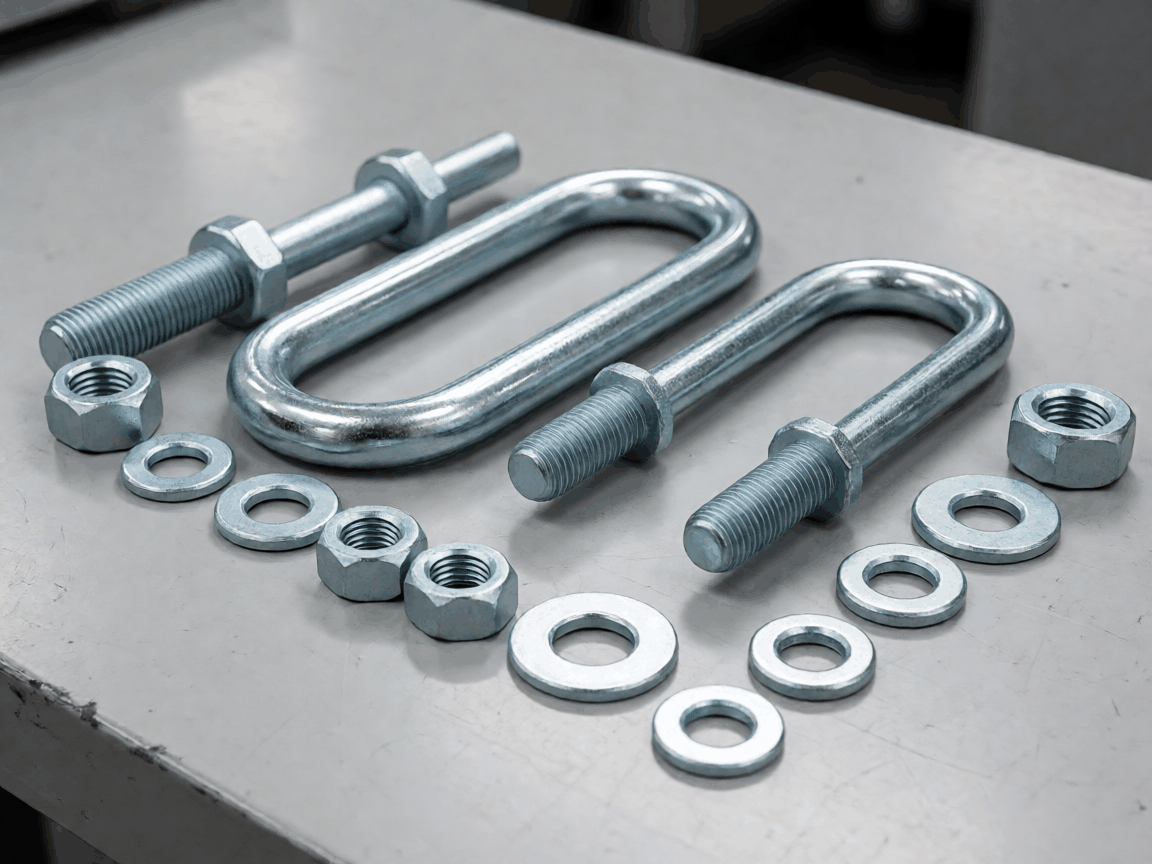
A U bolt is a formed metal rod with two threaded legs, used with nuts and often a saddle or plate to clamp around a pipe, tube, or other specified section. Importers and retail buyers usually source them by rod diameter, inside width, inside height, leg length, thread size, material, and finish. The quotation only compares like for like when those details match.
For a standard order, the factory can cut the rod, form the bend on matched tooling, prepare the threaded ends, and apply the selected finish. Custom dimensions, small batches, and a finish that needs extra handling can raise unit cost or extend the production schedule. Confirm the sample and its packing plan early if the goods must reach a retail launch date.
What the Design Has to Balance
The first complaints tend to be practical: the legs do not pass through the plate, the bend sits unevenly on the part, or the nuts bind on damaged or poorly matched threads. Tightening the bend radius to make a compact fit can add forming difficulty; adding excess clearance can let the assembly shift. Set the inside dimensions against the actual mating part, then confirm the thread and finish with the hardware used in assembly.
Standard Forming Tool
For repeat sizes, existing tooling can reduce setup expense and help keep a competitive unit price. The trade-off is limited flexibility in bend radius and geometry; verify that the standard form matches the mating component before ordering.
Dedicated Forming Tool
A custom tool can control a non-standard width, height, or radius more closely, but setup cost and approval time rise. It is worth considering when a poor fit would lead to returns or assembly rework across the full order.
Comfort and feel matter at the point of installation: burrs, sharp thread starts, or inconsistent leg spacing make a part harder to handle and assemble. Specify clean thread starts and acceptable edge condition, then ask for checks on the dimensions that control fit. A lower price is not useful if the buyer must sort out parts that bind or sit crooked.
Assumptions Buyers Should Stop Making
A quote can look low because one measurement, finish, or order condition is missing. Check the drawing and commercial terms before comparing suppliers:
- Do not assume “same size” means the same inside width, inside height, rod diameter, or thread length. Put each measurement on the drawing.
- Do not assume a quoted finish covers the service environment. A plated part and a hot-dip galvanized part have different costs and fit considerations.
- Do not treat a sample as proof that every unit will match. Agree on the inspection dimensions and the acceptable condition of threads, bends, and finish.
- Do not assume a short lead time is secured by the unit price. Confirm material availability, sample approval timing, production quantity, and export packing before fixing the launch schedule.
When a batch arrives with uneven legs or damaged threads, the root cause may be specification gaps, forming variation, or poor protection in transit. Align the drawing, approved sample, and purchase order so the factory and receiving team inspect the same requirements.
What Can Be Customised and What Cannot
Buyers can usually specify rod diameter, inside width and height, leg length, thread details, material, finish, and packaging. Changes to bend geometry or material may require different tooling or forming settings. A drawing should also identify the mating part and any clearance that matters; a nominal dimension alone may not resolve fit issues.
Set the mating dimensions before asking for a final price. After approval, changes to rod size, bend radius, thread length, or finish can affect tooling, processing sequence, sample sign-off, and delivery timing.
Not every combination is practical at every size. A thick rod with a tight bend, a long threaded leg, or a heavy finish may need process review before the factory can confirm fit and cost. Ask the supplier to flag any dimension that could interfere with forming, thread preparation, or the mating nut.
Packing, Marking and Freight Configuration
Loose U bolts can tangle, scrape their finish, or damage thread ends during transit. Choose a pack quantity and divider method that restrain movement without making cartons difficult to handle. For corrosion-sensitive finishes or long routes, discuss protective wrap and moisture control with the packing team.
- Confirm whether parts ship in inner packs or bulk cartons, and state the count per pack and carton.
- Keep thread ends protected from impact and avoid pack layouts that rub the bend or legs against one another.
- Agree on carton marks for item reference, quantity, purchase order, and batch identification where required by the buyer.
- Check carton dimensions and gross weight against the planned freight method before production packing is approved.
Request a packing sample or clear packing photos if the order has a fixed retail receipt date. A confirmed configuration helps the importer plan receiving and reduces the risk of repacking at destination.
Care, Storage and Service Life
Storage conditions affect the finish before installation: damp cartons and condensation can leave marks or start corrosion, especially on carbon steel parts. Keep cartons dry, off the floor, and protected from damage; inspect the finish and threads before assembly. If parts show corrosion, deformation, or thread damage, segregate them rather than forcing a nut onto the thread.
Service life depends on material, finish, load, exposure, and installation. Use the specified mating hardware and installation requirements for the application; do not infer a load rating from appearance or price. Replace a bent or corroded fastener instead of straightening or reusing it where the part carries a safety-related load.
For a sample-based quote, send the dimensioned drawing, material and finish preference, order quantity, packing requirements, and target ship date. The factory can review the forming route and identify which details affect unit price or schedule before you approve production.