


Affordable brass allen head bolts supplier: Specification, Ordering and Quality Notes
During a private-label launch with a fixed ship date, a socket that rounds during installation can cost more than the fastener saved on purchase price. For distributors and product managers, the useful comparison is cost per unit sold: returns, replacements, sorting, and missed replenishment dates all count.
Brass socket-head bolts suit applications that value a non-ferrous fastener, appearance, or electrical conductivity more than steel-like clamp loads. Agree the brass grade, thread, socket geometry, and installation torque before comparing unit prices.
How It Performs in Use
In a socket-head fastener, the hex recess transfers tool torque through a small contact area. Brass is softer than steel, so excessive torque, a loose-fitting key, or repeated removal can deform the socket before the bolt reaches the clamp load expected from a steel fastener.
Set the joint requirement first. If the assembly needs a high clamp load, frequent service, or strong resistance to thread stripping, confirm that brass is suitable; changing head dimensions alone will not give it steel’s strength.
Use this selection path to narrow the specification before requesting a production quote:
- If corrosion resistance, appearance, or conductivity drives the choice, confirm the service environment and brass grade with the application owner.
- If the joint needs substantial preload, frequent tightening, or repeated disassembly, validate brass against the required torque and thread engagement before release.
- If the bolt sits in a tight recess, check the head diameter, head height, socket size, and usable socket depth against the mating part and installation tool.
- If the design is approved, freeze the drawing, material, finish, and inspection points for sampling and repeat orders.
Assumptions Buyers Should Stop Making
A low unit quote does not prove the bolt will lower cost per unit sold. A softer socket may round under an installation tool set for steel fasteners; a mismatched thread pitch can damage the mating part; and a visually acceptable finish says little about dimensional fit. Each complaint creates inspection, replacement, or customer-service work after the purchase order has closed.
Do not treat “brass” as a complete material specification. Alloy choice affects machinability, forming suitability, strength, and corrosion behaviour. Likewise, a nominal thread diameter does not settle pitch, tolerance, engagement length, or head geometry. Put the drawing revision and any material or finish requirements on the order; otherwise, a supplier may price a different build than the one approved in the sample.
For repeat production, cold heading with socket broaching and thread rolling can spread setup cost across a larger run when the alloy and geometry suit the process. Machined samples or low-volume specials can carry a higher piece price, but may avoid dedicated forming tooling before demand is proven.
Who Uses It and Where It Matters
Brass Allen head bolts are selected for assemblies where a non-ferrous fastener or a visible brass finish is part of the specification, and where the joint load fits brass’s mechanical limits.
- Electrical enclosure and instrument-panel assemblers may specify brass for conductive or non-ferrous hardware; thread fit and socket condition still matter during controlled assembly.
- Furniture and fixture producers use socket heads where the fastener must sit neatly in a recessed or exposed joint; finish consistency and head dimensions affect the finished appearance.
- Distributors serving repair and maintenance buyers need stable thread, length, and pack identification so replacement bolts match the installed hardware.
- For continuously wet or chemically aggressive service, specify the environment and verify alloy suitability rather than assuming every brass grade resists every exposure.
Capacity, Tooling and Scheduling
Scheduling depends on whether the order uses an existing forming setup or needs new tooling, as well as on alloy availability, finish, quantity, and inspection scope. A drawing review should settle the thread system, socket dimensions, head profile, length measurement method, and packaging before a sample is made.
The ranges below are for initial planning, not a substitute for a released drawing. Unit mass is indicative across the listed combinations; head style, alloy, and exact dimensions change the result.
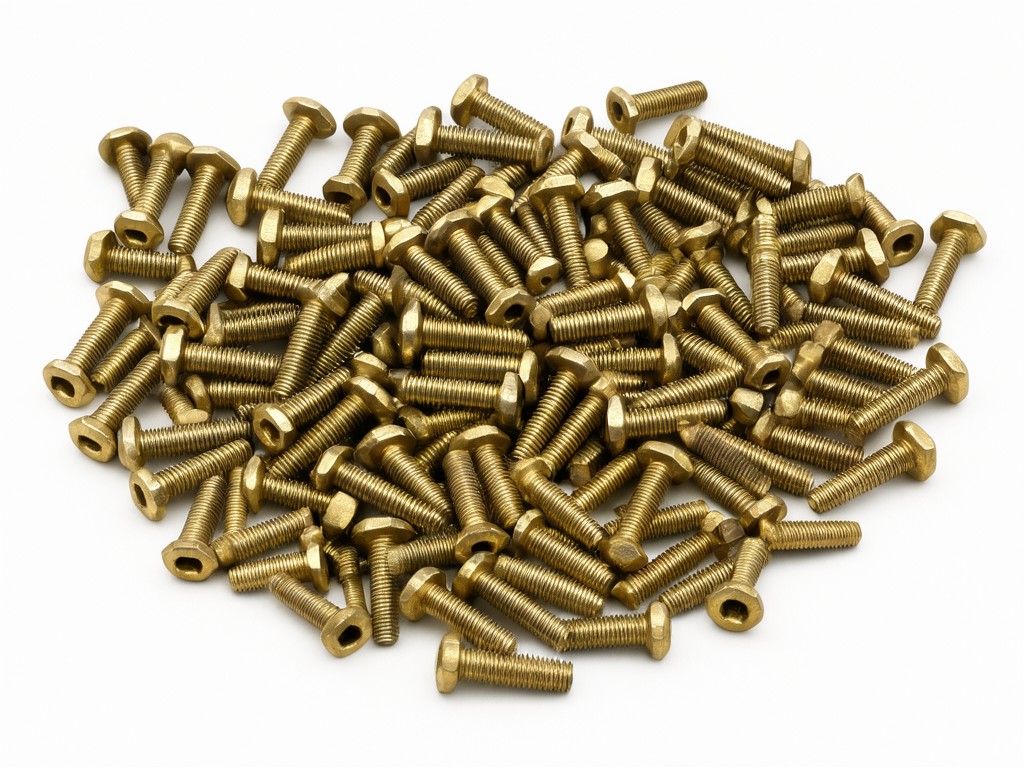
| Check or parameter | Planning range or method | Order control |
|---|---|---|
| Common metric sizes | Typically M3–M10; confirm thread diameter and pitch on the drawing. | Check thread with the specified gauge and verify fit against the mating component. |
| Common lengths and unit mass | Typically 6–50 mm; indicative unit mass is about 0.3–30 g across these size combinations. | Measure under-head length as specified; confirm mass against the approved sample and pack-weight requirement. |
| Head and socket dimensions | Set head diameter, head height, socket across-flats, and socket depth from the part drawing. | Inspect with dimensional gauges or measuring tools; check socket engagement with the specified key. |
| Thread and surface condition | Inspect the agreed thread form, finish, and visible surface condition against the approved sample. | Record drawing revision and inspection criteria with the order; use sample torque checks only where the application requires them. |
| Material and lot traceability | Confirm brass grade, finish, and any requested material documentation before production. | Agree batch identification and carton labelling to support incoming checks and repeat orders. |
For a cost comparison, request the same drawing revision, material, finish, inspection plan, and export pack from each supplier. Otherwise, a lower quote may reflect a different bolt rather than a more efficient production route.
Keeping Repeat Orders Supplied
Stock availability depends on the exact diameter, length, alloy, socket geometry, and finish. A common configuration may be easier to schedule than a special head or plated finish, but availability should be confirmed against the order specification rather than assumed from a catalogue description.
For repeat supply, retain an approved sample, drawing revision, material details, and pack configuration. Set the reorder point using actual consumption and replenishment time; splitting a forecast into planned releases can help balance inventory cost against production setup and freight cost.
Before release, compare the sample against the mating part and installation tool. That check can catch a socket-depth, thread, or length mismatch before it becomes a carton-level complaint.
Request a Sample Against Your Drawing
Send the drawing or sample, expected order quantity, brass grade, finish, inspection needs, and packing details. A pre-production sample gives your team a chance to verify fit and tool engagement before committing to a larger run.
Request a brass bolt sample and quotation