


Bespoke Allen head cap bolts maker: Specification, Ordering and Quality Notes
Cost and durability pull in opposite directions once material, heat treatment and finish are set against the assembly’s service conditions. Agree those choices against a controlled drawing before production; a change made after sample approval can alter both unit cost and the launch schedule.
For importers, OEM buyers and wholesalers, the main supply risk is often not the bolt itself but an unresolved detail: thread length, socket depth, coating, or the reference used for inspection. Locking those points early gives the factory a stable basis for tooling, sample sign-off and repeat orders.
What the Design Has to Balance
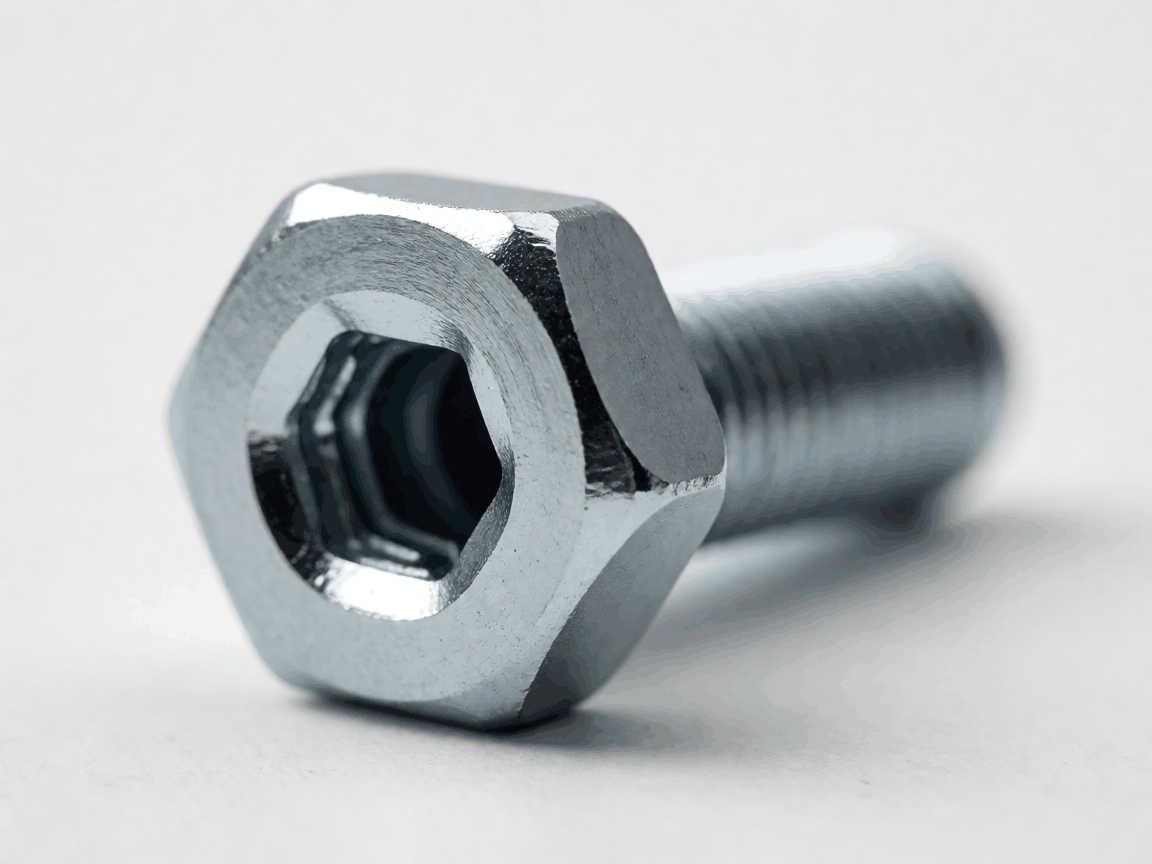
Socket head cap bolts need enough head height and socket depth for the specified hex key to engage without bottoming out. The head also has to clear surrounding parts, while the shank and thread provide the clamping length the joint requires.
Reducing head height can help in a tight enclosure, but it leaves less material for the socket and can limit the usable drive engagement. A longer thread may simplify stock planning, yet it can intrude into a clearance zone or change how the joint seats. A drawing should therefore identify the mating parts, usable thread length and drive access—not just the nominal diameter and overall length.
Materials and Construction Trade-offs
Alloy Steel
For load-bearing machinery and repeated assembly, alloy steel with a specified heat-treatment condition can provide a strength option that stainless grades may not match on a like-for-like basis. Agree the grade, hardness range and any required markings in the purchase specification; do not use a finish colour as a substitute for material identification.
Stainless Steel
Stainless steel is a practical choice where corrosion exposure matters, but the selected grade and joint design still govern performance. It generally costs more than plain carbon steel, and galling can be a concern in some stainless-on-stainless assemblies. Specify the grade and any lubricant or assembly condition that affects installation.
Zinc plating can suit general indoor service where a plated appearance and added corrosion resistance are required. Black oxide is typically selected for appearance or controlled indoor use rather than as a substitute for a corrosion-resistant coating. Choose the finish from the actual exposure and storage conditions, then approve a sample before the production order.
Construction Method and Its Effect on Consistency
Production Route
For production quantities, cold heading forms the head and socket from wire stock, followed by thread rolling, heat treatment where specified, and surface finishing. This route suits repeat orders because the forming tools set the main head and shank geometry, while rolling forms the thread without cutting it into the blank.
Custom head proportions or a non-standard socket may call for dedicated tooling. Tooling cost and setup time are weighed against order quantity and the expected reorder pattern. Confirm the production route and sample approval point before placing a date-sensitive order; a late geometry revision may require new tooling or another sample cycle.
Size, Weight and Specification Range
Drawing control: M3–M24 covers a common production range, subject to dimensions, tooling and material availability. Treat this as a planning envelope, not a guaranteed catalogue range. Confirm nominal diameter, pitch, length, head diameter, head height, socket size and socket depth on the released drawing; component mass can then be checked against assembly and packing requirements.
Metric or inch threads, coarse or fine pitch, and full or partial thread can be considered where the tooling and order quantity support them. State the measurement reference and tolerances for each critical dimension. If a mating component sets the fit, provide its drawing or a physical reference part rather than relying on a nominal size alone.
Customisation Options and Their Limits
Custom details are easiest to control when the buyer separates functional requirements from appearance requests. Include these items in the drawing pack or purchase specification:
- Head profile, socket dimensions, shank length, thread form and any under-head feature.
- Material grade, heat-treatment condition, finish and any restriction on coating thickness or colour.
- Head markings, packaging label content and any part-number or batch-identification requirement.
- Critical dimensions, acceptance references and the sample that will serve as the approved production reference.
Logo marks and custom head shapes can affect tooling, forming space and legibility. Artwork should be supplied as vector files with a marked position and orientation. A finish change after sample approval can also affect appearance and lead time, so record the approved finish and any acceptable visual variation in the order documents.
Usage Scenarios and Buyer Segments
| Usage level | Typical buyer and service condition | Specification to settle before order |
|---|---|---|
| General equipment assembly | OEM purchasing teams sourcing repeat fasteners for enclosed machinery with routine maintenance access. | Thread fit, head clearance, material, finish and replacement-part identification. |
| Corrosive or damp service | Importers and equipment makers supplying assemblies exposed to moisture, washdown or outdoor storage. | Stainless grade or coating, mating materials, storage conditions and sample appearance. |
| Retail or service-part programme | Wholesale buyers and distributors managing labelled part assortments and planned replenishment. | Part number, quantity per pack, label artwork, carton count and batch traceability. |
These usage levels do not replace a load or material specification. The joint designer remains responsible for selecting a fastener for the applied load and assembly method; the factory can manufacture to the agreed drawing and material requirement.
OEM and ODM Programme Structure
An OEM order starts from the buyer’s released drawing, material callout and packaging instruction. For ODM development, the buyer supplies the assembly requirements and the factory reviews manufacturable dimensions, tooling needs and sample details before the specification is frozen.
Approval Sequence
A workable programme moves from drawing review to quotation, sample production, written sample approval, production release and shipment planning. The agreed order file should carry the revision level, approved sample reference, finish, packing configuration and delivery destination. This reduces the risk of a launch delay caused by different teams working from different versions.
For a first order, tooling and sample timing should be confirmed separately from the production lead time. Buyers with a fixed launch date can reserve a production window after key specifications and artwork are approved, then align carton labelling and export packing before the shipment is booked.
How Consistency Is Held Across Batches
Batch reference: Keep the released drawing revision, material requirement, approved sample and finish record together with the purchase order. That record gives the factory and buyer a shared reference for repeat production.
Production control can include dimensional checks on head and shank features, thread gauging, socket fit checks, material identification and finish review against the approved requirements. The inspection plan should identify which features are critical to the joint and how results are recorded; no inspection method can compensate for an incomplete drawing.
Before a reorder, confirm whether the part number, finish, packaging or destination has changed. Small revisions can affect tooling setup, coating arrangements or label preparation. For artwork and branding review, send the drawing pack and artwork for review before sample approval, so the agreed specification and launch schedule stay aligned.