


Buy 316 stainless steel square u bolts Factory Sale: What Buyers Should Check Before Ordering
Before comparing quotations, the importer must verify the dimensional consistency of the square profile, as this geometry dictates the clamping contact area and the risk of stress concentration on the attached component. Unlike standard round or oval U-bolts, square U-bolts provide a flat seating surface against the clamped material, which eliminates the point-loading that causes rapid wear on rubber isolators or wooden subframes. However, achieving a tight square corner radius without residual stress is a machining challenge; if the corner radii vary by more than 0.5 mm across a lot, the bolt will not seat evenly, leading to uneven clamping force and potential vibration failure. This variance is the primary driver of warranty claims for bulk purchasers who discover that 5% of the shipment requires re-fitting or replacement.
Unit price and service life diverge significantly when evaluating 316 stainless steel versus 304 grades for coastal or high-humidity applications. While the initial material cost for 316 is approximately 20-30% higher, the molybdenum content provides resistance to pitting corrosion in chloride environments, extending the service life from 3-5 years to 10+ years in marine settings. For a brand manager managing a repeat order of 10,000 units, the cost of a single batch failure due to surface pitting or structural cracking far exceeds the premium paid for 316 grade. The specification must therefore specify not just the alloy, but the surface finish—typically a bead blast or pickled finish—which affects how the material interacts with the surrounding environment and the visual consistency of the final product.
Design Constraints Behind the Specification
Two suppliers quoting the same specification often differ in their cold-forming capabilities, which directly impacts the mechanical properties of the final fastener. The square shape requires a specific bending process; if the material is bent too sharply without adequate heating or intermediate steps, the grain structure at the outer radius breaks, creating a fatigue weakness. Buyers should request the bend radius tolerance in the technical drawing. A radius of R2.0 mm is typical for a 12 mm width square bolt, but a factory with tighter tolerances may produce R2.0 ± 0.1 mm, whereas a looser process yields R2.0 ± 0.5 mm. This 0.4 mm difference is negligible for static loads but critical for dynamic applications where the bolt flexes under load, such as in motorcycle exhaust mounting or heavy machinery vibration dampening.
Critical Tolerance Note
For square U-bolts used in precision assembly, the distance between the two legs (inner width) must be controlled to ±0.2 mm. A deviation of +0.3 mm prevents the bolt from fitting into a pre-drilled bracket, while a deviation of -0.3 mm creates a loose fit that rattles under vibration. Verify that the factory uses a CNC-controlled bending machine rather than manual press brakes for orders exceeding 500 units to ensure this consistency.
Specification Range and Customisation Limits
| Parameter | Standard Range | Customisation Limit | Impact on Cost/Lead Time |
|---|---|---|---|
| Material Grade | SS316, SS316L | SS304, SS321, Alloy 2205 | SS304 reduces cost by ~15%; Alloy 2205 increases cost by ~40% and adds 2 weeks to sourcing. |
| Width (Leg Height) | 10 mm – 50 mm | Up to 80 mm (requires custom die) | Custom dies for >50 mm add $150-$300 tooling fee and 10-15 days lead time. |
| Wall Thickness | 2.0 mm – 6.0 mm | 1.0 mm – 8.0 mm | Thinner walls (<2mm) are prone to warping during bending; thicker walls (>6mm) require heavier tonnage presses. |
| Surface Finish | Bead Blast, Pickle | Mirror Polish, PVD Coating | Mirror polish increases processing time by 20% and is not recommended for high-abrasion environments. |
The choice of wall thickness is a trade-off between weight and tensile strength. A 3.0 mm wall thickness in 316 steel provides a yield strength of approximately 205 MPa, sufficient for most automotive and industrial clamping duties. However, if the application involves high-frequency vibration, such as in turbine exhausts or heavy-duty trailers, a 4.0 mm or 5.0 mm thickness is required to prevent fatigue failure at the bend radius. Buyers should specify the minimum required tensile strength in Newtons rather than just the dimension, as this allows the factory to optimize the material grade and thickness combination for the best cost-performance ratio.
Matching the Product to the Buyer's Need
Standard Industrial Clamping
Application: Conveyor belts, pipe supports, general machinery.
Recommended Spec: SS316, 3.0 mm wall, Bead Blast finish.
Why: The bead blast finish provides a non-reflective surface that hides minor scratches and dust, reducing the need for frequent cleaning. The 3.0 mm thickness offers a balance of stiffness and weight, keeping the overall assembly mass down without compromising clamping force.
Marine & Coastal Exposure
Application: Yacht rigging, offshore platforms, coastal architectural fixtures.
Recommended Spec: SS316L, 4.0 mm wall, Pickle finish.
Why: SS316L has lower carbon content, preventing intergranular corrosion after welding or heat exposure. The 4.0 mm thickness provides extra safety margin against unexpected loads from wave action or wind. The pickle finish removes surface oxidation, ensuring the passive layer forms uniformly on the first exposure to salt air.
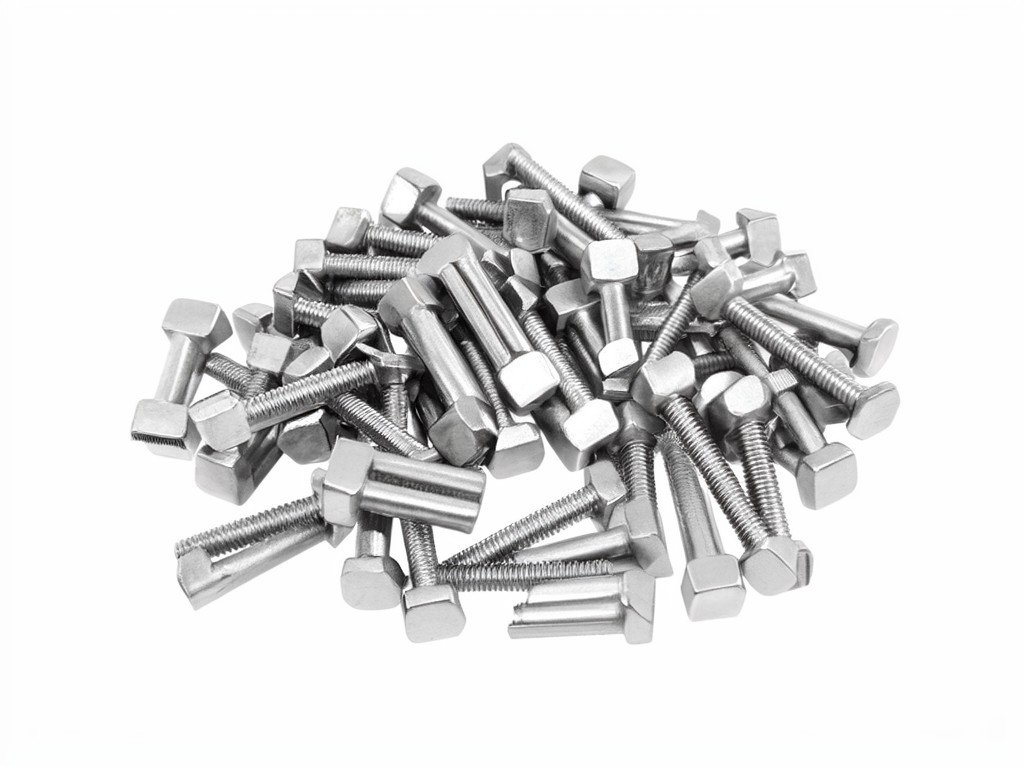
For buyers concerned with the aesthetic integration of the hardware into visible product components, the surface finish plays a significant role in perceived quality. A bead blast finish has a matte, uniform texture that diffuses light, while a mirror polish reflects sharply. In applications where the bolt is part of the user interface, such as in high-end furniture or consumer electronics housings, the mirror polish is often preferred. However, this finish is more susceptible to showing fingerprints and water spots, which can lead to higher return rates if the end-user does not maintain it properly. Therefore, the choice of finish should be aligned with the intended maintenance behavior of the end-user.
Who Uses It and Where It Matters
The primary users of 316 stainless steel square U-bolts are manufacturers in the automotive, marine, and heavy machinery sectors. In the automotive industry, these bolts are used to secure exhaust systems, suspension components, and aftermarket accessories. The square profile allows for a tighter fit against the mounting bracket, reducing the space required for the installation. This is particularly important in compact vehicle designs where every millimeter of clearance matters. The 316 grade is chosen for its resistance to heat and corrosion, ensuring that the bolt does not weaken or rust over the vehicle's lifespan.
- Marine equipment manufacturers use these bolts for securing deck hardware, rigging, and propulsion systems. The consistent leg width ensures that the clamping force is distributed evenly, preventing the hardware from slipping under dynamic loads.
- Industrial machinery builders rely on the high tensile strength of 316 steel to maintain structural integrity under continuous vibration. The square shape provides a larger contact area than round bolts, which reduces the rate of wear on the mounting surfaces.
- Architectural firms specify these bolts for outdoor installations where exposure to rain, UV, and pollution is expected. The corrosion resistance of 316 steel ensures that the bolts maintain their appearance and structural function for decades without replacement.
In all these applications, the lot-to-lot consistency of the product is a critical factor. If the leg width varies between batches, the assembly time increases, and the risk of installation errors rises. This is why brand product managers often insist on a Certificate of Conformance (CoC) for each shipment, detailing the chemical composition and mechanical properties of the material. This documentation provides a traceable record that can be referenced in the event of a quality dispute.
Volume Planning and Lead Time
Planning the order volume requires a balance between inventory holding costs and the risk of stockouts. For standard sizes, the Minimum Order Quantity (MOQ) is typically 1,000 pieces, with a lead time of 15-20 days. However, for custom sizes or special finishes, the MOQ may be higher, and the lead time can extend to 30-45 days due to the need for custom tooling and longer processing times. Buyers should factor in a buffer of 2-3 weeks for shipping and customs clearance, especially when importing from overseas manufacturers.
| Order Volume | Standard Size Lead Time | Custom Size Lead Time | MOQ (Standard/Custom) |
|---|---|---|---|
| 1,000 – 5,000 pieces | 15 – 20 days | 30 – 35 days | 1,000 / 5,000 |
| 5,000 – 10,000 pieces | 12 – 15 days | 25 – 30 days | 5,000 / 10,000 |
| 10,000+ pieces | 10 – 12 days | 20 – 25 days | Negotiable / Negotiable |
The lead time for custom orders is primarily driven by the tooling process. If the factory does not already have a die for the specific square width required, they must manufacture one. This process involves CNC machining and trial bending, which can take 2-3 weeks. To mitigate this risk, buyers should request sample approval before placing the full order. This allows for a visual and dimensional check of the prototype, ensuring that the final production run matches the specifications.
Stock Availability and Reorder Planning
Maintaining a safety stock of 10-20% above the expected monthly usage is a common practice for importers dealing with fast-moving industrial components. This buffer accounts for variations in demand, shipping delays, and potential quality issues that may require replacement. For 316 stainless steel square U-bolts, the storage conditions are less critical than for other materials, as the alloy is resistant to corrosion. However, the bolts should be stored in a dry, ventilated area to prevent dust accumulation, which can interfere with the smooth operation of the clamping mechanism.
Reorder planning should be based on a forecast of the upcoming production schedule. If the brand manager anticipates a launch of a new product line, the demand for specific bolt sizes may spike. In this case, it is advisable to place a larger initial order to take advantage of volume discounts and to secure a consistent lot number. Using the same lot number ensures that all the bolts in the shipment have the same mechanical properties and surface finish, which is crucial for maintaining the quality standards of the final product.
Setup, Use and Replacement Parts
The installation of square U-bolts requires the use of appropriate nuts and washers. The square profile of the bolt legs means that the washers must have a flat surface to ensure even pressure distribution. Using round washers on a square bolt can lead to uneven clamping, as the contact area is reduced. Buyers should specify the washer type in their purchase order to ensure that the correct components are supplied. The nuts should be torqued to the manufacturer's recommendation, typically 20-30 Nm for M8 bolts and 40-50 Nm for M12 bolts.
- During installation, ensure that the bolt is seated correctly on the clamped surface. A loose fit can lead to vibration and noise, which can degrade the surrounding components over time.
- For replacement, it is recommended to use new nuts and washers each time, as the existing ones may have been deformed by the previous installation. Reusing worn nuts can reduce the clamping force and lead to premature failure.
- Regular inspection is advised for applications in corrosive environments. Check for signs of pitting or discoloration, which may indicate the onset of corrosion. If corrosion is detected, the bolt should be replaced immediately to prevent further damage.
Ready to Review Your Specification?
We provide detailed technical support to help you finalize the dimensions, material grade, and finish for your order. Our team can review your drawings and offer recommendations to optimize cost and performance.
Contact Our Technical Team for a Quote