


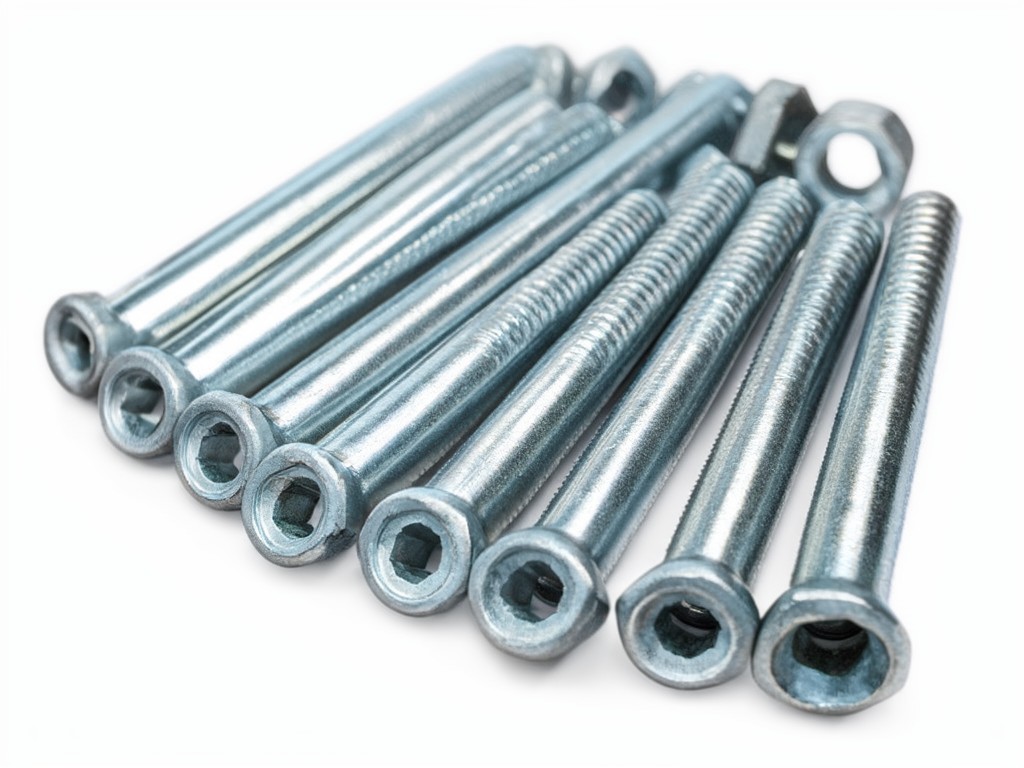
Specifying China industrial u bolts exporter for Wholesale and OEM Orders
Fatigue appears at the stress concentration: repeated movement at the bend, thread runout or clamp interface can expose a mismatch that a headline diameter alone will not reveal. For wholesale buyers qualifying a second source, compare the U bolt against the installed assembly, service exposure and drawing—not just a catalogue description.
As a China industrial U bolt exporter, we quote formed carbon-steel and stainless-steel parts to buyer specifications. Confirming the bend geometry, thread details, material and surface treatment at the start helps reduce fit differences between suppliers and repeat orders.
Material Options and Their Trade-offs
Outdoor exposure changes the material decision: a coating that suits sheltered equipment may not suit a wet, salt-laden or chemically exposed installation. Start with the actual corrosion environment, then select the material and finish as one specification.
- If the assembly is used indoors or in a sheltered location, choose carbon steel with a specified zinc finish where the purchase price matters and exposure is limited. State the coating type and any required coating thickness on the drawing or order.
- If rain and general outdoor weather are expected, consider hot-dip galvanized carbon steel. The thicker coating can improve corrosion protection, but it changes the effective thread dimensions; confirm nut fit and thread allowance before approving production.
- If the service environment is persistently wet or corrosive, assess stainless steel against the actual exposure and required strength. Alloy choice affects cost and mechanical properties, so identify the grade on the purchase specification rather than accepting a generic “stainless” description.
- If the clamp is subject to repeat vibration or load cycling, review the material, bend radius and installation method together. A change in material alone does not correct a stress concentration or a poorly matched clamp seat.
Measured Performance in Real Use
The limiting factor is rarely the headline specification. Buyers most often report a poor fit at the pipe or support, nut binding after coating, corrosion at exposed threads, or cracking after repeated movement. Each complaint points to a different control: inside width and height for fit, thread allowance for assembly, finish selection for weather exposure, and bend geometry for cyclic service.
Specify the interface, not only the rod diameter. Provide the inside width, inside height, leg length, thread size and thread length, plus the mating pipe or support dimensions. If the assembly has a defined working load or cyclic duty, provide its design basis; a U bolt should not be assigned a load rating from dimensions alone.
Dimensional checks should cover the formed shape after bending, since springback can affect leg alignment and spacing. Thread gauges and a trial nut check can identify fit issues, while coating-thickness checks and agreed corrosion testing can help assess finish consistency. For fatigue-sensitive use, review the installed clamp arrangement and any specified test method before confirming suitability.
Customisation Options and Their Limits
A small change to the bend or thread can affect fit, coating coverage and tooling time. Send a dimensioned drawing or a physical reference part, and flag which dimensions are functional before the first sample review.
| Custom feature | Information to confirm | Practical limit or trade-off |
|---|---|---|
| Rod diameter and material | Nominal diameter, material grade and intended service condition | Larger diameters and specified grades may require different forming capacity and sourcing time. |
| Inside width, height and bend radius | Dimension reference points, mating-part size and required fit | Tight radii or narrow tolerances can increase forming difficulty and sample revisions. |
| Thread size, length and end treatment | Thread specification, usable length, nut engagement and coating condition | A thick finish can affect nut engagement; confirm fit on a finished sample. |
| Surface finish and identification | Coating type, exposure requirements, part marking or label artwork | Finish choice affects cost, appearance, corrosion performance and finished-thread fit. |
OEM and ODM Programme Structure
For an OEM replacement, use the approved drawing and agreed inspection points as the control documents. A sample should match the fit-critical dimensions, thread engagement and finish before it becomes the reference for a repeat order. If the existing part has no drawing, a measured sample can establish the initial specification, but confirm the dimensions against the installed assembly before tooling or volume production.
ODM work is a better fit when the buyer needs support to resolve a repeated field complaint—for example, a nut that binds after coating or legs that do not sit parallel on the support. We can review the geometry and propose a drawing revision for approval. Any change to material, bend shape or finish should be recorded as a controlled revision, not substituted informally on the next batch.
Quality Control and Batch Consistency
Repeat loading drives the failure, but inconsistent forming or thread fit can create complaints before a part enters service. For second-source approval, align the inspection plan with the failure mode you are trying to prevent.
- Check rod diameter, inside dimensions, leg length and alignment against the approved drawing.
- Verify thread dimensions with suitable gauges and confirm nut travel on parts with the specified finish.
- Inspect the bend for visible cracking or surface damage, with closer attention where the radius or material makes forming more demanding.
- Record material and finish details by production batch. Agree in advance whether coating checks, corrosion exposure tests or load-related tests form part of order acceptance.
For a new source, compare the approved sample and first production batch using the same drawing revision and inspection method. That comparison helps separate a real process shift from a change in measurement practice.
Stock Availability and Reorder Planning
Standard dimensions and common finishes may be easier to schedule than a non-standard bend, material grade or coating combination. Availability depends on the confirmed drawing, quantity and current material supply, so request a production schedule against the actual order configuration rather than a generic lead-time estimate.
To reduce single-supplier risk, qualify the second source with a production-representative sample and retain the approved revision, material details and inspection criteria for reorders. Where demand is uneven, share forecast quantities and release timing; this gives the factory a basis to plan material purchases without treating a forecast as a firm order.
Start with an artwork-and-branding review. Send the part drawing, material and finish requirements, target order quantity, and any carton label or product identification artwork. We can check whether the requested marking and buyer information fit the proposed U bolt specification before sample approval.