


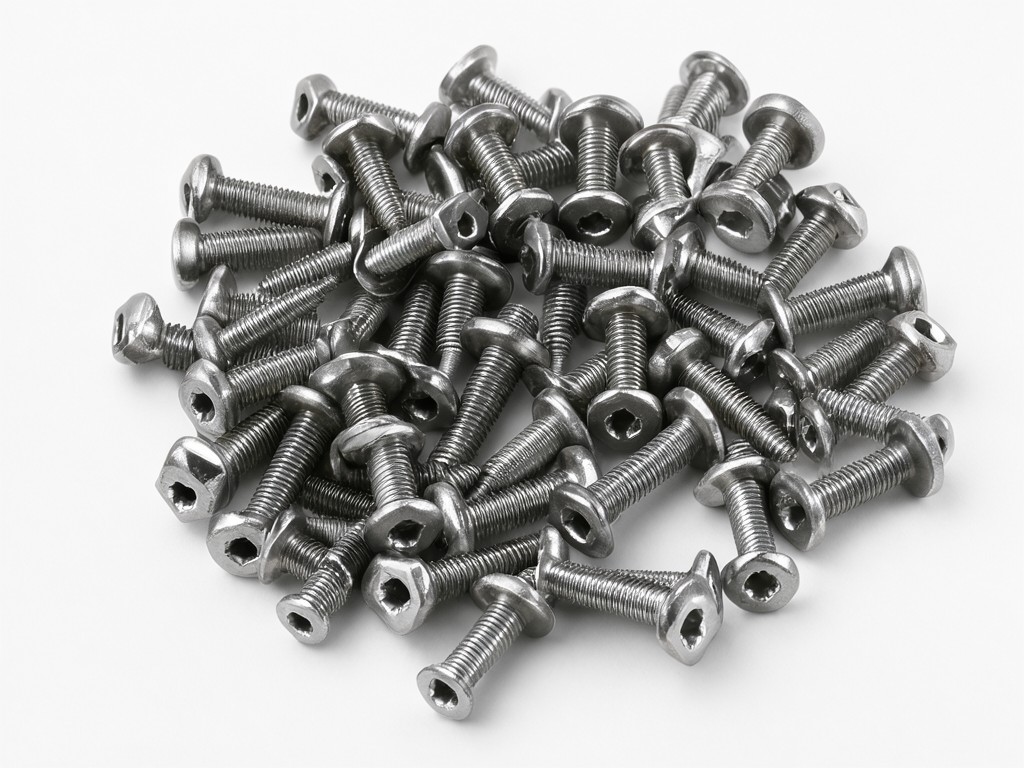
custom countersunk metric security toggle bolts suppliers - Bulk Supply and Specification Guide
Washdown residue and outdoor exposure can attack the bolt finish long before the toggle mechanism reaches its load limit. Zinc-plated carbon steel usually lowers unit cost for dry indoor installations; stainless steel raises material cost but reduces the corrosion risk where moisture and cleaning chemicals recur. Select by the actual exposure and substrate, then qualify head seating, toggle clearance and finish on the assembled part.
The Problem Buyers Keep Paying For
A countersunk security screw and spring toggle must work as one assembly. A mismatch between screw length, panel thickness and cavity depth can leave the wings short of full opening, or prevent the countersunk head from seating flush. Those faults often appear only after installation, so a second source needs to match the approved assembly dimensions, not just the nominal thread.
- Plating damage at the head or wing bend exposes carbon steel to damp storage and repeated cleaning.
- A different countersink angle or head diameter can leave a proud edge, a gap, or poor contact with the mounted panel.
- Security drives require a matching bit; an unconfirmed drive profile can slow service work or damage the recess.
For second-source approval, compare a complete sample set against the drawing and installation method. A lower-priced screw that needs a different panel preparation or tool can cost more at assembly and service.
What Actually Determines Performance
The toggle wings carry load only after they pass through the access hole and open behind the substrate. Screw length must account for the mounted item, panel thickness, washer or spacer if specified, and enough free cavity for the wings to deploy. Thread engagement and wing geometry matter as much as nominal metric diameter.
Security drive selection does not increase the anchor’s rated load. Confirm the head recess, mating bit and countersink dimensions separately from the toggle’s fit and the substrate’s capacity. Do not use a metal fastener rating as a substitute for an application-specific pull-out check.
For dry interiors, zinc-plated carbon steel is usually the cost-focused choice. Stainless steel costs more and suits recurring moisture better, but the exact grade must reflect the cleaning chemistry and exposure; chloride residue can still cause corrosion in unsuitable conditions. UV has little direct effect on metal, yet it can degrade nearby plastic components, so assess the full installation rather than the bolt alone.
Specification Range and Customisation Limits
Metric thread, screw length, wing width, countersunk head geometry and security recess can be configured as a matched assembly. The ranges below are for initial sourcing discussions only; substrate thickness, cavity clearance and the approved drawing set the final dimensions.
Thread and Length
Common custom discussions cover M4–M8 threads and screw lengths around 50–120 mm. Confirm the usable length against panel stack and cavity depth.
Head and Drive
Specify countersink angle, head diameter and security recess from the mating part or drawing. Custom recess tooling may add setup cost.
Material and Finish
Compare plated carbon steel for controlled indoor use with stainless options for damp service. Confirm finish coverage at formed edges and recesses.
| Planning parameter | Indicative range or option | Buyer confirmation point |
|---|---|---|
| Metric thread | M4–M8, subject to toggle size and design | Thread pitch, tolerance and mating nut or wing assembly |
| Screw length | Approximately 50–120 mm for quote planning | Panel stack, countersunk item thickness and clear cavity depth |
| Assembly mass | Roughly 6–45 g; varies with diameter, length, wing and material | Weigh the approved full assembly; the range is not a drawing tolerance |
| Material and finish | Carbon steel with plated finish, or stainless steel by grade | Exposure, cleaning agent, colour and finish requirement |
Mass figures are approximate sourcing guides, not guaranteed values. A larger toggle, longer screw or heavier stainless grade changes assembly weight; set an acceptance band only after the production drawing and sample are approved.
Buying Mistakes That Lead to Returns
Most avoidable returns trace back to a drawing that defines the screw but not the installed assembly. Countersunk seating depends on the panel’s prepared hole, while toggle deployment depends on the access hole and free space behind it. Treat each interface as a measurable requirement.
Cost-Focused Selection
Plated carbon steel can meet a dry indoor requirement at lower material cost. If sweat, wash chemicals or persistent damp are present, coating wear at bends and contact points can expose the base metal; assess stainless options against the actual chemical exposure.
Exposure-Focused Selection
Stainless material raises purchase cost and can reduce corrosion concerns in wet service, but it does not remove the need to check grade compatibility, crevice conditions and cleaning residue. Approve the chosen grade against the site’s cleaning method.
- Do not approve by thread diameter alone. Check head angle, head diameter, overall length, wing spread and folded clearance.
- Do not assume a security recess fits existing service tools. Confirm the drive profile and bit access before production release.
- Ask for dimensional checks on the head and toggle assembly, plus a fit trial in the specified panel and cavity. Add a finish inspection suited to the selected material.
Capacity, Tooling and Scheduling
Production commonly combines screw forming or machining, security-head operations, toggle-wing stamping and forming, assembly, then finish processing where specified. Standard head and drive geometries can reduce setup work; a nonstandard countersink or security recess may require dedicated tooling and a separate first-article review.
For a second-source qualification, send the controlled drawing, material and finish requirements, annual demand estimate, target lot size and approved sample. The factory can then confirm which dimensions use existing tooling, what needs new tooling, and where inspection frequency should focus. Lead time depends on tooling approval, material route and finish capacity, so confirm the schedule after those inputs are fixed.
A branding review should cover laser marks or other requested identification, placement on the countersunk head, and legibility after the chosen finish. Share the artwork with the drawing before sample approval so the mark does not interfere with the drive recess or seating face.
To assess a second source, send the bolt drawing, finish specification and any branding artwork for a fit and manufacturability review. Request an artwork and specification review before sample release.