


custom high tensile galvanized countersunk bolts supplier: Specification, Ordering and Quality Notes
What the Design Has to Balance
The complaint that repeats across reorders is a bolt that sits proud in one assembly and binds at the thread in another. A countersunk head only sits flush when its angle and diameter match the mating recess; zinc thickness and thread fit also affect installation. If those details are left to supplier interpretation, buyers can face rework, slower assembly and avoidable replacement costs.
Custom production typically combines cold heading, thread rolling and heat treatment before the selected zinc coating route. The drawing should define thread, length, head geometry, drive, material or strength class, and coating requirement. High tensile material needs a coating route assessed for its strength class: the process must address hydrogen-embrittlement risk as well as coating build-up and thread clearance.
| Specification point | Buyer detail to confirm | Cost or service effect |
|---|---|---|
| Thread and length | Diameter, pitch, thread length and grip length from the assembly drawing | Clear dimensions reduce sorting and fit-related returns. |
| Countersunk head | Head angle, diameter, height and drive type | Correct mating geometry avoids proud heads and damaged recesses. |
| Strength and coating | Specified strength class, zinc route, appearance and thread-fit requirement | A matched process limits fit disputes and premature corrosion-related replacement. |
Where This Product Beats Standard Alternatives
A drawing-matched countersunk bolt earns its price when flush seating, repeatable thread engagement and corrosion protection matter more than the lowest piece price. If a standard bolt needs washers, extra finishing or manual sorting, its apparent saving can disappear across the full assembly run.
Galvanized coating can extend service intervals in exposed assemblies, but the finish choice has to match the bolt’s strength class and the available clearance. Hot-dip zinc usually builds more thickness than electrogalvanizing, so buyers need to account for thread fit and countersink contact. Electrogalvanized finishes have lower coating build, but high tensile fasteners require careful process controls because of hydrogen-embrittlement risk. The appropriate route depends on the specified service environment and assembly tolerance, not appearance alone.
For wholesalers and private-label buyers, custom dimensions can also reduce the number of substitute parts held in stock. The gain is strongest when a stable annual volume supports dedicated heading and thread tooling, while repeat orders preserve the approved geometry and finish.
Option Comparison by Usage Level
| Order pattern | Practical production route | Unit-cost and lead-time trade-off |
|---|---|---|
| Trial or low-volume demand | Use existing tooling where the drawing permits; confirm any custom head or thread feature before sampling. | Lower tooling exposure, but more setup cost per piece and fewer scheduling options. |
| Repeat mid-volume orders | Approve a stable drawing and reserve a repeatable production window. | Tooling is spread over more units; planned batches can steady replenishment timing. |
| High-volume programme | Dedicated tooling and forecast-based releases may suit stable annual demand. | A lower amortized tooling cost per unit is possible, but changes after approval can add tooling and schedule costs. |
The break-even point depends on part geometry, material, coating route and order release size. Buyers comparing quotes should separate one-time tooling from the recurring part price, then calculate cost across expected sell-through and service replacements. A larger order only lowers cost per unit sold if the stock moves before specification changes or excess inventory write-offs.
Matching the Product to the Buyer's Need
- For an exposed joint with frequent service access, specify the coating and drive so the fastener can be removed and replaced without damaging the mating recess.
- For a flush exterior surface, provide the countersink dimensions and mating material details; the head angle alone does not define a reliable fit.
- For a private-label range, lock the drawing revision, packaging quantity and marking plan before the first production batch.
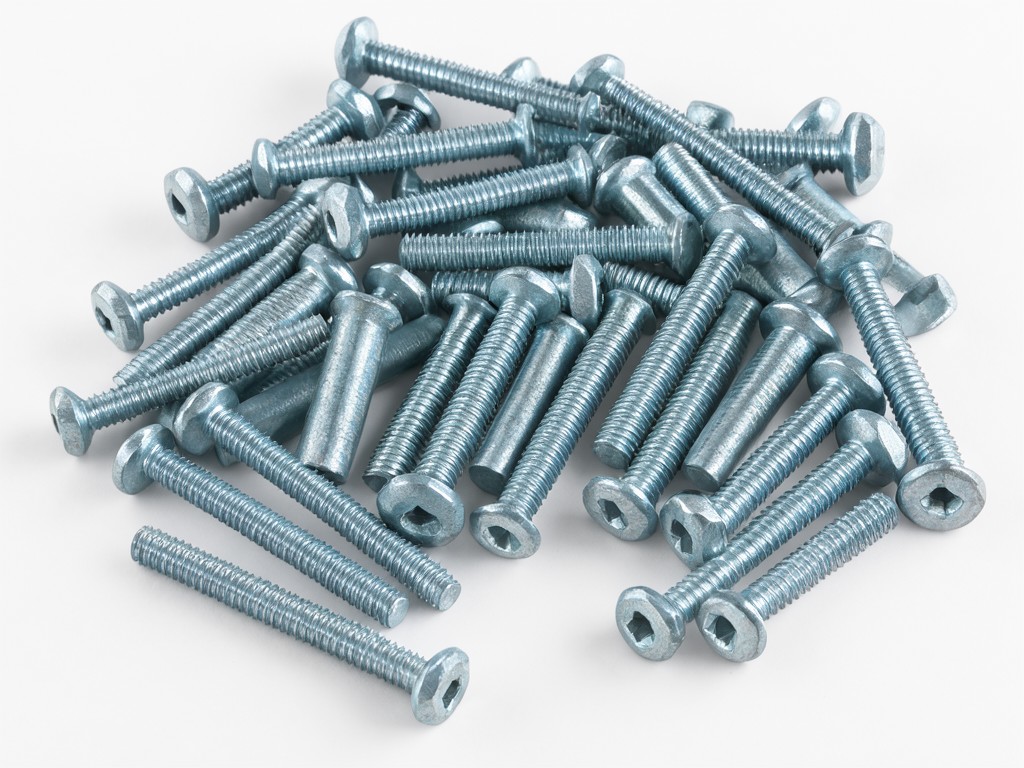
A short sample run can confirm assembly fit before a buyer commits to dedicated tooling. Use the same approved mating component for sample review and production approval; otherwise, a difference in the recess or finish clearance can produce misleading results.
| Customization option | Information to supply | Programme effect |
|---|---|---|
| Head and drive geometry | Dimensioned drawing or approved sample | Custom forming tools may add upfront cost and sample time. |
| Thread, length and strength class | Drawing revision and required material or mechanical properties | Stable repeat specifications reduce production changeovers. |
| Finish and retail pack | Coating description, quantity per pack, label details and carton needs | Consolidated packaging instructions can reduce warehouse handling and relabelling. |
Assumptions Buyers Should Stop Making
- Do not assume “galvanized” defines a single coating thickness or process. State the coating route and functional requirement, then confirm fit against the mating thread.
- Do not assume a countersunk head is interchangeable because the nominal thread matches. Head angle, diameter, drive and height can all change seating and tool access.
- Do not compare piece prices without setup, tooling, packaging and forecast volume. A low quote can cost more per unit sold if it triggers assembly sorting or emergency replenishment.
- Do not change the coating or strength class after sample approval without a revised review. Either change can affect process suitability, clearance and the accepted fit.
OEM and ODM Programme Structure
OEM: Build to the Approved Drawing
The buyer supplies the part definition, strength requirement, coating and pack specification. This route suits repeat demand where the drawing is controlled and changes are limited. Tooling charges can be quoted separately so their effect on unit cost stays visible.
ODM: Develop the Geometry Together
The buyer shares the mating-part dimensions, service conditions and target order volume. The supplier can review forming feasibility and propose a drawing for approval before tooling. Early agreement on ownership, revision control and forecast releases helps prevent later cost disputes.
For either route, sample approval should identify the drawing revision, coating route and packaging configuration. Larger committed volumes can support tooling amortisation and production planning; smaller or irregular releases may carry a higher unit cost and longer wait for a shared production slot.
Packing, Marking and Freight Configuration
Bulk cartons suit buyers who manage their own kitting, while smaller inner packs can simplify distributor picking and private-label fulfilment. Set pack quantity, carton identification and label language before production release. Mixed sizes need clear separation so warehouse staff do not combine similar-looking fasteners.
For export orders, confirm carton weight, pallet pattern, destination labels and shipment marks against the importer’s receiving process. Protective packing should limit movement and coating abrasion in transit. Keep lot identification linked to the order and drawing revision so a reorder or service query can be traced to the relevant batch.
Questions Buyers Ask Before Ordering
Can a high tensile countersunk bolt be galvanized without changing its fit?
Fit depends on coating build, thread tolerance and countersink clearance. Share the strength class and mating-part dimensions so the coating route and finished fit can be reviewed together. Do not treat a finish change as a colour-only substitution.
What information is needed for a custom quote?
Send a dimensioned drawing or sample, required strength class, coating requirement, annual forecast, release quantity and pack details. Include any known limits for head seating or thread engagement; those details help establish whether existing tooling is usable.
How does order volume affect tooling cost and lead time?
A larger, predictable programme can spread dedicated tooling cost across more pieces and make production slots easier to plan. A low-volume order may use existing tools if the geometry matches, but custom features can add setup and sample time. Confirm the tooling charge, sample schedule and repeat-order window in the quotation.
Can private-label packaging be included?
Yes. Provide artwork, label language, pack count and carton-marking requirements before the packaging sample is approved. Earlier confirmation reduces relabelling and helps align the finished order with the distributor’s receiving process.
Request a Tooling Review
Send the drawing, target annual volume and coating requirement for a tooling and production-route review. A clear volume plan makes it easier to separate upfront tooling from the recurring unit cost and set a practical reorder schedule.
Discuss your bolt specification and tooling plan