


Custom u bolt for mounting to angle iron factory - Bulk Supply and Specification Guide
Scope of Supply and Physical Form
Repeat loading drives the failure when a U-bolt’s legs do not align with the angle iron holes or the bend bears unevenly on the mounted member. Supply is a formed round-bar fastener with two threaded legs, sized to clamp a pipe, tube or comparable member against an angle-iron support. The intended fit is set from the mounting geometry, not from a nominal pipe size alone.
For a private-label or wholesale order, an existing drawing or approved sample can anchor the specification without redesigning the product. The order definition should state whether nuts and washers are included, how the inside dimensions are measured, the finish, and whether retail carton artwork or batch identification is required.
What Actually Determines Performance
The limiting factor is rarely the headline rod diameter. Clamp behaviour depends on the bar grade, inside width and height, bend radius, thread engagement, angle thickness, hole position and the direction of the applied load. If the mounted member can move under vibration, specify the full assembly and installation conditions; a diameter by itself is not a load rating.
Approval point: confirm the U-bolt on the actual angle profile or a dimensionally matching fixture. Check leg alignment, washer seating and clearance at the flange edge before approving the production sample. Do not infer a safe working load from fit dimensions alone.
Fatigue appears at the stress concentration around the bend or at the first engaged thread when fit or loading is uneven. A drawing review should therefore capture bend radius and thread length as well as the overall envelope. Sample approval records that fit; it does not replace a load assessment for the complete mounted assembly.
Materials and Construction Trade-offs
Indoor dry installations often favour carbon steel with an electroplated zinc finish for lower piece cost. Outdoor exposure, standing water or salt contact changes the finish decision; coating damage at the bend and threads can become the first corrosion point. Stainless steel avoids a separate plated layer, but grade choice still needs to match the environment and the required mechanical properties.
| Service condition | Complaint seen in service | Specification to approve |
|---|---|---|
| Dry indoor mounting with limited exposure to moisture | Rust marks or finish wear after handling and installation | Carbon-steel bar with the agreed zinc finish; confirm finish appearance on a sample and state whether nuts and washers need the same finish. |
| Outdoor rain exposure with periodic wetting | Corrosion at the bend, thread roots or contact points | Compare a heavier galvanized coating with stainless steel against the service environment, appearance requirement and landed cost. Review thread fit after coating. |
| Salt-laden air or repeated contact with corrosive moisture | Early surface attack despite an indoor-use finish selection | Select a stainless grade for the exposure and required strength, or specify a coating system reviewed for that environment; approve the material and finish together. |
| Vibration or repeated loading on an uneven support face | Loosening, distorted legs or cracking near the bend | Confirm bar grade, bend radius, leg spacing, thread engagement and the complete assembly’s locking method; validate against the actual load case. |
A heavier coating can raise the unit cost and affect thread clearance; stainless usually carries a higher material cost but removes the separate coating layer. Agree the trade-off from the exposure and installation conditions rather than specifying a finish by colour alone.
Size, Weight and Specification Range
Fit complaints commonly trace back to dimensions described from different reference points. The approved drawing should identify inside width between the legs, inside height from the bend’s inner surface to the leg-end reference, rod diameter, thread diameter and usable thread length. Values below are indicative ranges for quotation, not a substitute for the released drawing.
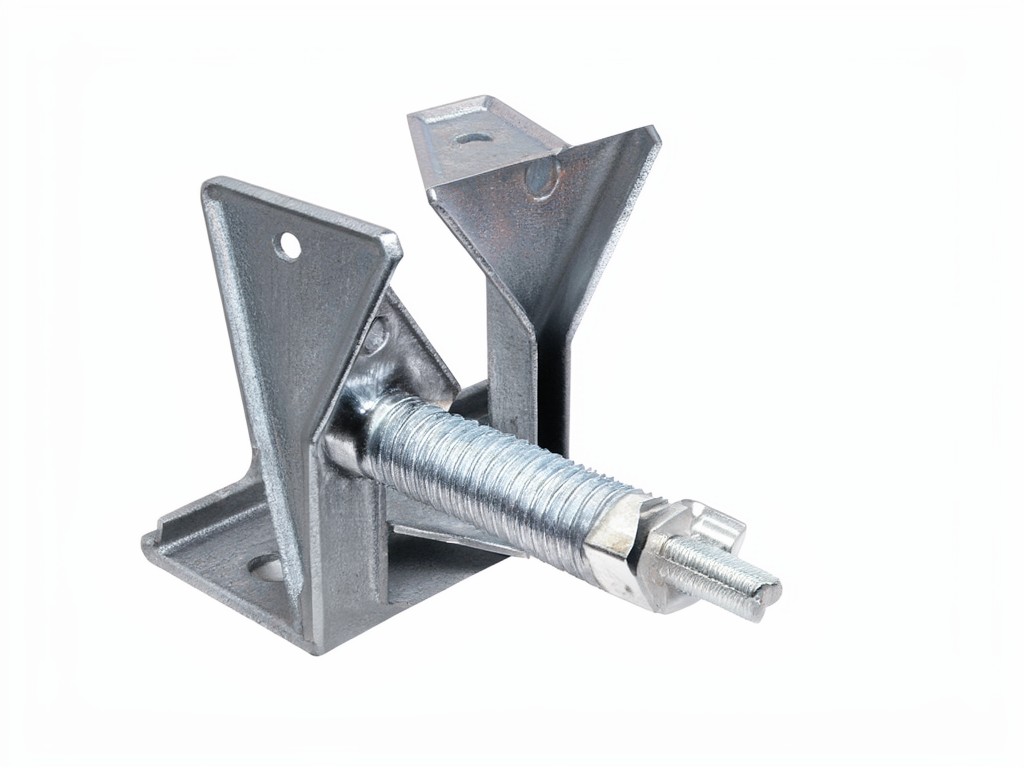
| Rod diameter | Indicative inside width × height | Indicative U-bolt mass, before hardware |
|---|---|---|
| 6 mm | 25–50 mm × 25–75 mm | Approximately 35–90 g |
| 8 mm | 40–75 mm × 40–100 mm | Approximately 80–180 g |
| 10 mm | 50–100 mm × 50–125 mm | Approximately 160–360 g |
| 12 mm | 75–125 mm × 75–150 mm | Approximately 300–650 g |
Mass changes with leg length, bend radius, thread length and finish, so use a confirmed sample or drawing calculation for carton weight and freight planning. Tolerances should be assigned by feature: hole-to-leg fit, inside width, inside height and thread fit may need different limits. Set them before sampling, then retain the approved sample as the production reference.
Buying Mistakes That Lead to Returns
Returns often start with a sample that was checked against the fastener alone, rather than against the customer’s angle iron and mounted member. A close nominal width can still leave the legs out of line with drilled holes; excessive inside height can let the clamp shift before the nuts seat. Check the actual mating parts before releasing the order.
Another common mismatch is approving an uncoated sample and changing to a thicker finish for production without checking thread engagement. The drawing, finish sample and fit sample should represent the same released construction. Record any allowed variation in the approval documents instead of relying on a verbal instruction.
For a private-label order, approve the carton label or artwork separately from the physical sample. Confirm the item description, quantity per pack, finish identification and batch reference so receiving teams can distinguish repeat orders without changing the fastener specification.
Capacity, Tooling and Scheduling
Order timing depends on bar diameter, bend dimensions, thread specification, finish route and batch size. A drawing with established dimensions can usually move directly to tooling and sample review; an incomplete sketch may require clarification of measurement datums and angle-iron fit before a production slot can be confirmed.
For repeat supply, the practical control point is the approved sample linked to a revision-controlled drawing. First confirm the dimensional sample, then the finish and packaging details, and release bulk production only after written approval. Non-standard bend radii or unusual leg spacing can affect setup and minimum batch economics; quantities and timing are quoted after those requirements are reviewed.
Inspection can cover rod diameter, inside dimensions, leg parallelism, thread fit, finish appearance and sample mass. Any load or fatigue validation must be defined for the complete assembly and agreed before production; it cannot be replaced by a dimensional inspection of the U-bolt alone.
Packing, Marking and Freight Configuration
Threaded legs can rub against adjacent parts in transit, which may mark the finish or damage thread starts. Bulk packing should separate hardware by size and finish, with nuts and washers bagged or compartmented when the buyer needs matched kits. Carton quantity should reflect unit mass and handling limits, not just the available carton volume.
Agree outer-carton wording, private-label artwork, pack count and batch traceability before the packaging sample is signed off. Export marks and shipping documents should use the same item code and quantity basis as the purchase order. For mixed-size shipments, clear inner-pack identification reduces receiving errors and helps preserve reorder consistency.
Specification-review request: send the current drawing or a physical sample, the angle-iron dimensions, required finish, expected order quantity and packaging artwork if applicable. A fit and specification review can identify missing dimensions before sample approval and bulk scheduling.
Request a U-bolt specification review to confirm the drawing, sample and packing requirements before order release.