


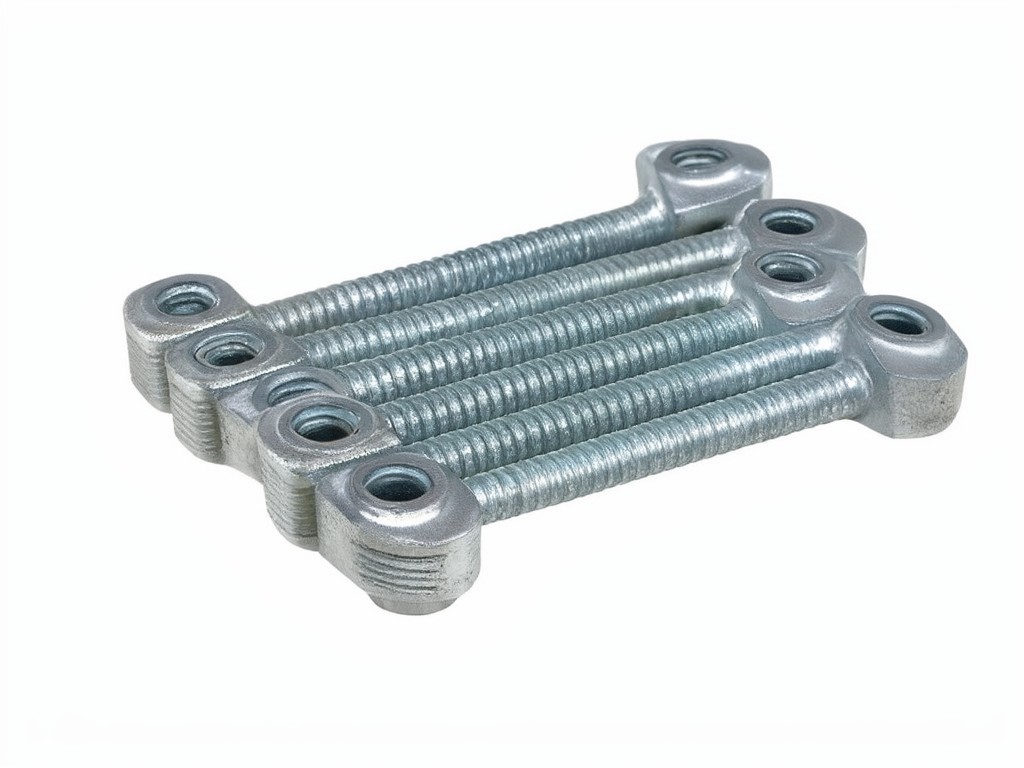
durable 16 inch long axle u bolts suppliers: Specification, Ordering and Quality Notes
Replacement rate, not unit price, sets the cost of a long axle U-bolt program. A part that stretches, corrodes through its coating, or does not match the axle and spring stack can mean repeat freight, installation labour, and a vehicle out of service. For a second source, compare the supplier’s drawing control and repeat-order capability alongside the quoted piece price.
“16 inch long” is not a complete ordering specification. Suppliers may interpret length from different datums, and axle fit also depends on rod diameter, inside width, crown shape, thread length, and the clamped stack. State the measurement reference on the drawing, identify the axle and spring arrangement, and agree on material, finish, nuts, inspection points, and packaging before a production quote is compared.
What This Product Is and Where It Fits
Axle U-bolts are formed steel fasteners used to clamp an axle to a leaf-spring pack or related suspension stack. The two threaded legs pass through the retaining plate, where nuts apply clamp load. A 16-inch leg length is typically specified for a deeper stack or a particular axle arrangement; it does not define the U-bolt’s inside width or the axle tube profile.
For supplier qualification, use a controlled drawing or approved sample with the measurement datums clearly marked. Buyers should verify the rod diameter, inside width, crown radius, usable thread length, and clearance at the plate. A mismatch in any of those details can prevent installation or change how the clamp load is carried.
Where This Product Beats Standard Alternatives
A correctly specified long U-bolt can suit a deeper axle-and-spring stack without relying on an improvised extension or a fastener with inadequate thread engagement. The value is conditional: the added length only helps when the U-bolt also matches the axle, plate, and required clamping arrangement. Surface protection matters for equipment exposed to road splash, stored outdoors, or used in wet conditions.
| Durability factor | What to specify or verify | Buyer trade-off |
|---|---|---|
| Steel grade and condition | Grade, heat-treatment condition where applicable, and mechanical requirements tied to the intended axle assembly | A higher-strength specification can raise material and process cost; it must match the assembly design rather than serve as a substitute for fit checks. |
| Protective finish | Finish type, coverage expectations, and thread fit after coating | More corrosion protection can increase cost and affect thread clearance; confirm nut fit on finished parts. |
| Dimensional repeatability | Inspection of leg length, inside width, bend symmetry, rod diameter, and thread details against the approved drawing | Dedicated gauges and setup control add qualification effort, but they reduce fit variation across repeat orders. |
Do not select a finish by appearance alone. For outdoor or road-exposed service, agree on the corrosion-protection requirement and verify that the finished threads accept the specified nuts without forced assembly.
Assumptions Buyers Should Stop Making
Fit complaints often start with a familiar phrase: “It is the same 16-inch U-bolt.” That can hide a different length datum, bend radius, or inside width. A supplier’s catalogue description is a useful search term, not a substitute for a released drawing.
- Do not assume the 16-inch dimension means the same thing across suppliers. Mark the start and end points, and state whether the dimension is measured to the leg end or thread end.
- A matching rod diameter does not confirm axle fit. Check inside width, crown profile, and clearance around the axle tube.
- A corrosion-resistant finish does not remove the need to check thread engagement, nut compatibility, and coating coverage.
- Do not transfer tightening torque from a different axle assembly. Use the vehicle or suspension maker’s installation requirement for the specific joint.
For a second-source sample, compare it against the released drawing and the current approved part. Record any accepted deviation before placing a production order; verbal confirmation is difficult to audit after a reorder.
What Can Be Customised and What Cannot
Suppliers can usually quote drawing-based changes to length, width, bend form, thread length, material, finish, and supplied hardware. The limits depend on the forming equipment, available rod sizes, thread tooling, and the supplier’s inspection method. A change to one dimension can affect the rest: for example, a thicker coating may reduce usable thread clearance, while a changed bend radius can alter the fit around the axle.
| Order variable | Customisation scope | Information needed for a firm quote |
|---|---|---|
| Dimensions and bend | Leg length, inside width, crown shape, and bend radius to drawing | Dimensioned drawing, tolerance requirements, axle profile, and measurement datums |
| Material and condition | Steel grade and any specified mechanical or heat-treatment condition | Assembly design requirement and any customer-controlled material documentation |
| Threads and finish | Thread form and length, finish choice, and compatible nuts | Thread callout, nut specification, corrosion exposure, and finished-part fit criteria |
| Packaging and identification | Bulk pack, separated hardware, carton labels, and lot identification | Order quantity, destination handling needs, label content, and traceability format |
The non-negotiable point is interface fit: the U-bolt must suit the axle, spring stack, plate, and nut arrangement. If those interfaces change, treat the item as a drawing revision rather than assuming the old tooling and inspection setup remain valid.
Usage Scenarios and Buyer Segments
Fleet maintenance distributors need repeatable fit across service orders and clear lot identification when replacement parts return with a complaint. Trailer and axle assemblers need dimensional consistency across build batches, with finish and hardware specified for the expected exposure. Importers qualifying a second source should compare sample approval time, production capacity, and packaging as well as the unit quote.
Existing Tooling, Lower Changeover Cost
For repeat orders that match a supplier’s current tooling, setup costs and approval effort may be lower. This route suits stable specifications and forecastable volume, provided the supplier confirms that the tooling matches the current drawing revision.
Dedicated Tooling, Controlled Variation
A dedicated setup can make sense when the geometry is unusual or annual volume supports the tooling charge. The buyer pays more up front, then spreads that cost across the order quantity; confirm tool ownership, maintenance responsibility, and reorder pricing in the purchase terms.
Volume affects both cost and timing. Larger releases can amortise setup and inspection costs across more pieces, but a new tool or a revised drawing can extend first-order lead time. Ask for separate timing for sample approval and repeat production, plus the supplier’s minimum order quantity for each finish.
Ordering, Tooling and Lead-Time Questions
A second-source order moves faster when the supplier receives a released drawing, a reference sample where available, target annual volume, initial order quantity, and destination requirements together. Request the tooling charge separately from the piece price, and ask how the quote changes at different volume breaks. Include finish and packaging in the quote request so they do not appear as late additions.
How Should the 16-Inch Length Be Defined?
Mark the measurement datum and endpoints on the drawing. State whether the dimension ends at the leg tip or the end of the usable thread, then give the required thread length as its own dimension.
What Should a First-Article Sample Confirm?
Check the critical dimensions, bend symmetry, thread engagement with the specified nuts, finish coverage, and fit against the axle-and-plate arrangement. Agree in advance which checks require recorded results and who signs off the sample.
How Do Tooling and Order Volume Affect the Quote?
A new bend setup or thread tooling can add non-recurring cost and time before production. Larger orders may reduce the per-piece share of setup costs, while smaller releases can carry a higher unit cost or require a minimum batch. Ask for the break-even quantities and whether the supplier stores dedicated tooling between orders.
Can the Supplier Pack Nuts with Each U-Bolt?
Yes, if the nut specification and quantity per assembly are defined. Confirm whether hardware is bagged with each part or packed in bulk, and specify carton labels and lot identification for receiving and traceability.
For a sample request, send the drawing revision, annual demand estimate, first-order quantity, finish requirement, and axle application. Request a sample and supplier review before committing production volume.