


Durable m10x1 25 countersunk bolt - Bulk Supply and Specification Guide
Returns usually trace back to the same weak point: a bolt that does not seat flush, match the mating thread, or retain its finish in the service environment. For OEM and private-label buyers, those issues can cost more in replacements and warranty handling than a small difference in unit price.
What This Product Is and Where It Fits
An M10×1.25 countersunk bolt is a metric fastener with a 10 mm nominal thread diameter, a 1.25 mm pitch, and a head intended to sit within a matching countersink. It suits assemblies where a projecting head could interfere with movement, handling, or a flush exterior surface.
Confirm the head angle, drive recess, overall length, and mating-thread specification against the assembly drawing before ordering. Countersunk fastener dimensions vary by design; a correct thread alone does not guarantee a flush fit.
Design Constraints Behind the Specification
Repeated returns often point to a mismatch between the fastener and its joint: the bolt sits proud, the head bears unevenly, or exposed surfaces show corrosion sooner than expected. The controls below help procurement teams specify a repeatable configuration for each service condition.
| Joint or Service Condition | Likely Complaint | Specification Control |
|---|---|---|
| Countersunk joint with a flush-face requirement | Head stands proud or pulls below the surface | Specify head angle and head dimensions to match the seat; approve a sample in the actual joint. |
| Mating part tapped M10×1.25 | Cross-threading, binding, or excess assembly rework | State M10×1.25 explicitly and verify thread fit with the agreed gauges and mating-part sample. |
| Outdoor equipment exposed to rain or washdown | Finish deterioration or corrosion at the exposed head | Choose a finish for the actual exposure and set a sample-approval criterion for appearance and coverage. |
| Repeat OEM or private-label production lots | Head, length, or finish variation between replenishment orders | Lock the drawing revision, measurement points, finish description, and approved sample for reorder checks. |
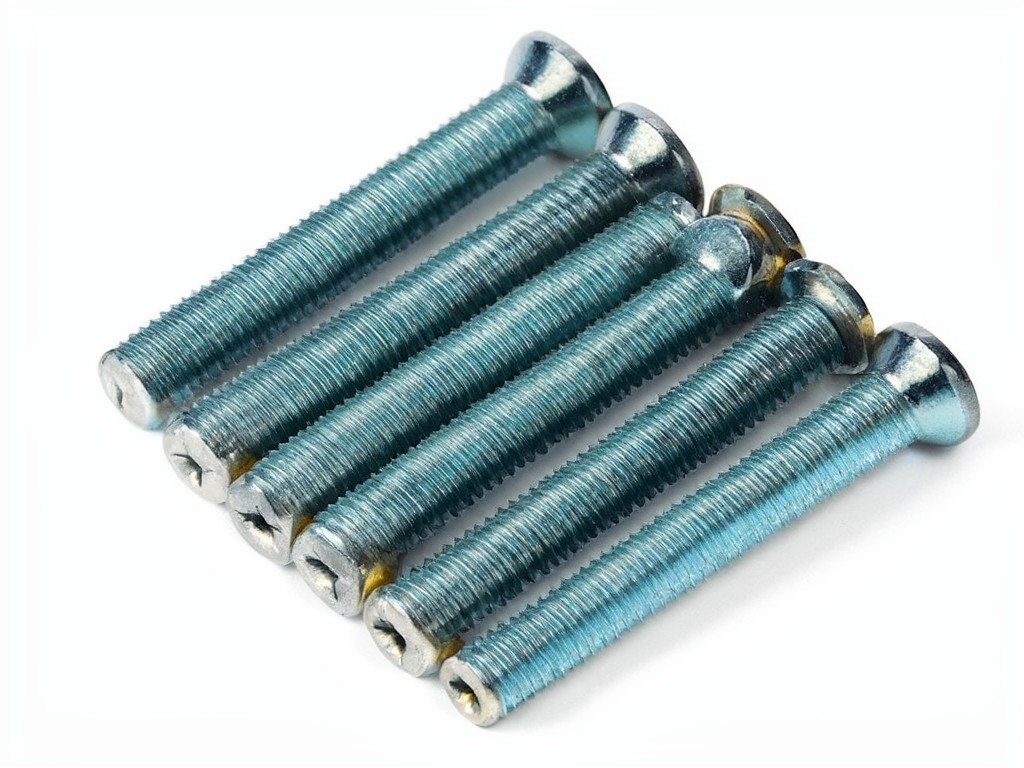
Length convention matters for countersunk hardware: confirm whether the drawing measures overall length, including the head. Torque should come from the joint design and account for the selected finish and assembly conditions, not from a generic bolt value.
Who Uses It and Where It Matters
Equipment makers use flush-head fasteners on guards, access panels, brackets, and housings where a raised head could catch on adjacent parts or obstruct cleaning. Distributors and private-label buyers need the same fit and finish across replenishment lots, since a small mismatch can trigger line-side sorting or field replacement.
- For moving assemblies, match head profile and drive recess to clearance and tool access; the countersink must support the head evenly.
- For outdoor frames and service equipment, specify a finish suited to moisture and cleaning exposure. No finish should be treated as a substitute for checking the actual environment.
- For branded product programs, keep the drawing revision and approved reference sample tied to each order so reorder checks use the same acceptance basis.
The lowest purchase price is not always the lowest cost per unit sold. A modest price difference can be justified if it reduces assembly stoppages, customer complaints, and warranty replacements over the product’s service period.
What Gets Checked Before Shipment
Batch consistency depends on a clear drawing and repeatable inspection points. A shipment check should cover the thread designation and fit, overall length, head dimensions, drive recess, and visible finish condition against the approved specification.
Acceptance rule: approve the first sample in the mating part, then use the same drawing revision, gauge approach, and visual criteria for production-lot checks. A thread-fit check cannot confirm countersink seating by itself.
For private-label programs, agree on the sampling plan and records before the first bulk order. Ask the supplier to flag any proposed change to dimensions, finish, or inspection method; an undocumented substitution can create a mismatch even when the part number stays the same.
Setup, Use and Replacement Parts
During assembly, keep the tapped hole and countersink free of debris, start the bolt by hand, and stop if thread engagement feels uneven. Use the specified tool and joint torque; excessive force can damage the drive recess or mating thread, while an under-tightened joint may loosen in service.
Replace bolts with damaged threads, deformed heads, rounded drive recesses, or visible corrosion that conflicts with the service requirement. For repeat maintenance orders, identify replacements by the complete specification—not only “M10”—and confirm pitch, length convention, head geometry, and finish.
Request a Specification Review
Send the drawing, target finish, annual volume, and mating-part details for a review of fit controls and batch acceptance points. Discuss your M10×1.25 countersunk bolt specification.