


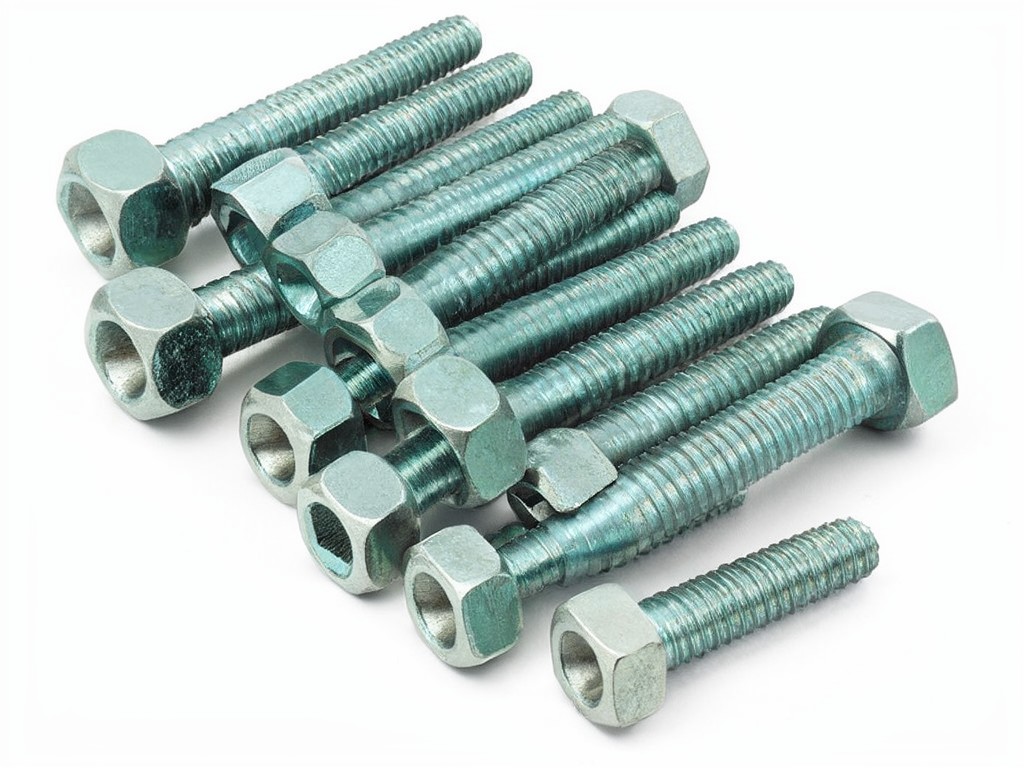
Factory Direct 3 8 16 flange hex bolts Factory - Bulk Supply and Specification Guide
Material choice starts with the conditions the product will meet. For M3, M8, and M16 flange hex bolts, the decision isn't about which steel looks better under a microscope; it is about where the gasket surface contacts the sub-frame, whether the vibration amplitude exceeds 20 Hz, and if the thread engagement length falls below 1.5 times the nominal diameter. If the bolt sits in a high-vibration chassis rail, a standard hex head without an integrated washer will lose preload within 500 hours due to fretting on the bearing surface. The flange geometry eliminates the need for a separate spring washer, reducing part count and assembly time, but only if the washer face is flatness-verified to 0.02 mm or less.
Cost and durability pull in opposite directions once you move from general-purpose hardware to precision fastening. A standard A2 stainless flange bolt costs 30-40% less than an A4 grade equivalent, but A2 suffers from pitting in coastal or de-icing salt environments. For a bulk buyer managing warranty claims, the 10-15% price premium for A4 316 stainless is often recovered by the first return cycle. The trade-off is clear: if the service environment involves chloride exposure or temperatures above 150°C, A2 is not a viable option regardless of the unit price advantage.
Construction Method and Its Effect on Consistency
Cold Forging
Grain flow follows the part geometry, increasing shear strength by 15-20% compared to hot forging. The flange face is integrated during the upset operation, ensuring perfect concentricity between the washer face and the hex head.
Ideal for M3-M12 ranges. Tolerance on the washer face is typically held to ±0.05 mm without secondary machining.
Hot Forging
Required for M16 and larger diameters where cold forging would cause excessive die wear or cracking. The grain structure is coarser, requiring subsequent machining to achieve tight tolerances on the flange face.
Higher energy input allows for more complex geometries but increases surface roughness, necessitating a deburring and polishing step.
Construction options diverge as soon as weight matters. For M16 bolts used in heavy structural applications, the mass of the flange itself contributes to the overall torque requirement. If the flange is too thick, it adds unnecessary weight to the assembly; if too thin, it risks plastic deformation under high clamp loads. The manufacturing process must balance these variables. Cold forging M16 bolts is technically possible but economically unviable for standard volumes due to die costs and material flow limitations. Hot forging provides the volume efficiency, but the buyer must accept that the flange face will undergo a finishing operation (grinding or turning) to remove scale and ensure flatness. This secondary step adds 0.03-0.05 mm to the cost per unit but is non-negotiable for consistent clamping force.
Where This Product Beats Standard Alternatives
Standard hex bolts require separate washers, which introduce two failure points: the washer can shift during installation, and the gap between the washer and the head creates a stress riser under vibration. Flange hex bolts eliminate this gap. The integrated washer face has a larger bearing area (typically 1.5 to 2 times the bolt head area), distributing the clamp load more evenly. This reduces the likelihood of indentation on the joint surface, particularly on softer materials like aluminum or composite panels. In automotive underbody applications, this means fewer corrosion pockets where trapped moisture would otherwise accumulate in the washer gap.
Critical Specification Rule: If your assembly uses a torque-to-yield (TTY) fastening procedure, the flange face flatness is more critical than the thread class. A warped flange face of >0.1 mm will cause uneven clamping, leading to premature fatigue failure at the thread root. Verify that the factory provides a flatness report using a surface plate and feeler gauges, not just visual inspection.
The "comfort and feel" aspect of a flange bolt is not tactile in the human sense, but refers to the consistency of the torque application. A standard bolt with a separate washer can feel "loose" during initial tightening as the washer seats. The flange bolt provides a solid, predictable stop. For assembly line workers, this translates to fewer re-tightens and reduced cycle time. For the end-user, it means a stiffer joint that does not rattle or loosen over time. This perceived quality is often the difference between a product that feels "industrial" and one that feels "precision-engineered."
How to Choose Before Requesting a Quote
| Parameter | M3 Range | M8 Range | M16 Range |
|---|---|---|---|
| Material Options | A2, A4, Grade 8.8 | A2, A4, Grade 8.8, 10.9 | A4, Grade 8.8, 10.9, 12.9 |
| Flange Type | Plain, Nub (with anti-rotation) | Plain, Nub, Washer-Integrated | Plain, Washer-Integrated |
| Typical Lead Time | 7-10 Days (Stock) | 15-20 Days (Custom) | 25-35 Days (Custom) |
| MOQ (Standard) | 5,000 pcs | 2,000 pcs | 500 pcs |
| Key Inspection Point | Thread Run-Out (2x pitch) | Flange Face Flatness | Hardness & Proof Load |
The selection process must align the mechanical requirements with the logistical reality. If you are importing M16 bolts for a heavy machinery project, the lead time of 25-35 days is standard for custom forging and heat treatment. Do not attempt to compress this timeline without risking the hardness profile. A rushed heat treatment cycle can result in a bolt that meets the tensile strength spec but fails the impact test. The proof load test is the non-negotiable gatekeeper. For Grade 8.8 M16 bolts, the proof load is typically 178 kN. If the factory cannot demonstrate 100% or statistical process control (SPC) on this parameter, the risk of field failure is too high for critical structural applications.
Requirements by Buyer Segment
- Automotive Tier-1 Suppliers: Require full material traceability (mill certs) and lot-specific inspection reports. The flange face must be free of scale and pits, which can act as corrosion initiators. Coating adhesion is tested via cross-hatch or salt spray (typically 480-960 hours depending on the specification).
- Construction & Infrastructure: Focus on cost per unit and bulk availability. A2 stainless is acceptable for interior structural work, but A4 is preferred for exterior exposure. Tolerances are generally looser (±0.1 mm on flange face) to reduce manufacturing costs, provided the clamp load is sufficient.
- Electronics & Precision Equipment: Require consistent plating thickness (e.g., 5-8 microns for zinc-nickel) to ensure electrical conductivity and corrosion resistance. The thread must be free of burrs to prevent short circuits in sensitive assemblies. Dimensional consistency is critical for automated insertion systems.
Each segment has a different threshold for acceptable variance. An electronics buyer will reject a lot for a 0.02 mm deviation in thread depth, while a construction buyer may not notice it. The factory must understand which segment you serve to apply the correct inspection intensity. Misaligning the inspection protocol leads to either over-inspection (wasted cost) or under-inspection (warranty claims).
OEM and ODM Programme Structure
OEM (Original Equipment Manufacturer) programs for flange bolts focus on customization of the head and flange geometry. This can include adding a logo, changing the flange profile to a square or oval shape for specific grip patterns, or modifying the nub height for anti-rotation features. The tooling cost for custom dies is typically amortized over the first 50,000-100,000 units. For lower volumes, a standard die with secondary machining (engraving or stamping) is a more cost-effective route.
ODM (Original Design Manufacturer) programs go further, allowing the buyer to specify the material grade, coating type, and even the heat treatment process. This is common for proprietary fasteners used in patent-protected assemblies. The factory acts as a development partner, providing DFM (Design for Manufacturability) feedback. For example, if the design calls for a flange face radius that is too small, the factory will advise on the minimum radius required to prevent stress concentration during forging. This collaborative approach reduces the risk of design-induced failures and accelerates the time to market.
Total Cost of Ownership (TCO) Note: A $0.05 reduction in unit price for a standard bolt can be negated by a 1% increase in returns due to corrosion or loosening. For a 10,000-unit order, the warranty cost for 100 returned units (including shipping, labor, and replacement) far exceeds the $500 savings. Prioritize consistency and material integrity over marginal price differences.
Sample Request and Next Steps
Before committing to a bulk order, request a physical sample batch of 50-100 units covering the critical sizes (M3, M8, M16) and the specific material/coating combination you intend to use. Verify the thread fit using a go/no-go gauge, check the flange face flatness with a surface plate, and inspect the coating for any pinholes or blistering. This small investment prevents costly mistakes in the production run.
To initiate the sample request and discuss your specific specifications, contact our technical sales team. Provide the detailed drawings, material requirements, and estimated annual volume to receive a formal quotation and lead time schedule.