


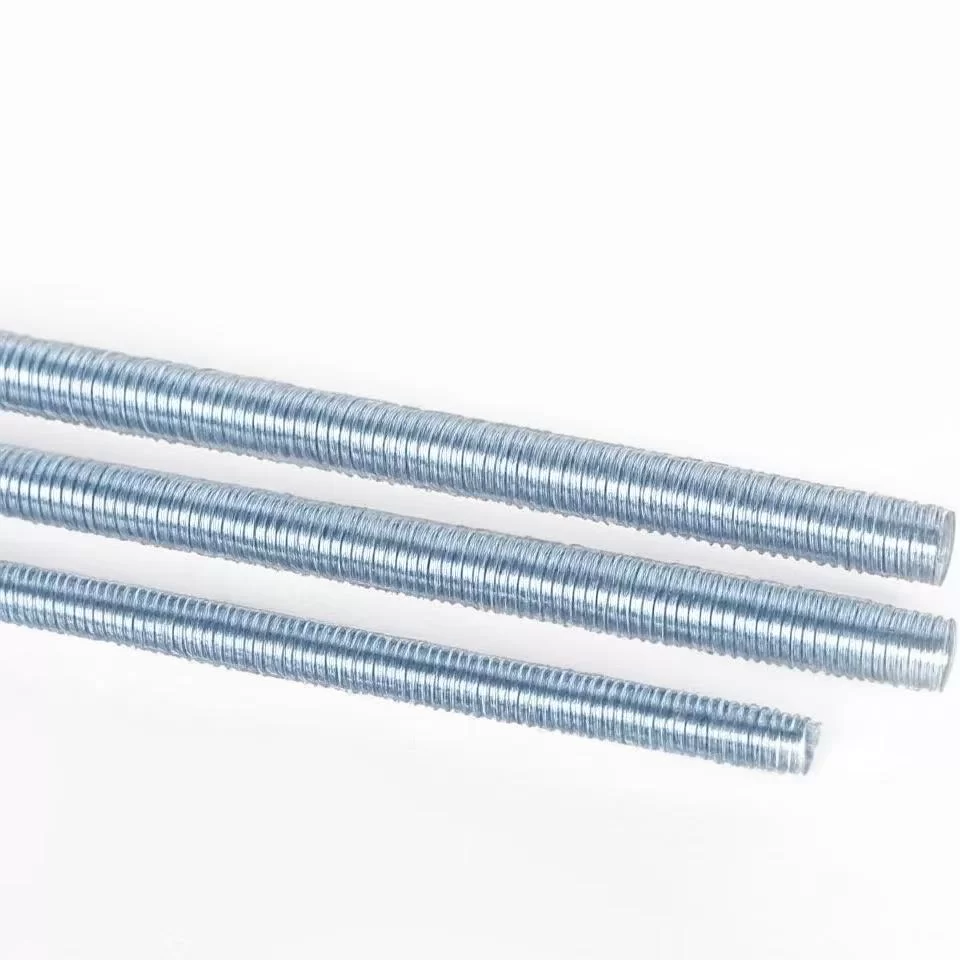
Threaded Rod Overview
Threaded rod is a fastening product for applications that call for a continuous threaded length to connect, secure, or support components. Its threaded form provides a point of engagement along the rod, allowing compatible fastening components to be positioned where the installation requires them. This can be useful in assemblies where a conventional bolt’s fixed head or limited threaded length does not suit the connection layout.
The range listed here covers sizes from M2-M64. That broad selection gives purchasers options to review against the requirements of their own project, assembly, or replacement need. Confirm the intended size, applicable standard, material, and surface treatment before ordering so the selected threaded rod is appropriate for the planned use. The product information provided identifies available specifications and purchasing details; it does not assign a particular size or material to a specific application.
In practical use, threaded rod may be considered for joining or supporting parts in a variety of installations where a threaded connection is required. The continuous threaded profile can help installers determine the engagement point and accommodate a connection arrangement that calls for a longer threaded fastener. The precise installation method and associated hardware depend on the design of the assembly and should be selected by the purchaser or project team.
Specifications, Materials, and Standards
The specification sheet lists the following size range and standards. Reviewing the required standard as part of the selection process helps buyers communicate the intended product requirements clearly and compare the rod with the needs of their assembly.
- Size: M2-M64
- Standard: ISO, DIN, ANSI, ASME, ASTM, BS, AS, JIS
- Material: Q235, 35K, 45K, 40Cr, B7, 20MnTiB, A2, and A4 carbon steel threaded rods and stainless steel threaded rods
The listed material choices include carbon steel threaded rods and stainless steel threaded rods. Because the appropriate material depends on the intended service conditions and project requirements, buyers should specify the material they need when requesting or placing an order. The listed standards are provided as specification options; confirm which standard applies to the required product rather than assuming every rod meets every listed standard.
The surface options shown are black, zinc plated, YZP, or according to customers' requirement. Surface selection is an important part of defining the requested product, so include the preferred finish or customer requirement in the enquiry. This makes the requested configuration clearer for review alongside size, material, and standard.
Application and Selection Considerations
For a dependable fit within an assembly, start by identifying the threaded rod size required by the design and the standard specified for the application. Then consider which listed material and surface option suit the project’s stated requirements. Providing these details together can help reduce uncertainty during product enquiries and make it easier to check that the requested rod matches the intended connection.
A threaded rod can be useful when a connection needs threaded engagement across a length rather than only at one end. Depending on the assembly design, it may be used to connect parts, position components, or form part of a support arrangement. These are general examples of how threaded rods can be applied; the product information does not specify a particular installation, load capacity, or compatibility with other components. Confirm those details through the project design and the relevant technical requirements.
Before installation, check the received product against the order details, including size, standard, material, and surface treatment. During use, maintain the assembly in accordance with its design and inspect the connection when required by the applicable maintenance practice. Keeping the rod and its mating components in suitable condition helps support orderly assembly and ongoing servicing, without substituting for project-specific engineering guidance.
Factory Supply, Samples, and Ordering
Factory: YES. The specification sheet identifies factory supply. For purchasing enquiries, provide the required size, applicable standard, material, and surface choice so the requested configuration can be understood clearly. If the surface should follow a customer requirement, state that requirement with the enquiry rather than relying on an unspecified finish.
Samples: din 975 din 976 samples are free. Sample enquiries may be useful when reviewing the referenced sample types before proceeding with an order. Confirm the details needed for the sample request with the supplier so that the request corresponds to the intended specification.
MOQ: 1000PCS. This minimum order quantity is relevant when planning purchasing requirements and should be considered when estimating order volume. The stated packing options are ctn, plt or according to customer's requirements. Buyers can identify their preferred packing arrangement when discussing an order, while ensuring that the required product specification is also clearly stated.
For product questions and order enquiries, contact Email: [email protected]. Include the required size, standard, material, surface option, quantity, and packing preference where applicable. Clear details help organize the enquiry and allow the requested threaded rod to be reviewed against the information on this specification sheet.