


Wholesale trailer u bolts for sale: Specification, Ordering and Quality Notes
The interface between axle, spring pack and clamp plate determines whether a trailer U-bolt seats evenly and holds the intended assembly geometry. For a wholesale order, nominal diameter alone is not a usable specification: inside width, leg length, thread, bend profile, material grade and finish all affect fit. A second source should be qualified against a controlled drawing or an approved physical sample, not a catalogue description that leaves those dimensions open.
Deflection under load governs how the fastener and clamped parts behave in service, while weather exposure affects the finish and maintenance interval. Differences in bar diameter, bend symmetry or thread length can change installation and assembly pressure from lot to lot. Those variations may turn into fit complaints, rework, returns or delayed reorders, so incoming checks need to compare each shipment with the approved specification.
Scope of Supply and Physical Form
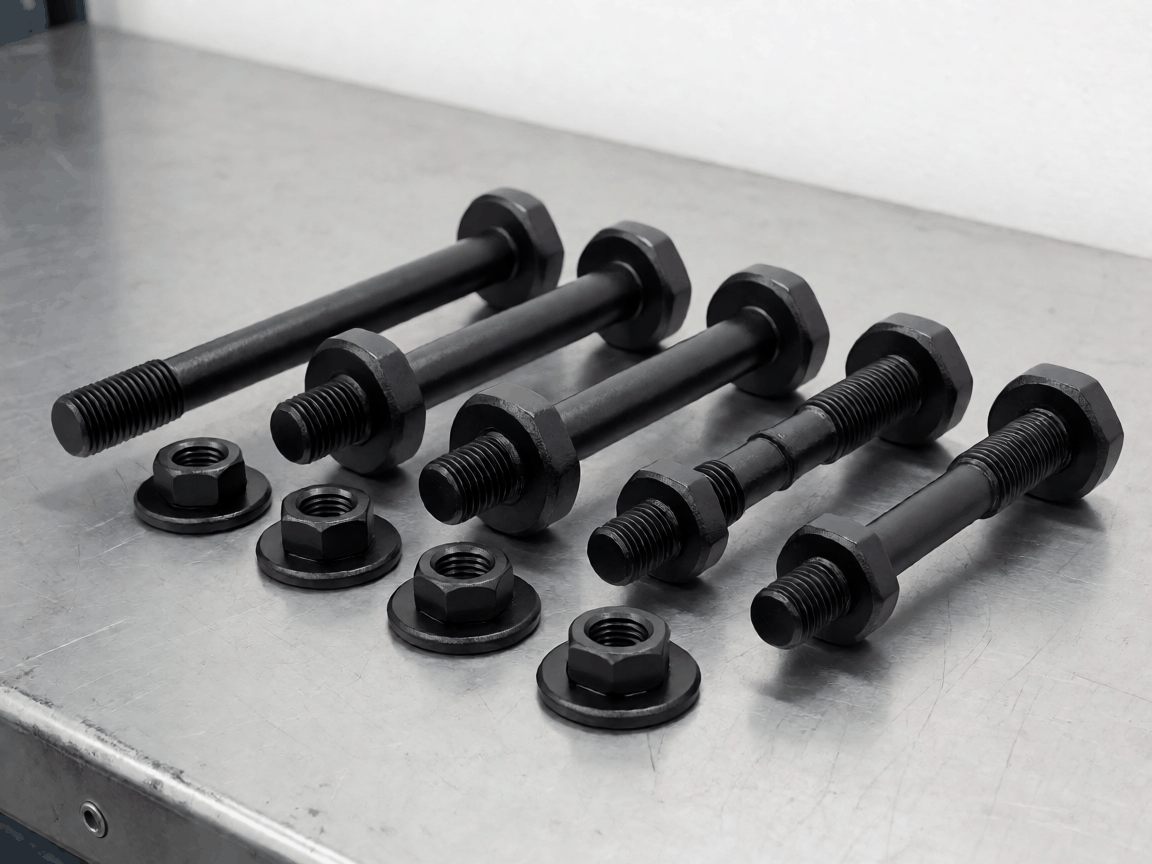
Trailer U-bolts are formed steel fasteners with two threaded legs, supplied to clamp an axle or related trailer assembly against a spring pack or mounting plate. Buyers commonly source the U-bolts with matching nuts and washers, but the mating hardware and pack quantity should be stated on the purchase order. Round and square bends are not interchangeable; the bend must match the axle or component profile and the approved drawing.
| Construction option | Typical supply choice | Buyer specification point |
|---|---|---|
| Carbon steel with zinc coating | A common choice for general trailer service and controlled exposure. | Specify coating type, appearance, coverage and compatible nut finish. |
| Carbon steel with hot-dip galvanized coating | Consider for wetter or more corrosive service where the coating build is suitable. | Account for coating thickness at the threads and confirm nut fit before release. |
| Stainless steel | A possible choice for specific corrosion environments and assembly requirements. | Name the grade and verify strength, thread pairing and galling considerations. |
A production route may include bar cutting, forming, thread production and surface treatment. The suitable method depends on the diameter, material and drawing requirements. Order documentation should identify bar diameter, inside width, inside length, thread size and length, bend form, material, finish and hardware. Treat the drawing revision as part of the specification; an unchanged part description does not guarantee unchanged dimensions across suppliers.
Design Constraints Behind the Specification
Trailer assemblies vary in axle profile, spring-pack thickness, clamp-plate geometry and the available thread engagement. Set inside width from the mating part, then confirm leg length against the full clamped stack and specified hardware. A U-bolt that is too narrow may not seat correctly; one that is too wide can shift against the plate. Short legs can leave insufficient thread engagement, while excess thread can interfere with surrounding parts.
For a second-source review, compare measured samples across more than one production lot. Check bar diameter, inside dimensions, leg parallelism, bend symmetry, thread condition and finish appearance. The buyer should also agree on measurement points and acceptance limits before production. Without that agreement, a supplier may meet its own process target while the received parts vary enough to create assembly issues.
Specification control: Keep the drawing, finish description, hardware pairing and approved sample aligned. A change to material or coating can alter thread fit and surface appearance, so require buyer review before a substitute enters production.
Assumptions Buyers Should Stop Making
Returns often start with an assumption that two parts are equivalent because their nominal diameter or finish colour looks the same. That shortcut misses geometry, coating build and lot variation. Use the comparison below when qualifying a replacement source.
Same Diameter Does Not Mean Same Fit
Inside width, bend radius, leg length and thread details govern fit at the assembly. Specify these dimensions separately and inspect them against a drawing or approved sample.
Similar Finish Colour Does Not Prove Equal Coverage
Visual colour can vary between coating batches and does not establish coating type or coverage. Set the finish requirement and check appearance consistently across samples and incoming lots.
Do not treat a general corrosion-resistant description as a service-life guarantee. Moisture, road salts, storage conditions and contact with dissimilar materials affect corrosion behaviour. Select the finish against the actual service environment, then confirm the nut and thread combination before a bulk release.
OEM and ODM Programme Structure
A second-source programme works best when the buyer defines service conditions before selecting a construction. “Light,” “regular” and “severe” describe purchasing context here, not certified load classes or a substitute for the vehicle or axle maker’s requirements. Share the assembly drawing, target volumes, finish expectations and inspection needs during quotation review.
| Buyer-defined use level | Typical operating context | Programme focus |
|---|---|---|
| Light or occasional use | Intermittent trailer use with limited exposure to wet or corrosive conditions. | Confirm assembly fit, finish needs and stock pack configuration. |
| Regular commercial use | Frequent road use with routine inspection and replacement planning. | Control dimensional consistency by lot and document approved finish and hardware. |
| Severe exposure or frequent service | Repeated exposure to moisture, road contaminants or frequent maintenance cycles. | Review material and coating compatibility, sample approval and replacement policy. |
OEM work can follow a buyer drawing, while ODM development can begin from assembly dimensions and a defined application. For either route, agree on first-article approval, revision control, lot identification and packaging before the production order. Packaging should protect threads and finished surfaces during export transit; label details can include part number, quantity, lot reference and buyer-specific marks.
Setup, Use and Replacement Parts
During installation, follow the vehicle or axle maker’s assembly procedure and torque requirements. A supplier should not replace those instructions with a generic torque value. Check that the U-bolt sits squarely, that threads engage correctly with the specified nuts and that the clamp plate fits the assembly. Do not use a fastener with damaged threads, a distorted bend or visible coating damage that affects the intended application.
- Inspect exposed surfaces and threads during scheduled trailer maintenance, with added attention after service in wet or salt-exposed conditions.
- Replace U-bolts when the equipment maker calls for replacement or when inspection finds deformation, corrosion damage or thread wear. Follow the maker’s guidance after loosening or removal.
- Order nuts and washers as a matched hardware set where the assembly specification requires them; do not assume a visually similar nut has the correct thread or finish.
- Keep replacement stock under the same drawing revision and finish description as the original approved part to reduce fit variation across service orders.
For a specification review, send the drawing or sample details, expected order volume, service environment, preferred finish and hardware requirements. Request a trailer U-bolt specification review before approving a second source or releasing a production order.