


Specifying china pipe saddle curved washers exporter for Wholesale and OEM Orders
For pipe-support assemblies with a fixed launch date, lock the washer radius, thickness, hole position and finish before confirming production. A lower-cost material or coating can change springback, fit and finished dimensions; the right choice is the one that holds the approved assembly fit across the full order.
When an OEM buyer schedules a pipe saddle assembly for a customer launch, a curved washer that arrives late or no longer matches the approved sample can hold up packing and installation. The part may look simple, but radius and hole alignment affect how it seats against the saddle and shares clamp load. Set a signed-off dimensional sample and a finish specification before releasing the production quantity.
What Actually Determines Performance
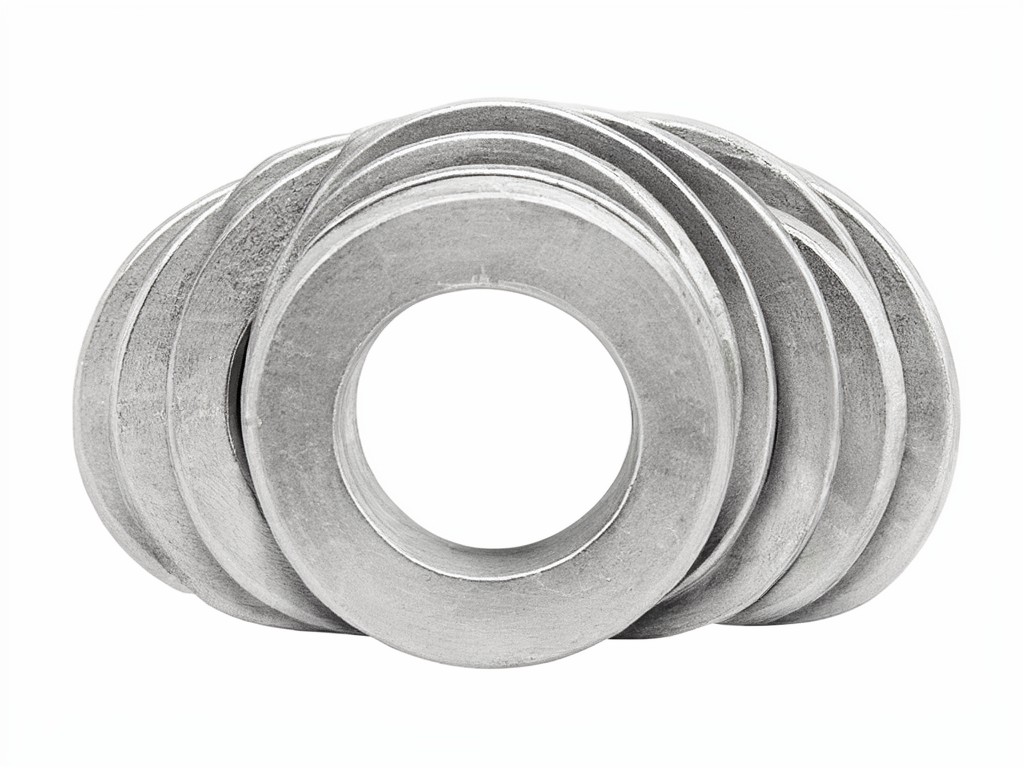
A pipe saddle curved washer is typically blanked from sheet and formed to a specified arc, with one or more punched holes for the assembly fastener. Its curved face supports contact with the pipe saddle or mating surface; the fastener then applies the intended clamping force through the joined components. If the radius is too shallow or too tight, contact can concentrate near an edge rather than spread across the intended bearing area.
Springback varies with material grade, thickness, blank direction and forming setup. A small change can shift the arc or hole-to-edge relationship, so parts from separate lots may sit differently even when their outline appears similar. Specify the measured radius or mating profile, thickness, overall dimensions, hole diameter and hole location; approve the part against the actual saddle and fastener stack.
Burr direction and edge condition also matter at assembly. A sharp edge can interfere with seating or damage a coating on an adjacent component. Agree on the deburring approach and the acceptable contact face before sampling, then use those same reference points for repeat-order checks.
Material Options and Their Trade-offs
Material selection sets the balance between forming behaviour, corrosion exposure, part cost and dimensional repeatability. Carbon steel is often the economical choice for indoor or coated assemblies; stainless steel can suit wet or corrosive service, but its grade and forming response need confirmation against the design. Do not substitute by nominal thickness alone: material condition can affect springback and the final curved profile.
| Option | Production and service considerations | Buyer decision point |
|---|---|---|
| Carbon steel sheet | Usually offers a cost-effective route for stamped and formed parts. Corrosion protection depends on the selected finish and the assembly environment. | Confirm required coating, exposure and the dimensional allowance for the finish. |
| Stainless steel sheet | Can reduce reliance on a separate protective coating in suitable service. Grade availability, material cost and forming response affect the quote and tooling setup. | Name the required grade and service conditions; approve the formed profile using production-intent material. |
| Thickness and temper | Changes in thickness or material condition can alter forming force, springback and stack height. | Treat any material or thickness change as a design revision, not a silent purchasing substitution. |
A lower-cost sheet grade can reduce piece price, but a changed forming response may require setup adjustments or a new sample approval. For repeat orders, keep the material description, thickness tolerance and approved finish tied to the drawing revision. That gives purchasing a clear basis for comparing quotes without accepting an unapproved change.
How to Choose Before Requesting a Quote
Start with the mating pipe saddle and fastener, not a generic washer size. Provide a drawing or sample that identifies the curved contact face, arc or radius, overall length and width, thickness, hole count, hole diameter and hole spacing. If the washer must sit flush against a particular saddle profile, include that mating part or its controlled dimensions.
Choose for Fit and Load Path
Where contact with the saddle controls assembly fit, prioritize the curved profile, bearing width and fastener position. Confirm the washer in the assembled stack before approving a production quantity.
Choose for Exposure and Reorder Control
Where corrosion exposure drives the specification, decide material and finish together. Record the approved surface appearance and any coating coverage requirement so replenishment lots match the original assembly.
For a priceable request, state annual demand, first-order quantity, target ship date, packaging method and whether tooling ownership or dedicated tooling is required. Mark critical dimensions on the drawing rather than relying on a general note. Clear inputs reduce quote revisions and make the production sample a useful reference for later lots.
Assumptions Buyers Should Stop Making
A washer that looks close to the sample is not necessarily interchangeable. A radius mismatch can produce edge contact, while a small hole-position shift can pull the fastener off-centre. Use defined dimensions and an assembly-fit approval instead of visual comparison alone.
The same drawing does not guarantee the same result if material thickness, finish or forming sequence changes. Coating can add thickness at contact surfaces, and a material substitution can change springback. Keep the approved material and finish fixed unless engineering accepts a revised sample.
Finally, do not assume that a repeat order can start from the last invoice alone. Confirm the drawing revision, quantity, packaging and ship window each time. That check helps avoid mixed revisions and schedule pressure at the point of dispatch.
OEM and ODM Programme Structure
For OEM production, the buyer normally supplies the drawing, material and finish requirements, and the supplier quotes against the agreed revision. ODM support can begin with a sample or assembly reference when the buyer needs help converting a fit requirement into a manufacturable formed profile. In either route, the approved sample should identify the material, finish, critical dimensions and revision used for production release.
Stamping and forming tools need setup and validation before volume production. Existing tooling may lower initial cost when it matches the profile and tolerances; dedicated tooling gives more control over a new geometry but adds tooling cost and approval time. Confirm tooling scope, ownership, maintenance responsibility and sample charges in the quotation.
Finish and Colour Options
Finish selection affects corrosion protection, appearance and fit at the contact surface. The available route depends on material, coating thickness, order volume and destination requirements; approve a representative sample before locking bulk production.
| Finish route | Appearance and fit notes | Useful specification detail |
|---|---|---|
| Zinc coating | Can be supplied in clear, blue-toned or other agreed appearances, subject to the coating route. Coating build may affect close-fitting dimensions. | Name the required appearance and identify any surfaces where coating build is restricted. |
| Hot-dip galvanizing | A thicker protective coating may suit the specified exposure, but can change fit at holes and bearing faces. | Confirm dimensional allowances and whether the mating parts are designed for the coating build. |
| Plain or oiled surface | Avoids a specified decorative coating, but does not provide the same corrosion protection as a selected coating system. | State storage, transit and subsequent treatment requirements before packing is agreed. |
Volume Planning and Lead Time
Moving from sample orders to container loads changes the planning problem: material procurement, forming setup, coating capacity and export packing all need to align with the ship window. A repeat part with approved tooling can shorten preparation, but it does not remove the time needed for material allocation and finish processing. Request a schedule against the actual quantity and destination rather than applying a sample-order estimate to bulk production.
Lot-to-lot drift costs buyers through re-sorting, assembly interruptions and replacement shipments. Keep a retained approved sample or controlled drawing revision, and ask the supplier to identify lots by production batch. If multiple deliveries are planned, agree whether each shipment must match one finish batch or may use separate, documented lots.
Set the order schedule around approval gates: drawing confirmation, production sample acceptance, quantity release and export packing. A late change to radius, material or finish can reset tooling or processing plans. Freeze those inputs before the production slot if the launch date cannot move.
Ordering, Tooling and Lead-Time Questions
Which dimensions should the drawing control?
Show the curved profile or radius, sheet thickness, overall dimensions, hole size and position, edge condition, material and finish. Mark critical dimensions and provide the mating saddle or assembly reference where fit depends on the full stack.
Can existing tooling be used for a new order?
Possibly, if the tool matches the current drawing revision, material thickness and required forming profile. Ask for a tooling review before quoting; a changed radius or hole layout may require modification or new tooling, followed by a revised sample approval.
What sets the order quantity and production timing?
Material purchasing, tooling setup, coating batch requirements and packing format all affect the practical order plan. Provide the target quantity, sample-approval date and required ship date so the quote can distinguish sample, tooling and production stages instead of relying on a generic lead-time estimate.
How should export packing protect finish and count accuracy?
Agree the unit quantity per inner pack, outer-carton count, protection against surface rubbing and the label information before production packing. For scheduled releases, confirm whether cartons need batch or part-revision identification to support receiving and replenishment control.
For a project discussion, send the part drawing or sample, mating saddle details, material and finish preference, forecast quantity, and required ship window. These inputs allow the quotation to address tooling, sampling and repeat-lot controls before the launch schedule is committed.