


Custom 3 8 galvanized flat washers Wholesale - Bulk Supply and Specification Guide
Choose the zinc finish around the service environment, then confirm washer dimensions against the fastener and mating surface. Electrogalvanized washers suit tighter dimensional control and milder exposure; hot-dip galvanizing adds more zinc for outdoor exposure, but its coating build can affect bore and face fit.
The build method decides whether a 3/8-inch flat washer arrives with a predictable bore and a finish that matches its use. Washers are typically stamped from steel strip, deburred, then galvanized; the coating choice and its build on the edges can change how readily the washer seats around a fastener. Confirm the drawing, finish, and sample before committing a launch quantity.
Where Cheaper Alternatives Fall Short
A low-priced washer can disappoint first at the bore, the bearing face, or the coating edge. A bore that runs tight slows assembly or binds on a 3/8-inch fastener; a thin, uneven washer can dish under tightening and leave an inconsistent contact area. If zinc coverage is light at cut edges or damaged during bulk packing, corrosion marks may show before the rest of the hardware wears out.
The practical trade-off is not simply a thicker washer or more zinc. Match thickness and outside diameter to the clamp load and bearing surface, then select a coating suited to the exposure. For retail or private-label packs, a signed-off sample also reduces the chance that a late dimensional change delays packing and dispatch.
Design Constraints Behind the Specification
Process choice shows up later as fit, seating, and coating consistency. Stamping sets the washer’s basic profile, while deburring affects edge condition and how the part sits against the joint. Galvanizing after forming protects the newly cut edges, but coating buildup can narrow a close-fitting bore or leave a less even face than a thinner electrogalvanized finish.
A wider outside diameter spreads contact over more surface, but it also takes more material and may interfere with nearby features. Greater thickness resists dishing in demanding joints, at a higher unit weight and material cost. Set these dimensions from the actual assembly rather than treating “3/8” as a complete washer specification.
Specification Range and Customisation Limits
The dimensions below are a quoting guide for custom parts, not a substitute for a controlled drawing. Actual bore clearance depends on the fastener, finish build, and assembly method; weight changes with every change in diameter or thickness.
| Parameter | Typical custom range or basis | Specification note |
|---|---|---|
| Nominal fastener size | 3/8 inch | Confirm the required finished bore, including clearance for the selected coating. |
| Inside diameter | Typically about 10.3–11.0 mm | Set from fastener clearance and finish thickness, not nominal size alone. |
| Outside diameter | Typically about 16–32 mm | Select for bearing area and available clearance around the joint. |
| Thickness and piece weight | Typically about 1.2–3.0 mm; roughly 1.5–20 g per piece across the size range above | Weight is an estimate; confirm from the approved dimensions and material. |
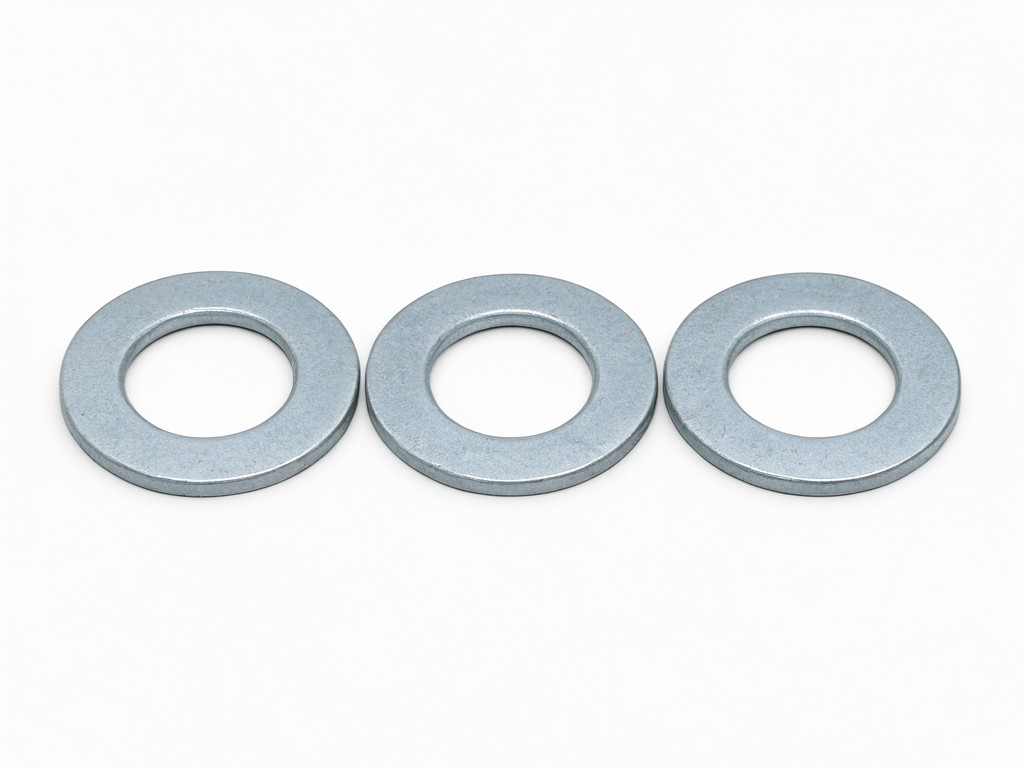
Custom outside diameter, thickness, edge condition, finish, and retail pack format can be quoted from a drawing or approved sample. Close tolerances and small bores need early review with the selected galvanizing route, since coating buildup can limit the usable fit.
Comparing Two Standard Configurations
Finish selection is a balance between weather exposure, dimensional fit, and purchase cost. The comparison below is a starting point; the intended environment and drawing determine the final specification.
| Selection point | Electrogalvanized steel | Hot-dip galvanized steel |
|---|---|---|
| Coating build and fit | Thinner coating generally makes bore and face fit easier to control. | Greater coating buildup can narrow the bore or affect seating; allow for it in the drawing. |
| Weather exposure | A practical choice for indoor use or milder exposure when the finish requirement supports it. | Often selected for outdoor service where a heavier zinc coating is preferred. |
| Cost and best fit | Usually the lower-cost option for standard fit requirements and less severe exposure. | May raise processing and handling cost; specify it when the service environment justifies the added coating. |
Matching the Product to the Buyer's Need
For a buyer managing a retail launch, lock the fastener size, washer dimensions, finish, and pack quantity before artwork approval. A standard electrogalvanized option can help control cost and fit when exposure is limited; a hot-dip option is more appropriate when the washer must tolerate regular outdoor weather and its coating build is compatible with the assembly.
Private-label requirements add a separate timing decision. Confirm bag or carton counts, product identification, and any barcode or label data at the sample stage, so packing materials do not become a late change after the washer specification is approved.
Who Uses It and Where It Matters
Hardware distributors and retail buyers commonly source 3/8-inch galvanized flat washers for fastener assortments, repair packs, and general assembly kits. In those channels, mixed dimensions or inconsistent finishes create customer returns because a washer may not seat correctly or may show visible corrosion after outdoor storage.
Equipment assemblers use the washer to spread load beneath a nut or bolt head, including joints exposed to rain or damp storage. For exposed installations, select the finish for the service conditions and keep dissimilar-metal contact in view; galvanizing does not remove the need to check the complete joint for corrosion compatibility.
Volume Planning and Lead Time
Consistency is set at the forming stage, but a launch date depends on more than stamping capacity. Custom tooling, coating route, sample approval, and pack preparation each affect the schedule; a nonstandard diameter or finish can need extra coordination before bulk production starts.
Share the target order quantity, drawing or sample, finish preference, packaging details, and required ship date together. That gives the supplier a basis to confirm tooling needs, production allocation, and export packing before the order is released. Approve the sample and label details promptly to avoid holding a finished batch for a packaging decision.
Request a pre-production sample with the intended dimensions and galvanized finish to confirm fit and presentation before placing the wholesale order. Contact us to arrange a sample request and review the specification against your launch date.