


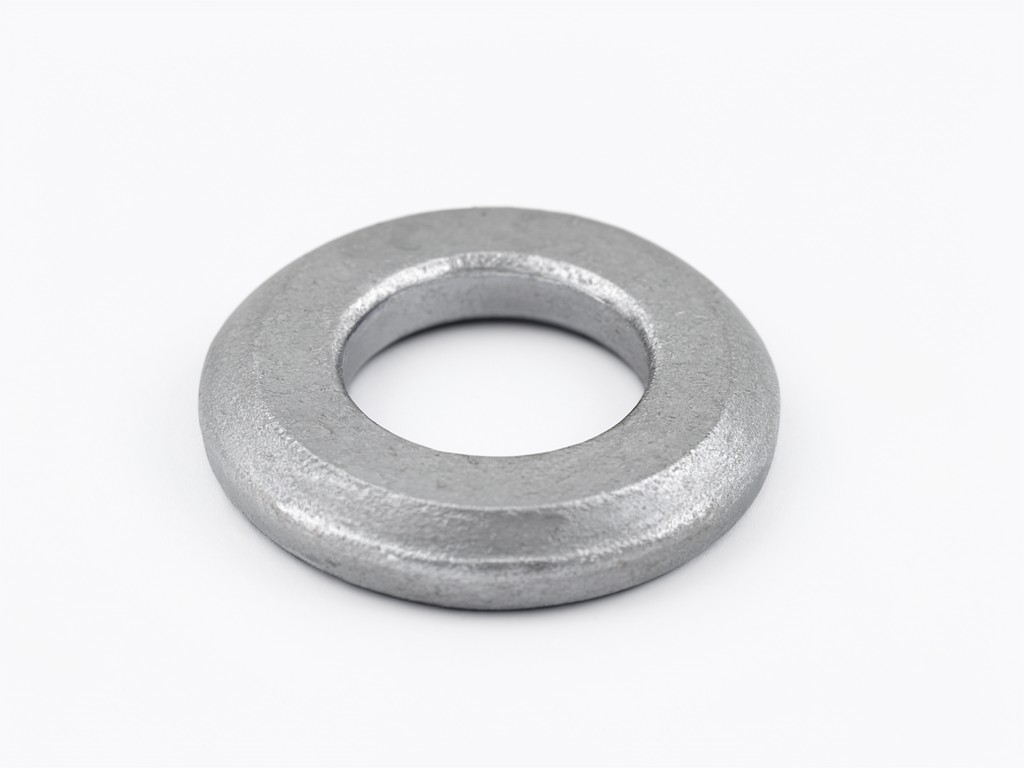
Specifying Custom lock washer for carriage bolt for Wholesale and OEM Orders
Replacement rate, not unit price, decides whether a custom lock washer pays off. For OEM and private-label orders, matching the approved washer’s dimensions, material, finish and spring form can avoid fit issues and repeat field complaints without redesigning the carriage-bolt assembly.
The washer sits beneath the nut, not under the domed carriage-bolt head. Its inner diameter must clear the bolt thread, while its outer diameter and form must seat on the mating surface. The right specification depends on the joint, exposure and tightening method.
Where Cheaper Alternatives Fall Short
On outdoor assemblies or equipment that sees frequent cleaning, an inexpensive washer can cost more through corrosion, poor seating or inconsistent spring action. A coating that does not suit the exposure may wear through at contact points; a washer with a loose fit can shift during tightening or fail to sit flat against the nut and work surface.
A split lock washer is not a substitute for joint design. Under sustained vibration or changing loads, it may not prevent preload loss. The washer should match the specified joint and tightening practice, with any vibration-control requirement assessed at assembly level rather than assumed from the washer alone.
What the Design Has to Balance
Use the approved drawing or a retained sample to set the inside diameter, outside diameter, thickness and free height. Small changes to these features can alter fit, seating and the washer’s spring response under the nut.
Stamped spring steel is a common choice when the joint calls for a formed split washer. The forming and heat-treatment route affects spring behaviour; plating adds corrosion protection but also adds thickness that can affect fit. Stainless steel avoids a plated coating, though its cost and mechanical properties differ by grade. Match the material to the actual load and exposure rather than choosing by appearance alone.
For assemblies handled repeatedly, edge condition and surface feel matter during installation. A cleanly formed washer should sit without burr interference, while the specified finish should tolerate the expected abrasion, moisture and cleaning agents. Sweat, UV exposure, wash cycles and storage conditions are relevant only where the finished assembly actually encounters them.
Where This Product Beats Standard Alternatives
Standard Catalog Washer
A catalog size can suit a general-purpose joint where dimensions and finish are flexible. It is usually the simpler purchase, but may not match a controlled private-label drawing or an existing assembly’s seating area.
Custom-Matched Washer
A custom specification can retain the approved ID, OD, thickness, material and finish. Dedicated tooling adds an upfront cost, so the benefit is strongest when repeat volume, fit control or replacement consistency justifies that cost.
Custom production makes the most sense when a standard part creates a recurring mismatch, or when the buyer needs stable dimensions across reorders. Sample approval against the assembly is the practical check before committing to production quantities.
Who Uses It and Where It Matters
| Nominal Bolt Size | Indicative Washer ID / OD | Indicative Thickness | Indicative Piece Weight |
|---|---|---|---|
| M6 | About 6.1–6.4 mm / 9.5–11.8 mm | About 1.2–1.6 mm | About 0.3–0.6 g |
| M8 | About 8.1–8.4 mm / 12.5–15.5 mm | About 1.6–2.0 mm | About 0.7–1.4 g |
| M10 | About 10.2–10.5 mm / 16–19 mm | About 2.0–2.5 mm | About 1.5–3.0 g |
| M12 | About 12.2–12.8 mm / 18–22 mm | About 2.5–3.0 mm | About 2.5–5.0 g |
These figures are indicative sizing and weight envelopes for initial discussion, not a production drawing. A stamped washer’s final dimensions and mass depend on its form, material thickness and finish; approved drawings and samples take precedence.
OEM buyers use custom-matched washers in furniture, fixtures, equipment frames and other assemblies where a carriage bolt provides a finished domed head. Outdoor installations need a finish suited to rain, handling and storage; frequently cleaned equipment needs a coating compatible with the specified cleaning method. The buyer should confirm the washer’s seating surface and finish against the actual assembly.
Ordering, Tooling and Lead-Time Questions
Which details should go on the drawing?
Specify bolt size, washer form, ID, OD, thickness, free height where applicable, material, hardness requirement if controlled, finish and permitted dimensional variation. A mating nut, carriage bolt and sample assembly help confirm fit and seating.
How does tooling affect order cost?
Custom dimensions may require dedicated stamping tooling. The tooling charge is separate from the unit price, and its effect per piece falls as repeat volume increases. Confirm the tool scope, ownership terms and expected reorder schedule before approval.
What sets sample and production timing?
Timing depends on drawing completeness, tooling work, material and finish availability, sample review and order quantity. Approve the dimensional sample and finish before the production run; confirm packaging and batch identification at the same stage for private-label supply.
For a tooling review, send the current drawing or sample, annual and release quantities, target finish, and the assembly’s exposure conditions. Request a tooling review before changing the approved washer specification.