


Specifying Customized bolts nuts and washers price for Wholesale and OEM Orders
Two suppliers quoting the same specification can still deliver different service life. Compare the material, thread, finish and inspection scope behind the unit price before approving a private-label order; changing those details later can affect fit and force a product redesign.
For a like-for-like quote, submit the existing drawing or sample, required material and property class, finish, order quantity, packaging instructions and any inspection requirements. Price then reflects the specified production route—typically cold heading and thread rolling for bolts, nut forming and tapping, and washer stamping—rather than assumptions about an unspecified substitute.
Where Cheaper Alternatives Fall Short
| Quoted approach | Complaint that may surface first | Specification control that addresses it |
|---|---|---|
| Lower-cost material or an unconfirmed property class | Bolt stretch, head damage or breakage under the assembly load | Name the material and required mechanical class on the drawing and purchase specification. |
| Thread fit treated as interchangeable | Nuts bind, feel rough during hand assembly or loosen after installation | Confirm thread system, fit class and any coating allowance as a matched bolt-and-nut set. |
| Finish described only by colour | Corrosion appears at edges or threads; coating buildup affects fit | Specify finish type and performance requirement, then check finished dimensions and thread engagement. |
Unit price settles the question only after the hardware passes assembly and service checks. A bolt that starts poorly or a washer that dishes under clamp load can cost more in line stoppage, sorting and replacement than the saving on the original order.
A low quote often omits a control rather than a visible feature. Ask whether the supplier will check thread fit, head dimensions, washer thickness, coating coverage and lot consistency, and whether the quoted inspection applies to every order or only the approval sample.
Size, Weight and Specification Range
For repeat orders, dimensional fit usually matters more than a target piece weight. Metric sizes from around M3 to M30 are common in production, with bolt lengths often spanning roughly 6 mm to 200 mm; actual availability depends on head style, material, thread length and the selected forming route. Nonstandard geometry can require dedicated tooling or a machined process, which changes both setup cost and lead time.
Lock the mating dimensions together. State nominal diameter, pitch, thread length, under-head length, head form, nut type, washer inner and outer diameters, and washer thickness. If the parts ship as a set, approve the finished bolt, nut and washer together; coating can change thread clearance and the assembled feel.
Part weight is useful for carton planning and order reconciliation, but it should not replace dimensional tolerances. A small shift in washer thickness or nut height may change stack-up and clamping behaviour even when the shipment’s total weight appears correct. Specify the acceptance limits that protect your assembly rather than relying on a generic weight target.
How to Choose Before Requesting a Quote
Start with the existing assembly and the conditions it must withstand. If the application already has a validated fastener set, preserve its dimensions and mechanical requirements; request a change only where the current complaint points to a measurable cause, such as corrosion, thread binding or washer deformation.
Carbon Steel With a Specified Finish
Often suits cost-sensitive assemblies with a defined corrosion exposure. The quote depends on steel grade, heat treatment where required, finish type and coating controls. If coating chips at contact points, corrosion can begin there; specify the exposure and finish requirement rather than choosing by colour alone.
Stainless Steel
Can suit damp or washdown conditions, but alloy selection affects price and mechanical properties. Stainless threads may gall under some assembly conditions, so confirm the mating material, surface condition and installation method before changing a carbon-steel design to stainless.
Send forecast annual volume as well as the first-order quantity. A larger committed volume may lower the unit cost through production planning, while small runs of unusual geometry may carry a higher setup share. Include sample approval needs, inspection records, marking and packaging in the quote request so suppliers price the same scope.
What Can Be Customised and What Cannot
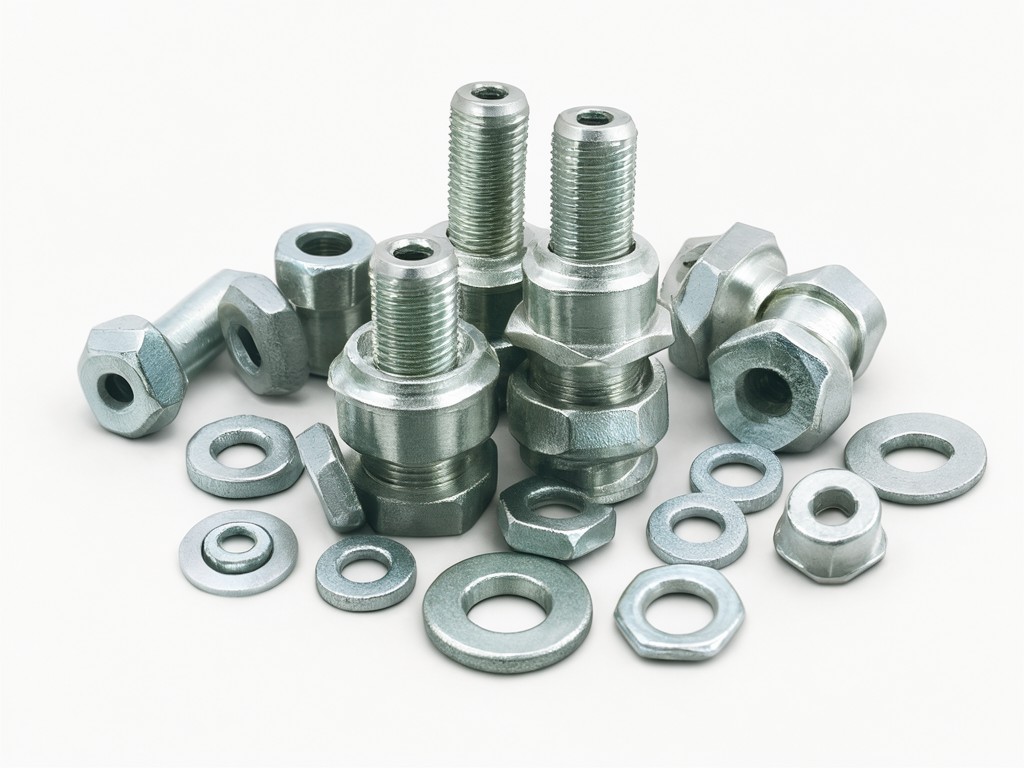
Most private-label orders can retain the approved geometry while changing material, finish, marking or pack configuration. The finish choice affects both price and fit, so approve it on production-representative samples rather than on a colour reference alone.
| Finish or surface option | Appearance and fit considerations | Price and selection notes |
|---|---|---|
| Zinc plating with clear or coloured passivation | Bright or tinted appearance; coating buildup needs allowance at mating threads. | Cost varies with coating specification, part geometry and order volume. |
| Hot-dip galvanizing | Typically a thicker, less uniform surface; thread dimensions and nut compatibility need advance review. | Can add processing and sorting cost; suitable where the specified environment calls for it. |
| Black oxide | Dark appearance with little dimensional buildup; corrosion protection depends on the full surface-treatment system. | Often selected for appearance or fit needs, not as a substitute for a defined corrosion requirement. |
| Stainless steel, passivated or supplied in a natural finish | Metallic appearance; material and finish should match the service environment and mating components. | Material grade is a main cost driver; confirm mechanical requirements before substitution. |
Custom options usually include head marks, laser or stamped identification where the part allows it, kit quantities, and retail or industrial pack labels. Geometry, material strength and thread fit cannot be changed independently of the assembly design. A logo or colour request does not replace the need for approved drawings, material definitions and measurable acceptance criteria.
Usage Scenarios and Buyer Segments
The right specification depends on how the fastener set is installed and exposed after delivery.
- OEM procurement teams replenishing an approved assembly need stable dimensions, matched bolt-and-nut fit and batch identification so a new lot does not disrupt line setup.
- Industrial distributors building private-label assortments need clear size and finish separation, repeatable carton quantities and labels that reduce picking errors at the customer site.
- Importers sourcing hardware for outdoor or humid service should define the corrosion exposure and inspect the finished threads; a surface that looks intact on arrival may still fail first at edges or damaged contact points.
- Maintenance buyers purchasing replacement kits need the original thread pitch, length, head style and washer stack. Near-match parts can feel acceptable by hand yet leave insufficient engagement or alter clamp load.
For all segments, consistency across replenishment lots protects installation feel and reduces sorting. Keep the approved sample, drawing revision and finish definition tied to the purchase record.
Packing, Marking and Freight Configuration
Bulk packing lowers packaging cost but raises the chance of size mixing during picking. For production kits or distributor inventory, specify separate bags or cartons by part number, a fixed pack quantity, and labels that show the description, size, finish, lot reference and purchase-order details required at receiving.
Ask for corrosion protection in transit when the route, storage period or destination climate warrants it. The packaging method should protect the selected finish from moisture and abrasion, while the carton design should prevent heavy fasteners from crushing labels or splitting inner packs.
Agree whether goods ship as mixed components or as matched sets. Mixed cartons may reduce freight volume, but they need compartmentalised inner packs and clear quantities to prevent bolt, nut and washer counts from drifting apart during warehouse handling.
Setup, Use and Replacement Parts
Set installation torque from the assembly design and the fastener maker’s guidance; do not transfer a torque value from a different material, finish or lubrication condition. Coating and lubrication alter friction, so a torque change can shift clamp load even when the fastener dimensions remain the same.
During incoming inspection, sample the dimensions most likely to trigger complaints: thread fit, bolt length, head dimensions, nut height and washer thickness. Check the surface for bare patches, transport damage or corrosion, and keep suspect lots separate until the fit and finish have been reviewed.
Replace hardware when threads are damaged, a bolt has stretched or yielded, a washer has permanently dished, or corrosion compromises the contact surface. For repeat orders, retain the approved sample and drawing revision, then record any change in material, finish or source before release.
Request a Tooling Review
Send the current drawing or sample, annual volume, finish requirement and pack details for a tooling and quote review. If the specification is already approved, note which dimensions and materials must remain unchanged.
Discuss your customized bolt, nut and washer specification