


Specifying durable 8 32 flat washer supplier for Wholesale and OEM Orders
Before comparing quotations, check what each supplier means by an 8-32 flat washer. The 8-32 callout identifies the screw size; it does not define the washer’s outside diameter, thickness, finish, or acceptable dimensional variation. Those details decide whether a low unit price holds up after assembly, sorting, and resale.
For wholesale and OEM orders, the useful comparison is cost per acceptable washer delivered to the assembly point. A washer that fits the screw but has a burr, inconsistent thickness, or a finish that does not suit the service environment can add handling and replacement cost. Confirm the drawing or sample, inspection points, and finish before volume pricing is approved.
Scope of Supply and Physical Form
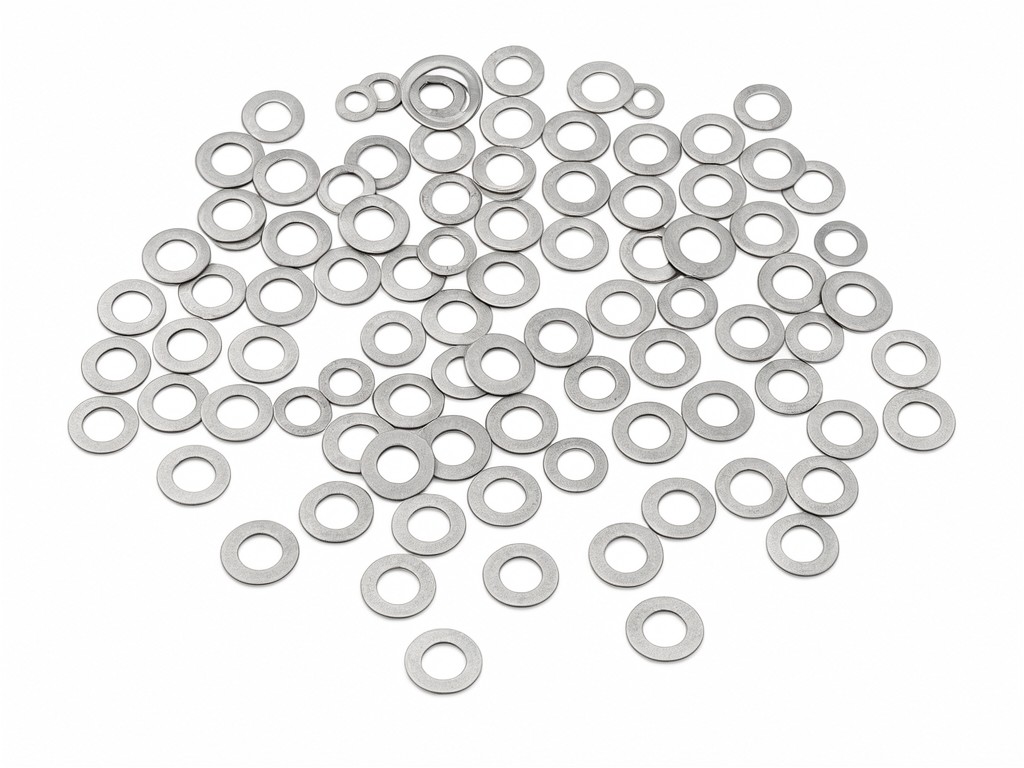
An 8-32 flat washer is a non-threaded, flat ring fitted beneath a screw head or nut. Its job is to spread bearing pressure over a wider area and help protect the clamped surface. The buyer should specify the inside diameter for screw clearance, outside diameter for coverage, thickness, material, edge condition, and finish.
Fit rule: approve the washer against the mating screw and the actual joint space. A nominal screw-size description alone is not a complete dimensional specification.
Supply can be based on a buyer drawing, an approved reference sample, or a mutually confirmed dimensional schedule. For repeat orders, retain the approved specification and identify any permitted changes to material or finish in writing.
How It Is Built and What That Changes
Flat washers are commonly produced by stamping sheet or coil stock through a washer die, followed by edge treatment and any specified surface finish. Tool condition and strip control affect the inner and outer edges, thickness consistency, and part-to-part repeatability. When the die is set up against a confirmed drawing, a stable run can reduce dimensional sorting and keep assembly fit more consistent across replenishment orders.
A stamped carbon-steel washer with a plated finish generally has a lower material cost than a stainless version. Stainless can suit damp or exposed service, but the material premium only pays back where corrosion resistance matters to the end use. The comparison below ties those choices to common complaint risks rather than treating the material name as a complete specification.
| Service condition | Complaint to prevent | Construction and specification control |
|---|---|---|
| Dry indoor assembly with a cost-led target | Burrs or size variation cause poor seating or extra sorting. | Stamped carbon steel with an agreed finish; define ID, OD, thickness, and edge condition on the drawing. |
| Moisture exposure or a longer interval between maintenance checks | Visible corrosion leads to replacement, rework, or a customer complaint. | Consider stainless construction; confirm the grade and check compatibility with the mating fastener and surrounding materials. |
| Washer sits against a visible or easily marked surface | A sharp edge or inconsistent bearing face mars the surface or feels rough during assembly. | State the edge and flatness expectations; approve a production sample with the actual joint materials. |
Measured Performance in Real Use
Two suppliers quoting the same specification can deliver different assembly outcomes if one controls only the nominal screw fit. For this part, the useful checks are inside diameter, outside diameter, thickness, flatness, burr condition, and finish appearance. Inspection frequency and acceptance limits should be agreed against the drawing and order quantity rather than assumed from the 8-32 label.
An undersized inside diameter can bind on the screw; excessive clearance can leave poor centring in a tight assembly. A thin or uneven washer may dish under clamp load, while a rough edge can damage a coated or finished mating surface. Dimensional checks with suitable gauges or measuring equipment, plus a visual review of edges and finish, help catch these issues before the lot reaches assembly.
Do not treat a washer as a substitute for a locking feature or a joint designed to carry a specified load. Its performance depends on the fastener, clamp force, substrate, and joint geometry. For a sensitive application, provide the assembly context and evaluate an approved sample in the real joint.
Usage Scenarios and Buyer Segments
Fastener distributors need a defined size and finish that can be reordered without a fresh fit investigation. Their cost per unit sold depends on minimizing mixed lots, returns, and time spent separating parts that do not match the catalogue specification.
OEM purchasing teams use 8-32 washers in repeat assemblies where screw clearance and bearing coverage must remain consistent. A drawing-controlled order helps protect fit across production batches. Club or academy purchasing managers may also buy these washers as maintenance stock for fixtures and equipment; in that case, simple identification and a finish suited to the storage and service environment can matter more than a custom appearance.
Unit price and service life diverge when the cheapest lot needs extra inspection or replacement before the next planned service. Match material and finish to the real exposure, then compare suppliers on conforming-part cost and reorder consistency.
Volume Planning and Lead Time
Order volume changes the economics through setup time, die use, material purchasing, and inspection planning. A small run may carry more setup cost per washer; a larger repeat order can spread that cost across more pieces, provided the dimensions and finish stay fixed. A new or modified die adds tooling cost and approval time, so reuse an existing tool only after confirming that its dimensions match the approved drawing.
- Combine forecast demand into scheduled releases when the specification is stable; this can support material planning without forcing unnecessary stock at the buyer’s site.
- Keep changes to dimensions, material, or finish out of a repeat order unless the drawing revision and sample approval are complete.
- Ask for a lead-time estimate after the supplier confirms tooling status, material availability, and any first-article or finish approval requirements.
| Order detail | Available specification choice | Cost or timing effect |
|---|---|---|
| Dimensions | Buyer drawing, approved sample, or confirmed dimensional schedule | A new dimension or tool change may require setup, sample review, and additional lead time. |
| Material and finish | Agreed carbon-steel finish or specified stainless construction | Material availability and finishing steps affect quotation and scheduling; confirm the choice before the production slot is set. |
| Identification | Plain part supply or buyer-approved order and product identification | Custom identification artwork needs review and may add a separate approval step. |
Questions Buyers Ask Before Ordering
Does 8-32 define the washer dimensions?
No. It identifies the mating screw size. Specify the washer’s inside diameter, outside diameter, thickness, material, and finish separately, or provide a drawing or approved sample for confirmation.
Can an existing die reduce the order cost?
Potentially. The tool must produce the approved dimensions and edge condition. Ask the supplier to confirm the tool match before pricing the run; a near-size tool can create fit problems that erase the setup saving.
Can our brand artwork go directly on the washer?
Direct marking may not be practical on a small washer and should not interfere with its bearing face or finish. For branded orders, submit the part identification and label artwork for review; the supplier can confirm a workable identification method before production.
What should be approved before a repeat order?
Keep the approved drawing or sample, material and finish, inspection expectations, and any identification artwork on file. If one of these changes, request a revised quotation and confirm whether another sample review is needed.
Request an order review: Send the 8-32 washer drawing or sample, planned volume, service environment, finish requirement, and any branding or label artwork. The review can confirm dimensional scope, tooling status, and the approval steps that affect unit cost and lead time.