


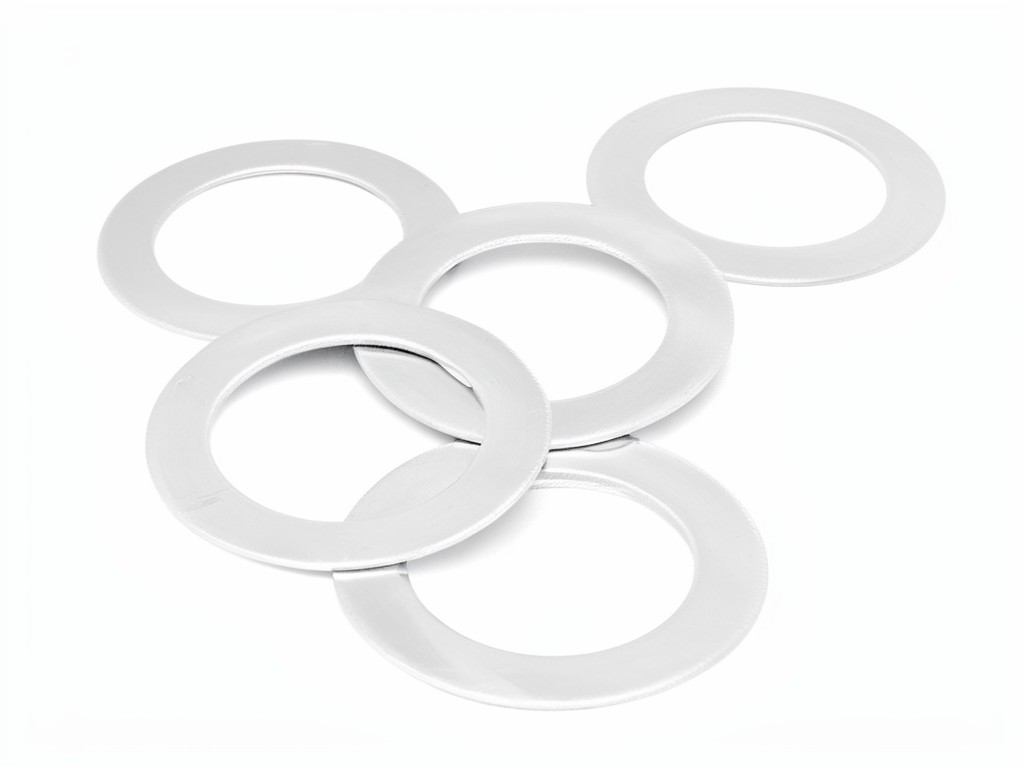
durable mylar phenolic flat washers supplier: Specification, Ordering and Quality Notes
For launch-sensitive orders, confirm the washer stack-up and finished dimensions before approving production. A polyester-film face can protect the phenolic surface, but it does not seal the cut edge; moisture exposure and edge condition still depend on the base material, bonding process and part geometry.
Returns usually trace back to the same weak point: a washer that fits the drawing but arrives with chipped edges, a loose film face or dimensions that drift across a batch. Those issues can hold up assembly and push a distributor or retail buyer past a planned launch date.
What the Design Has to Balance
A flat washer has little room to absorb a mismatch. The inside diameter must clear the fastener, the outside diameter must provide the intended bearing area, and thickness must suit the assembled stack. If the hole is too tight, installation can scrape or split the washer; if it is too loose, the part can shift under clamping. Flatness and concentricity matter most where the washer locates an insulating layer or separates components in a close-fitting assembly.
Phenolic sheet selection and film bonding are part of the same specification. Reinforcement and resin affect stiffness, edge behaviour and moisture response, while film thickness and adhesion affect the finished face. A Mylar-faced construction should not be treated as a sealed washer: punched edges expose the phenolic substrate, and prolonged damp or outdoor service can still affect dimensions or bonding depending on the grade and assembly.
Where This Product Beats Standard Alternatives
Where an assembly needs a non-metallic spacer with an insulating phenolic body and a smoother film-faced surface, this construction can meet the requirement in one part. The benefit depends on the application: the film face may reduce direct contact with the phenolic surface, but it does not replace a separate environmental seal or make the washer suitable for every temperature, chemical or outdoor exposure.
Compared with an unfaced phenolic washer, the faced option adds a bonding operation and tighter control of film placement. That raises process cost, but can be worthwhile when surface condition or contact behaviour is a recurring complaint. If the application only needs a basic insulating spacer, an unfaced washer may be the simpler, lower-cost specification.
What Can Be Customised and What Cannot
Finished dimensions, material grade, film coverage and packaging can be set against the drawing and purchase order. Feasibility depends on sheet thickness, washer geometry and the chosen cutting method; narrow annular walls and small internal radii need a tooling review before a production date is confirmed.
| Specification area | Options to confirm | Production consideration |
|---|---|---|
| Inside diameter, outside diameter and thickness | Drawing dimensions, tolerances and critical fit points | Tolerance capability depends on stock thickness, part size, tooling condition and inspection method. |
| Phenolic substrate | Available sheet grade and reinforcement, subject to service requirements | Confirm moisture, temperature and chemical exposure; these conditions affect grade suitability. |
| Film face and coverage | Face side, film coverage and agreed appearance | Bonding and cutting sequence must limit lifting, wrinkles and exposed-face damage. |
| Packing and identification | Bulk pack, lot marking and export carton information | Agree the label and quantity per pack before order release to avoid relabelling delays. |
A drawing cannot remove material limits. If a tolerance is tighter than the selected sheet and cutting process can hold consistently, the specification needs a process review or a revised design before tooling is committed.
Requirements by Buyer Segment
Distributors usually need stable repeat dimensions, clear lot identification and pack quantities that match their customers’ replenishment needs. A procurement officer coordinating a launch also needs the drawing revision, sample approval status and delivery window tied to the same order record; a late change to any one of these can disrupt receiving or assembly schedules.
Retail buyers should settle carton labels and the customer-facing part description before production. For replacement or service channels, confirm whether the washer is supplied loose or grouped by kit quantity, and whether the finished part must match an existing sample as well as the drawing.
What Gets Checked Before Shipment
Inspection should target the failures buyers report: a washer that will not fit, a chipped bore, an uneven edge or film that has lifted from the substrate. Dimensional checks cover inside diameter, outside diameter and thickness against the approved drawing; visual checks focus on edge damage, face condition, bonding and contamination.
For repeat orders, retain the approved sample or inspection reference and record the production lot against the order. Where the service environment includes moisture or weather exposure, review the material grade and any agreed conditioning or application test with the buyer rather than assuming that a film face protects exposed edges.
Volume Planning and Lead Time
Order timing depends on sheet availability, washer geometry, tooling condition, film bonding requirements and the amount of inspection or packing work. Standard dimensions from available stock may move through planning sooner than a new profile or a custom facing arrangement; new tooling and first-article approval add preparation time before the full quantity can run.
To protect a launch date, provide the latest drawing, forecast quantity, required ship date, pack details and any sample-approval deadline at quotation. Reserve time for drawing review and approval before booking freight, and ask for the production schedule to distinguish material preparation, conversion, inspection and dispatch.
A specification review before order placement can flag tolerance conflicts, exposed-edge risks and packaging details while there is still time to adjust the plan. Send the drawing and target delivery window through our contact page for a review of dimensions, material construction and production timing.