


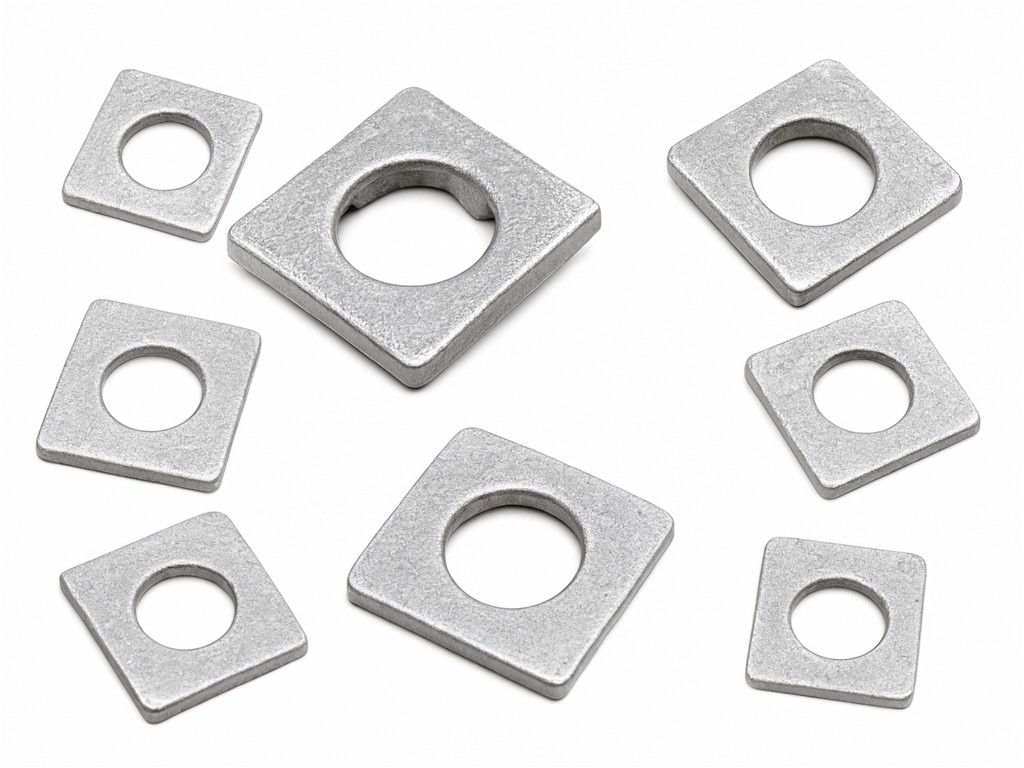
durable square anchor bolt lock washers factory: What Buyers Should Check Before Ordering
Material choice starts with the conditions the washer will meet: sheltered indoor assembly, exposed foundations, or equipment subject to washdown and seasonal weather. For distributors and private-label buyers, the practical decision is not simply carbon steel versus stainless steel. Material, locking geometry, coating thickness, and the mating bolt all have to match the approved assembly specification.
A square anchor bolt lock washer is a load-spreading component with a specified locking feature, if the design calls for one. Its size and function must be confirmed against the bolt, base plate, and installation method. A washer cannot correct an incorrect anchor layout or replace the required bolt-tightening procedure.
The Problem Buyers Keep Paying For
Cost and durability pull in opposite directions once an assembly is exposed to moisture, handling, and repeated service access. A low unit price can be offset by field replacement, corrosion complaints, or warranty claims when hole clearance, coating, or the lock feature varies between batches. The table maps common conditions to the complaint pattern and the specification checks that help prevent it.
| Installation or Service Condition | Complaint Seen in the Field | Specification to Confirm |
|---|---|---|
| Exposed foundations with recurring rain or condensation | Red rust, coating damage, or seized hardware during later service | Base material and coating route matched to exposure; define coverage and appearance requirements on the drawing |
| Anchor assemblies with frequent removal or adjustment | Locking feature damage or inconsistent seating after reassembly | Specify the locking geometry and evaluate it with the actual bolt, nut, and bearing surface |
| Mixed anchor-bolt lots or replacement parts from different sources | Uneven fit, assembly delays, or washers that do not sit flat | Control washer dimensions, flatness, hole location, and batch identification to the approved sample |
Compare the landed unit cost with the cost of sorting, returns, and replacement visits. For recurring orders, stable dimensions and coating requirements often matter more than a small saving on the first purchase.
Design Constraints Behind the Specification
At the drawing stage, confirm the bolt diameter, washer outside dimensions, thickness, hole size, and any specified corner or edge details. Hole clearance has to allow installation without excess movement; the square footprint has to provide the intended bearing area on the plate or supporting surface. Actual dimensions should follow the customer drawing rather than a catalogue description alone.
Locking action depends on the specified feature and its contact with the mating parts. Serrations, tabs, and other formed features are distinct designs, not interchangeable upgrades. A locking washer also needs a suitable bearing surface; a coating, soft substrate, or assembly sequence can change how the feature engages.
Drawing control: freeze the washer dimensions, material, finish, and locking geometry together. A finish change can affect fit and assembly contact, so treat it as a specification change that requires review before production.
Option Comparison by Usage Level
Where chlorine, sweat, or UV exposure is routine, confirm whether those conditions describe the actual installation: for anchor hardware, rain, condensation, salts, cleaning chemicals, and outdoor exposure are more common selection drivers. Choose a material and finish for the service environment, then verify compatibility with the bolt and surrounding structure.
| Construction Route | Typical Fit | Buyer Trade-Off |
|---|---|---|
| Carbon steel with a specified plated finish | Indoor or less aggressive exposure, where the finish requirement is defined | Often lower material cost; finish selection and handling affect corrosion protection |
| Carbon steel with a heavier galvanized coating, where specified | Outdoor or weather-exposed assemblies requiring a defined coating route | Coating build can affect hole clearance, contact surfaces, and appearance; confirm the fit after finishing |
| Stainless steel, with grade selected for the service environment | Applications where corrosion resistance and maintenance access are key concerns | Higher material cost; confirm grade, mating hardware, and assembly practices to manage galling risk |
No finish is a substitute for defining the exposure and inspection criteria. If the customer requires a particular corrosion test or coating measurement, include the method and acceptance conditions in the purchase specification; do not rely on a finish name alone.
What Can Be Customised and What Cannot
Private-label production can preserve an existing design while adapting the order presentation and manufacturing controls. Custom options depend on the approved drawing, tooling, material availability, and finish route.
- Dimensions, hole location, thickness, corner treatment, and locking geometry can be produced to a controlled drawing when the design is manufacturable with the selected process.
- Material and surface finish can be set for the application, but changing either may affect fit, corrosion behaviour, cost, and lead time.
- Private-label carton marks, product labels, and batch references can follow buyer artwork and packing instructions.
- A locking feature cannot be changed informally to address a field complaint. Any geometry revision needs drawing approval and assembly validation with the intended mating parts.
For repeat orders, retain a revision-controlled specification and approved sample. This gives procurement a direct reference when comparing quotations or checking a reorder against the first production batch.
Segment-Specific Requirements
Construction distributors need repeatable dimensions across mixed anchor-bolt orders so counter staff can supply the washer that matches the specified bolt and plate. For infrastructure and equipment buyers, long outdoor service intervals can justify a corrosion-resistant material or coating, provided the full assembly remains compatible.
Private-label product managers may prioritize packaging identity and a stable reorder code, while the engineering team controls the part geometry. Keep artwork changes separate from drawing changes; a new label should not create uncertainty about which washer revision is inside the carton.
For assemblies that will be serviced after installation, specify whether parts are intended for reuse or replacement. Locking features can deform or wear during removal, so the service instruction should match the washer design rather than assume unlimited reuse.
Working as a Production Partner, Not a Catalogue Supplier
A catalogue description rarely captures the tolerances, finish limits, and packaging rules needed for a private-label reorder. Production should start from the customer drawing or approved sample, with open points recorded before tooling or process setup begins.
Before the First Order
Review the drawing revision, bolt fit, material, finish, locking feature, inspection plan, and pack quantity. A pre-production sample can expose fit or coating issues before the buyer commits to a full run.
Across Reorders
Use the same revision record, agreed inspection points, and batch identification for each release. If a material or process substitution becomes necessary, obtain approval before production rather than letting an unreviewed change reach the buyer.
A clear production record helps distributors and brand teams compare incoming lots against the same acceptance basis. It also makes it easier to investigate a warranty claim without confusing product revision, finish, and batch.
Inspection Items and Test Methods
Inspection should follow the drawing and purchase specification, with sampling frequency agreed before release. For stamped or formed parts, dimensional checks should cover the features that control fit and seating, not only the overall square dimensions.
- Measure outside dimensions, thickness, hole size and location, and flatness with suitable gauges or measuring equipment.
- Inspect edges, burrs, cracks, surface condition, and the formed locking feature against the approved sample or drawing.
- Check coating coverage and thickness when specified; use the buyer-approved method and acceptance limits.
- Where locking performance is a stated requirement, assemble the washer with the specified mating hardware and evaluate it using the agreed test setup. A generic bench result may not represent the installed joint.
- Confirm material identification and batch records where the order requires traceability, and retain inspection results against the production lot.
Hardness or corrosion testing should be included only where the material and buyer specification call for it. Agree on sample size, method, and acceptance criteria in advance; this prevents a test result from being judged against an unstated requirement.
Export Packaging and Handling Protection
Square washers can rub against one another in transit, which may mark a finish or damage a formed feature. Select inner packing and carton strength for part weight, surface finish, shipment duration, and the buyer’s warehouse handling method. Keep dissimilar finishes or clearly distinct part revisions separated and identified.
Before order release, confirm pack quantity, carton labeling, private-label artwork, lot code format, and any pallet or export-document requirements. Carton marks should identify the part number and revision clearly enough for receiving staff to distinguish a reorder from an older batch.
Discuss the project: Send the drawing or approved sample, target material and finish, annual or release quantity, inspection requirements, and private-label packing details. Contact the production team to review fit, process, and reorder controls before the first batch.