


Wholesale 3 8 internal tooth lock washers Factory: Specification, Ordering and Quality Notes
Choose the Washer Envelope Before Pricing the Run
A 3/8-inch designation commonly refers to the nominal fastener size; it does not, by itself, fix the washer’s outside diameter, thickness, tooth form, or material. Confirm the applicable drawing or washer series first. Carbon steel with a suitable protective finish usually lowers piece cost, while stainless steel can be the better fit for repeated wet exposure. Those choices affect tooling setup, finishing, and the ship date.
What the Design Has to Balance
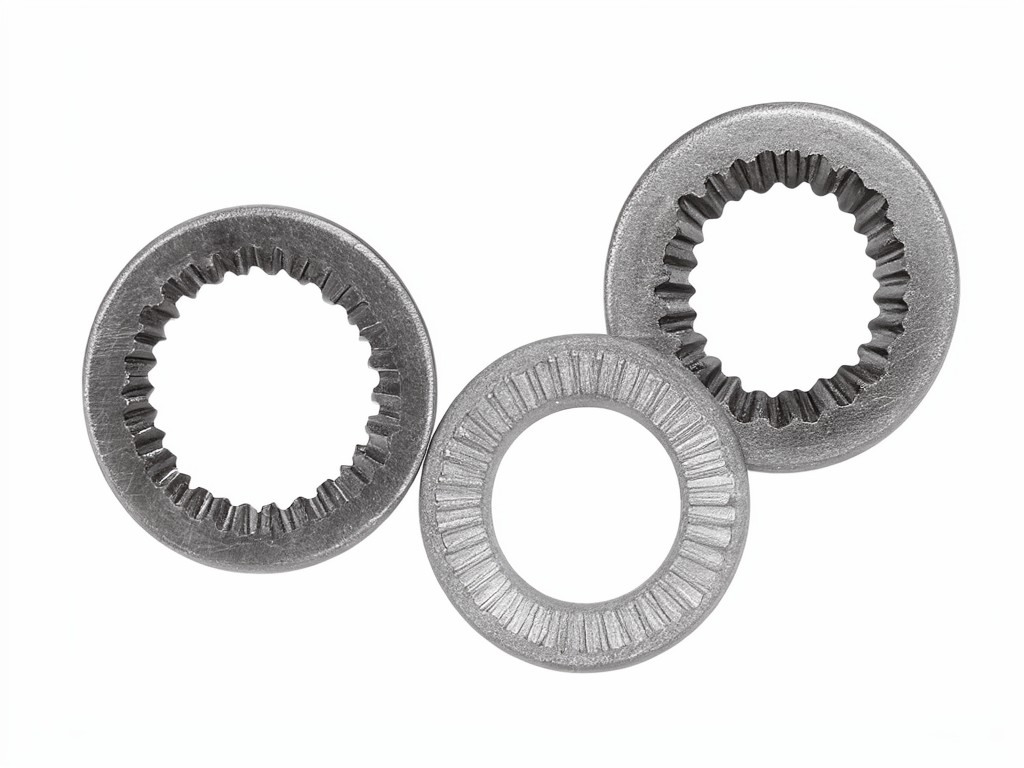
Unit price settles the question only after the washer’s mating conditions are clear. Internal teeth need enough contact with the fastener head and bearing surface to resist rotation, but their edges can mark soft coatings or softer materials. For assemblies opened during service, that bite can also leave visible witness marks; plan for washer replacement rather than assuming the teeth will retain their original action after reuse.
The buyer’s drawing should define the nominal fastener size, inside and outside diameters, thickness, tooth count or form where controlled, and material and finish. The chosen outside diameter affects bearing coverage, while thickness and tooth geometry influence how the washer seats. If the assembly faces rain, washdown, or storage in humid conditions, specify the exposure and mating materials so the factory can quote a finish or stainless option suited to that use. A plated carbon-steel version may cost less, but its protection depends on the coating and the service environment.
How It Is Built and What That Changes
Production typically starts with sheet or coil stock and a stamping die that blanks the washer and forms its internal teeth. For recurring volume, a progressive die can complete multiple operations as the strip advances. The die controls the outline and tooth geometry; wear or setup variation can show up as dimensional drift, uneven teeth, or burrs that complicate assembly.
A dedicated die requires upfront tooling expenditure, so a larger committed run can spread that cost across more pieces and lower the tooling portion of unit price. Small lots may be less costly to start with existing tooling, if the dimensions match, but a special envelope or tooth form can add setup time and require new tooling. Material thickness, grade, heat-treatment needs, deburring, and finishing also affect the route and should be settled before sample approval.
Tooling approval is not just a drawing checkpoint. A first-off sample lets the buyer confirm fit against the intended fastener and bearing surface, then approve appearance and packaging before a production quantity is released. Changing dimensions after die construction can add both cost and schedule pressure.
Buying Mistakes That Lead to Returns
Returns often begin with a mismatch between the catalog label and the buyer’s assembly. Treating “3/8” as a complete dimensional specification can produce a washer that accepts the fastener but does not cover the bearing area or fit the available clearance. Request a dimensioned drawing and compare the washer against the actual mating parts, not only a listing title.
A second source of complaints is a finish selected without regard to storage and service exposure. A coating that suits dry indoor stock may not suit persistent moisture, and a finish change can alter appearance or delivery timing. Specify corrosion expectations, colour or coating requirements, and any restrictions on the mating surface before quotation. Also confirm whether the installation torque and substrate are suitable for a toothed washer; it is not a substitute for checking the complete joint design.
For a launch order, late drawing changes are especially costly. Lock the approved revision, pack quantity, label language, and carton marks before production release. That gives the factory a stable basis for tooling, inspection, and export packing.
How Consistency Is Held Across Batches
Batch control starts with a fixed drawing revision and recorded material and finish specifications. Incoming stock is checked against the purchase requirements; stamped parts are checked for inside and outside dimensions, thickness, tooth formation, and burr condition. Sampling frequency and acceptance limits should be agreed for the order rather than assumed from the product name.
Where heat treatment is part of the specified route, hardness or spring characteristics can be checked against the agreed requirements. Finished parts also need visual review for coating coverage and handling damage. For corrosion-sensitive orders, define the relevant exposure expectation and the inspection method with the supplier; do not treat a finish description alone as proof of service life.
Retained samples, batch identification, and inspection records help distinguish a process shift from a change in incoming fasteners or assembly conditions. If the buyer supplies a mating part or gauge, use it during sample approval and keep the acceptance basis consistent on repeat orders.
Keeping Repeat Orders Supplied
Unit price and service life diverge when a low-cost finish or a non-matching washer creates rework, corrosion complaints, or replacement shipments. For a scheduled product launch, agree the drawing, packaging, and order quantity early enough to reserve material and production capacity. Lead time depends on whether the die already exists, whether the sample needs approval, the selected finish, and the factory’s current workload.
MOQ is also quote-specific. Existing tooling and standard material can make a smaller run practical; a new die, special material, or nonstandard finish may require a larger commitment to cover setup and process costs. Ask for the MOQ and schedule against the exact approved specification, with any sample, tooling, and production stages shown separately.
| Order condition | MOQ basis | Lead-time planning | Main cost or schedule lever |
|---|---|---|---|
| Existing die, standard stock, confirmed dimensions | Quoted against the factory’s standard production and packing quantity | Allow for order confirmation, production slot, inspection, and export packing | Stock availability and run size |
| New die or nonstandard washer dimensions | Set after tooling cost, material yield, and annual demand are reviewed | Include die manufacture, first-off review, and production after approval | Tooling scope and sample sign-off timing |
| Specified stainless steel or special finish | Quoted according to material availability and finishing batch requirements | Confirm material sourcing and finish route before setting the launch date | Material sourcing and finishing capacity |
Review the Tooling Before the Launch Window Closes
Send the dimensioned drawing, material and finish requirements, target quantity, packaging details, and required delivery window for a tooling and schedule review. A confirmed specification lets the factory separate die cost from piece price and identify approval stages before you commit to the launch date. Request a tooling review.