


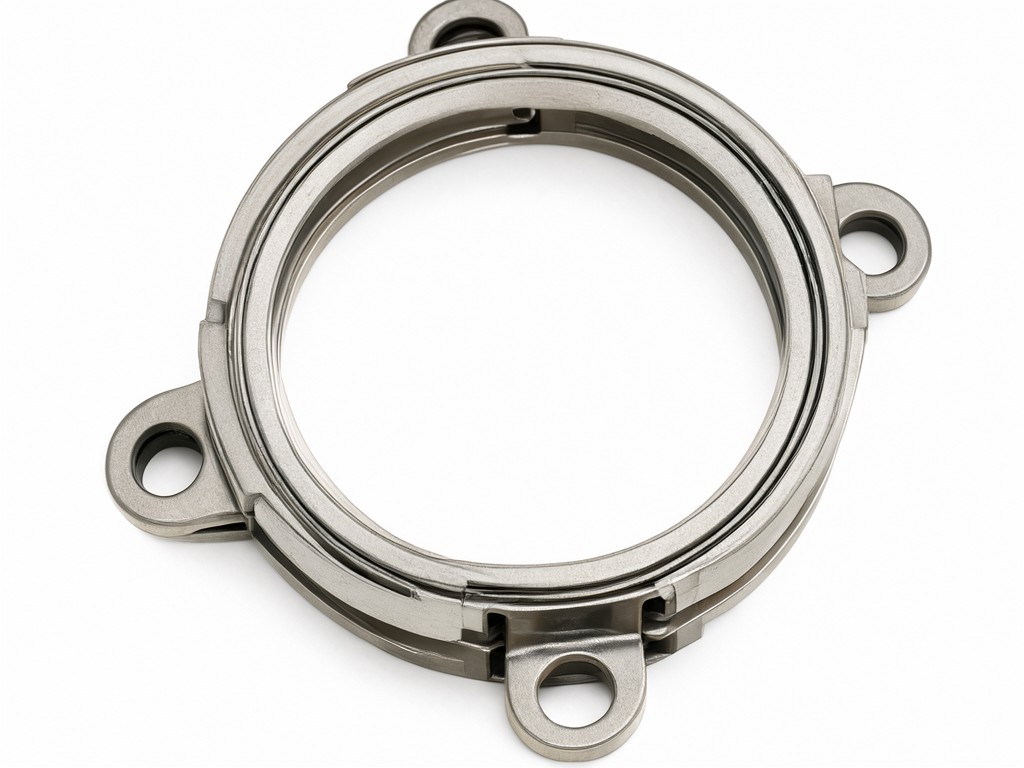
Specifying China insulated riser clamp supplier for Wholesale and OEM Orders
Fatigue appears at the stress concentration when a vertical pipe transfers repeated load through clamp ears, fasteners and the supporting structure. For OEM buyers qualifying a second source, the useful comparison is not a catalogue description; it is whether both suppliers can build to the same pipe outside diameter, liner thickness, steel gauge and approved drawing.
An insulated riser clamp supports vertical pipe runs at floor or structural attachment points. Its steel body carries the clamp load, while the insert separates the pipe from direct metal contact. That insert can reduce vibration transfer and limit a thermal bridge, but it does not replace a separately specified anchor, firestop or engineered load calculation.
How It Performs in Use
Repeat loading drives the failure risk toward the clamp ears, fastener holes and points where the band changes direction. A close fit spreads contact around the pipe; a loose fit can allow movement, while excessive bolt force may compress the liner unevenly or deform the band. Agree the pipe size and installation method before comparing steel thickness or quoted load data.
Fit Basis
Specify actual pipe outside diameter, not nominal size alone. Pipe material and wall variation can change the clearance required at the liner.
Load Path
Clamp geometry, fastener arrangement and the supporting attachment all affect capacity. Request a stated basis for any load figure.
Exposure
For damp plant rooms or outdoor pipework, match the steel finish and fasteners to the exposure. A protective coating does not make every assembly suitable for every corrosive environment.
Load figures need a defined assembly. Confirm clamp size, steel gauge, fastener type, installation torque and support condition before using a supplier’s capacity value for design or substitution approval.
Material Options and Their Trade-offs
The limiting factor is rarely the headline specification. In service, coating damage at cut edges, a liner that takes a permanent set, or moisture trapped against the pipe can determine replacement timing. Select the body material and insert as a pair, with the installation environment and expected pipe movement included in the review.
Coated Carbon Steel Body
A coated steel body is a cost-conscious option for typical indoor mechanical services. Specify coating type and coverage, including edges and formed features; scratches from handling or installation expose the base metal.
Stainless Steel Body
Stainless construction is generally selected where moisture or cleaning conditions make a coated body less suitable. It carries a higher material cost; confirm the required grade and fastener pairing against the actual exposure rather than assuming all stainless assemblies behave alike.
Elastomer or Foam Insert
An elastomer insert suits applications where resilience and grip matter; a foam insert can offer a different insulation and compression profile. Compare thickness, hardness, temperature range and water exposure against the pipe service before approving a substitution.
How to Choose Before Requesting a Quote
Quote comparisons become useful once the supplier has a common dimensional basis. Send the pipe outside diameter, nominal pipe size, insulation or liner requirement, support arrangement and exposure conditions. Include the drawing revision and identify which dimensions are controlled for interchangeability.
- Confirm whether the clamp is supplied as a complete assembly, and state the fasteners and loose components expected in each unit.
- Set acceptable tolerances for body dimensions, liner thickness, hole position and closure fit before sample approval.
- Ask for material and finish details that can be checked against the approved sample or purchase specification.
- For a second-source trial, compare first-article parts with the incumbent sample and drawing before authorising the production order.
The ranges below are planning references, not a substitute for a released drawing. Unit mass varies with band geometry, steel gauge, liner construction and fastener choice; request a confirmed weight for the selected assembly.
| Indicative Pipe Size Band | Typical Assembly Basis | Planning Unit-Mass Range | Material Options |
|---|---|---|---|
| DN 15–50 | Compact band and insert; confirm actual pipe outside diameter. | Approx. 0.08–0.25 kg per assembly | Coated carbon steel or stainless; elastomer or foam insert |
| DN 65–100 | Mid-size band; geometry and fastener configuration affect mass. | Approx. 0.25–0.65 kg per assembly | Coated carbon steel or stainless; liner to service conditions |
| DN 125–200 | Larger band; verify body gauge, closure and support interface. | Approx. 0.60–1.80 kg per assembly | Material and finish confirmed to drawing and exposure |
What Can Be Customised and What Cannot
Custom dimensions, liner material and thickness, steel gauge, finish, hole pattern and supplied fasteners can usually be reviewed against a drawing and target order quantity. Branding can be added to labels or cartons where the buyer supplies approved artwork and placement instructions.
A change to pipe fit, band profile or fastener position is a design change, not a colour variation. It may require new tooling, a fresh sample and another fit check. Material substitutions also need written approval; two liners with the same nominal thickness may differ in compression, temperature behaviour and moisture response.
Freeze the drawing revision, material callouts, tolerance points, finish and artwork before the production release. Any later revision should be recorded against the sample or order so the second source does not drift from the approved fit.
Segment-Specific Requirements
Commercial Plumbing and HVAC Distributors
Stocking programs need consistent size identification, repeatable fit and clear separation between similar variants. Agree the label description and size coding against the buyer’s catalogue before a private-label order.
Mechanical Contractors and Project Buyers
Project orders depend on approved submittal dimensions and the specified support interface. For exposed service areas, identify wetting, cleaning and corrosion conditions early so the finish and fasteners match the installation.
OEM and Private-Label Buyers
A second-source qualification should compare the production sample with the current approved part, not only the nominal size. Record the required body, liner and fastener details so a reorder uses the same configuration.
Working as a Production Partner, Not a Catalogue Supplier
A practical OEM review starts with the buyer’s drawing, sample or controlled specification. The supplier checks the fit basis, flags dimensions that need clarification and returns a drawing or marked-up proposal for approval. That review should settle tolerance points, material substitutions, finish, fasteners and any private-label details before sample manufacture.
For second-source qualification, keep sample approval separate from production approval. First agree the reference sample and its measurable features; then confirm the order quantity, MOQ implications, lead-time basis and change-control contact. A size already in regular production may need less setup than a revised band profile or non-standard insert, but timing depends on tooling and material availability.
Artwork should arrive as approved files with the intended label dimensions, language and placement. The buyer should sign off a proof before it is used for repeat orders.
What Gets Checked Before Shipment
Inspection should follow the released drawing and approved sample. A buyer-defined check plan can set sampling frequency and acceptance limits; do not treat a visual check as proof of load capacity or long-term corrosion performance.
- Measure critical band dimensions, hole locations, liner thickness and closure alignment against the drawing.
- Check material and finish against the purchase specification, including visible coating damage, burrs and exposed edges.
- Fit selected samples to the agreed pipe or dimensional gauge to confirm closure and insert contact.
- Verify assembly count, fastener configuration, product identification and approved label details.
- Retain inspection records by batch or order reference where traceability is part of the buyer’s purchasing requirement.
Setup, Use and Replacement Parts
Install the clamp with the pipe size and support arrangement stated in the project documents. Tighten fasteners to the specified installation method; over-compression can damage the insert, while insufficient closure can permit pipe movement. The clamp is one part of a support system, so verify the attachment and surrounding structure separately.
During inspection, look for corrosion at coating damage, loose fasteners, a split or permanently compressed liner, and movement marks on the pipe. Replace damaged components with parts matching the approved size and material configuration. A different liner or fastener can change fit and load transfer, even when the steel body appears interchangeable.
For a second-source review, send the drawing revision, target pipe sizes, material and finish requirements, expected order quantity and any approved reference sample details. Request a specification review before sample approval so dimensional, material and artwork questions are resolved on the same record.