


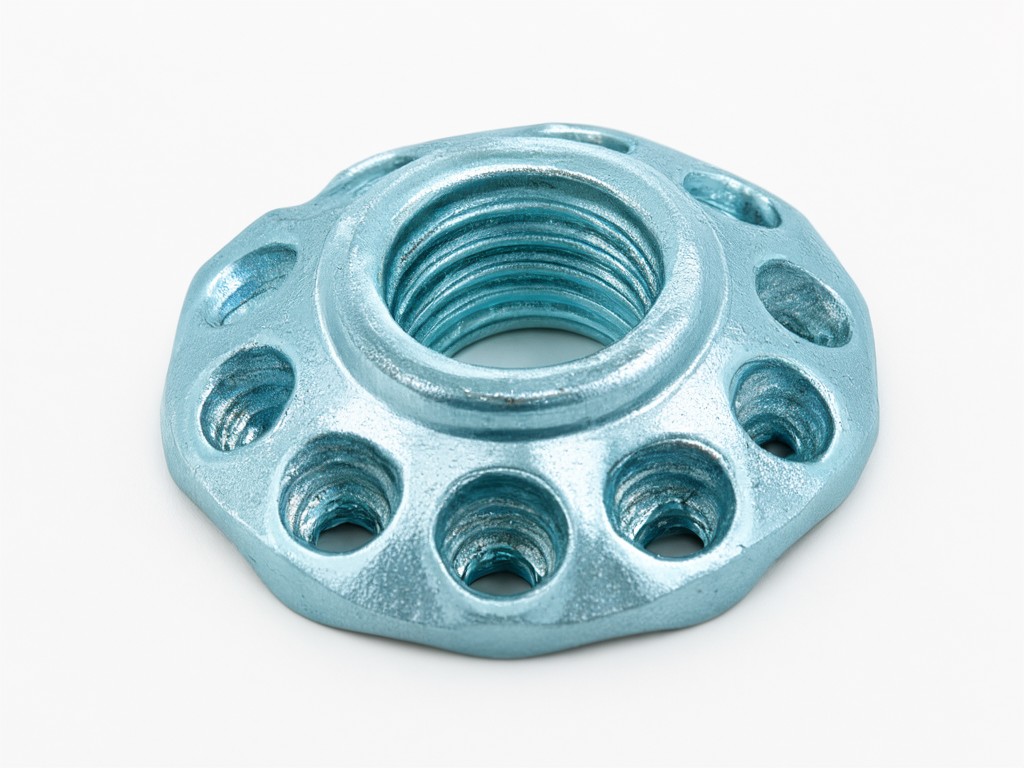
custom 5 16 x 24 flange nut factory: What Buyers Should Check Before Ordering
What the Design Has to Balance
Fatigue appears at the stress concentration when a flange nut sees repeated tightening, vibration, or load cycling. For a 5/16-24 design, the thread callout, flange geometry, material, and mating bolt need to work as one assembly; changing any of them can affect clamp load or service life.
A 5/16-24 designation generally points to a fine-thread nut, but the buyer’s drawing should govern the thread series, fit, and tolerances. A factory can match a private-label specification without redesigning the part when the print defines the across-flats dimension, nut height, flange diameter and thickness, bearing face, material, and finish. Missing dimensions should be resolved before tooling starts, not inferred from a sample alone.
Integral flange nuts are commonly made from a cold-headed blank, followed by the operations needed to form the flange and produce the internal thread. Cold heading spreads tooling cost across the run; small orders therefore carry a higher unit cost than repeat production. A larger flange may spread bearing pressure across more area, but it also changes blank size, forming load, and the space available around nearby components.
Measured Performance in Real Use
The limiting factor is rarely the headline specification. Seating-face contact, thread fit, and the tightening conditions determine whether the joint holds its intended clamp load. Set the nut’s material and property requirements against the mating bolt and assembly load; a coating or lubricant can change torque-to-clamp-load behaviour.
For serviceable assemblies, check that the flange sits flat on the joint surface and that the nut clears surrounding features through the full tightening path. A serrated bearing face may resist rotation on some assemblies, but it can mark the mating surface and is not interchangeable with a smooth flange by default. Buyers should specify the face style rather than rely on a broad “flange nut” description.
Corrosion exposure also changes the selection. Zinc-plated carbon steel can suit indoor or protected applications where cost matters; stainless steel is often selected where corrosion resistance is part of the service requirement, with material and strength compatibility checked against the bolt. Black oxide provides a different appearance and limited corrosion protection, so it should not be treated as equivalent to a plated coating in a wet or outdoor environment.
Customisation Options and Their Limits
Lower Initial Cost
Using an existing compatible heading and forming setup can reduce initial tooling expense and shorten preparation. This route works only when the existing geometry matches the approved drawing; a close-looking flange is not a dimensional substitute.
Dedicated Tooling
A dedicated die or forming setup can hold a non-standard flange profile or height, but adds a one-time cost and setup time. At higher repeat volumes, that cost can be spread over more pieces; at low volume, it may outweigh the per-piece saving.
Custom options may include carbon or stainless steel, smooth or serrated bearing faces, specified flange dimensions, and a selected finish. Material substitutions can change forming behaviour and strength, while coating thickness can affect thread fit. Supply the drawing revision, mating-bolt details, intended environment, and any packaging or marking requirements with the inquiry. That gives the factory a basis to assess the requested configuration without changing the part’s design intent.
Capacity, Tooling and Scheduling
| Order stage | Indicative planning window | MOQ and cost effect |
|---|---|---|
| Drawing and tooling review | Quoted after print review; add time if a new die or forming setup is needed. | No production MOQ is confirmed until material, geometry, and tooling scope are agreed. |
| First production order | A planning estimate is commonly several weeks after drawing approval, subject to tooling, material, and finish availability. | Lower quantities carry a larger setup and tooling share per nut; confirm the quoted batch minimum with the factory. |
| Repeat production | Scheduling can be shorter when the approved tooling and material are available; order size and coating queue still affect dispatch. | Forecast releases can improve capacity planning, while larger batches may lower the unit cost through fewer setups. |
These are planning considerations, not a production promise: actual MOQ and lead time depend on the print, annual demand, tooling ownership, material source, finish, and packaging. Retail and wholesale buyers can reduce reorder disruption by approving one controlled drawing revision, confirming whether tooling is retained for repeat orders, and sharing a forecast before peak demand. Ask for tooling cost as a separate line from unit price so the amortisation is visible across different order volumes.
Questions Buyers Ask Before Ordering
Can a sample be matched without changing the print?
A sample helps identify the intended shape and assembly, but it does not define hidden dimensions or thread fit. Send the drawing alongside the sample, including the 5/16-24 thread callout and the flange and bearing-face dimensions. The factory can then confirm whether existing tooling fits or whether a dedicated setup is needed.
What changes most between a small run and a repeat order?
Setup and tooling costs weigh more heavily on a small run. Repeat volume can spread those costs and support planned material purchasing, but only if the approved geometry, finish, and packaging stay stable. Confirm the breakpoints in the quotation rather than assuming the unit price scales evenly with quantity.
What should be included for a tooling review?
Provide a dimensioned drawing and revision, material and finish requirements, estimated annual volume, target order quantity, mating-bolt information, and any private-label packing instructions. Flag any assembly surfaces that cannot be marked by a serrated flange. Those details let the factory assess fit, process route, tooling scope, and a realistic schedule before quoting.
Send the drawing and volume forecast for a tooling review before placing a production order. Contact the factory to review the 5/16-24 flange nut specification and separate tooling charges from the quoted unit price.