


Specifying Custom 9 16 hex nut dimensions supplier for Wholesale and OEM Orders
Selection trade-off: Cold-headed nuts spread tooling cost across larger runs and support repeat orders at a lower unit cost. For a short run or a dimension that falls outside practical forming limits, machining may reduce initial tooling expense, but usually raises unit price and production time.
First-article tooling determines whether a custom 9/16-inch hex nut can move into production without a late dimensional reset. For wholesale and OEM orders, define the thread, across-flats dimension, nut height, material, and finish on one controlled drawing. A 9/16-12 UNC thread is a common interpretation of “9/16 hex nut,” but the purchase specification must confirm pitch and thread fit rather than leave them to the supplier.
Where Cheaper Alternatives Fall Short
Consistency is set at the forming stage. A low quote can rely on existing tooling that approximates the requested across-flats or height, then leave thread engagement and wrench clearance to be resolved during assembly. Those differences may not be obvious in a visual check, but they can cause assembly stoppages, loose fit, or tool slip.
Tooling charges also need to be read against order volume. A dedicated heading die and punch add cost before the first production lot, while repeat volume spreads that cost across more pieces. If the order is split across several releases, confirm whether the supplier will retain and maintain the tooling, and agree how the approved first article will be referenced on later batches.
A short-term price saving has little value if replacement nuts arrive after the assembly or retail launch window. Freeze the drawing, sample approval date, production quantity, and packing configuration together so the quoted lead time reflects the actual order.
Design Constraints Behind the Specification
Cold heading forms the nut blank from metal stock; the internal thread is then tapped, followed by any specified heat treatment and surface finish. The method suits repeat production, but custom outer dimensions must work with the forming sequence, available stock size, die geometry, and the amount of material displaced at each station. A change to across-flats or height can therefore affect tooling, setup, and the achievable production rate.
Treat standard dimensions as a reference, not as an incomplete drawing. A common 9/16-12 UNC hex nut reference uses 7/8 inch across flats; the required height depends on nut style and the joint design. State inch or metric units, tolerances, thread class, chamfer, and any clearance restrictions. If a mating bolt or stud is already selected, provide its specification so sample fit can be checked before the production lot.
Custom dimensions should be limited to the features that serve a defined assembly need. Tightening tolerances across every face can add inspection time and reduce process yield without improving fit; prioritize the thread, wrench flats, and bearing face that control the joint.
What Actually Determines Performance
Process choice shows up later as thread fit, seating behaviour, and batch-to-batch dimensional variation. A cleanly formed blank gives the tapping operation a consistent base; a poorly controlled blank can leave uneven wall thickness or a distorted bearing face. Thread plug gauges, dimensional checks for across-flats and height, and visual inspection of the thread and finish are practical controls for production release.
Nut strength cannot be selected by material name alone. The required property depends on the mating fastener, joint load, installation method, and any heat treatment. Excessive installation torque can damage threads or the connected parts; specify the joint requirement and validate fit rather than treating a nut’s wrench size as a load rating.
Coating thickness also affects internal thread clearance. If corrosion protection is required, agree whether threads are coated, masked, or otherwise controlled, and inspect the finished sample with the intended mating component. For export lots, define packaging that keeps parts dry and limits finish abrasion during transit.
Material Options and Their Trade-offs
Carbon steel is often the economical starting point for volume orders where a protective finish is acceptable. It cold forms efficiently and can be heat treated when the joint specification calls for it. The trade-off is dependence on the selected finish for corrosion protection, especially during storage and shipment.
Carbon or Alloy Steel
Choose carbon steel when unit cost and repeatable forming are priorities and the application accepts a coated surface. Alloy steel may suit a specified strength requirement, but heat-treatment control and verification add process steps and cost.
Stainless Steel
Stainless steel avoids reliance on a plated carbon-steel surface in many exposure conditions, but material cost and forming behaviour differ. Thread galling can be a concern in some stainless assemblies, so mating materials, lubrication, and installation practice need review.
Confirm the material designation and finish in the same revision of the drawing. Substituting a material after sample approval can change forming behaviour, thread fit, and finish appearance; any substitution should be reviewed and approved before the order is released.
Option Comparison by Usage Level
For recurring OEM demand, dedicated cold-heading tooling generally offers the better unit-cost path once the setup and tool expense are spread over forecast volume. It also gives the supplier a defined process to repeat, provided the approved tooling is kept in service and the critical dimensions are checked by lot.
For a small validation quantity or a one-off geometry, machining can avoid a dedicated forming tool. Expect a higher piece price and confirm the production route before approval: a machined sample may confirm dimensions, but it does not by itself demonstrate that a cold-headed production lot will behave identically. A sample made by the intended production process provides a more useful release reference.
Cost and schedule check: Ask for tooling cost, piece price at the planned volume, sample timing, production lead time after approval, and any cost to retain or rework tooling. A forecast split into repeat releases can change the best commercial option compared with a single small purchase.
Buying Mistakes That Lead to Returns
The most common specification gap is writing “9/16 hex nut” without stating thread pitch. Buyers can receive a nut that matches the nominal diameter but will not run correctly on the intended bolt. Add the thread series and fit requirement, then approve a sample against the actual mating fastener where possible.
Another return trigger is treating across-flats as the only custom dimension. Nut height, chamfer, bearing-face condition, and coating inside the thread can all affect installation. A drawing with tolerances on the functional features is more useful than a verbal request or a sample without a controlled revision.
Do not approve a launch date from a unit-price quote alone. Missing tooling approval, unclear sample sign-off, late finish selection, or cartons without batch identification can interrupt receiving and inspection. Tie the delivery schedule to drawing release and sample acceptance, and state whether the order requires lot labels or separate packing by release.
What Can Be Customised and What Cannot
Across-flats, nut height, chamfer, material, thread specification, and finish can be quoted against a controlled drawing. Feasibility depends on the stock size, forming tool geometry, thread engagement, and the quantity available to amortize dedicated tooling. A requested dimension that leaves too little material around the thread or bearing face may need a design revision before sampling.
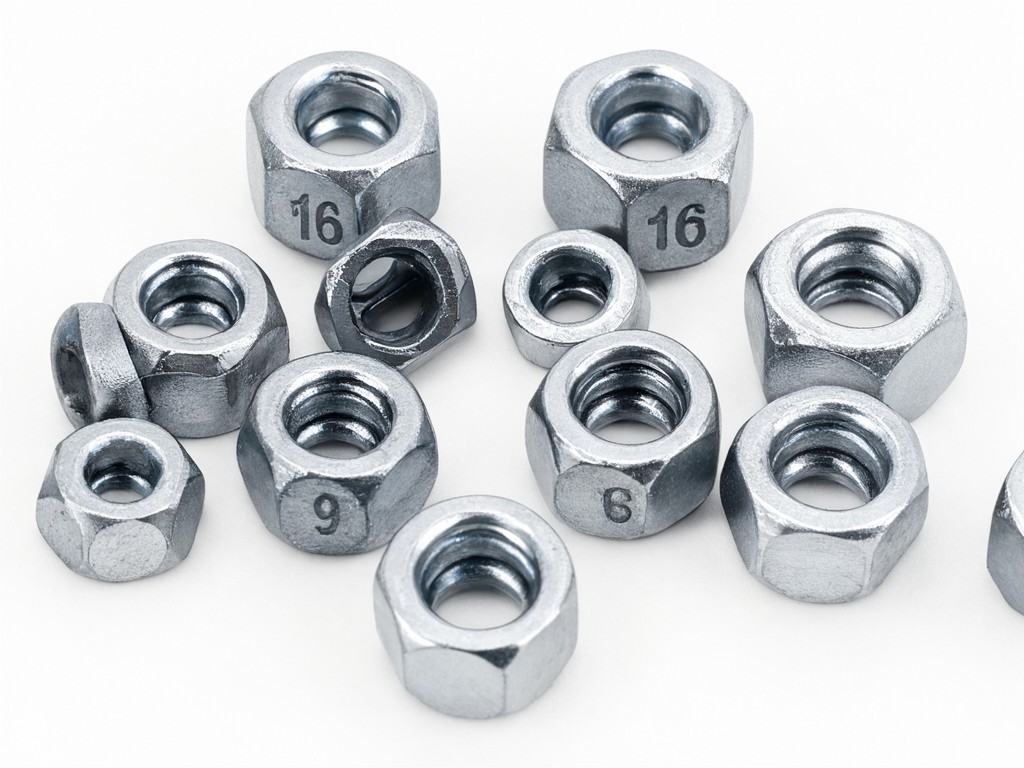
| Specification feature | What to define | Production consideration |
|---|---|---|
| Thread | Nominal diameter, pitch or thread series, and fit requirement | Confirm with the mating bolt; coating can affect usable thread clearance. |
| Hex and height | Across-flats dimension, nut height, tolerances, and wrench clearance | Non-standard geometry can require dedicated heading tooling and sample review. |
| Material and treatment | Material designation and any heat-treatment requirement | Changes can affect forming route, cost, lead time, and required checks. |
| Finish | Finish type, colour where applicable, and thread-coating instruction | Agree inspection appearance and corrosion needs before sample approval. |
Finish selection should account for storage, transport, assembly, and the required appearance. Colour is available only where the selected finish process supports it; it should not replace a written finish specification.
| Finish route | Typical selection reason | Points to confirm |
|---|---|---|
| Plain or lightly oiled steel | Lower finishing cost for controlled indoor use or parts that receive a later coating | Moisture protection during storage and shipment. |
| Zinc-based plated finish | Corrosion protection and a consistent bright or specified appearance | Coating build, thread fit, and handling marks on the approved sample. |
| Stainless steel, unfinished | Avoiding a separate plated layer where the material suits the exposure | Mating material, galling risk, and required surface appearance. |
Some features cannot be promised from a drawing review alone. Formability, achievable tolerances, and final thread fit need confirmation against the selected material and production route. Approve a representative sample before bulk production, then keep the approved revision and inspection points with the order record.
Request a Production Sample
Send the dimensioned drawing, material and finish requirements, target order quantity, and required delivery date for a tooling and schedule review. If the mating fastener is available, include it for thread-fit confirmation. Sample approval before the production release helps align the quote, process route, and delivery plan.
Request a sample and discuss your 9/16 hex nut specification