


Specifying custom flange nylock nut manufacturer for Wholesale and OEM Orders
During a private-label launch with a fixed ship date, a second source can appear ready at sample stage, then miss the first bulk release over flange dimensions or inconsistent nylon insert performance. For a wholesale buyer, those differences can mean assembly delays, returns, or a split specification across suppliers. Qualify the forming route, critical dimensions, and inspection method before comparing unit prices.
Construction Method and Its Effect on Consistency
For standard steel flange nylock nuts, the usual route starts with cold heading to form the nut body and flange, followed by tapping, finish application where specified, and installation of the nylon insert. A change in heading die can shift flange thickness or bearing-face geometry; a change in tap setup can affect thread fit. Each change needs approval against the drawing rather than an assumption that nominal thread size alone defines interchangeability.
Second-source rule: Freeze the thread, flange profile, material, finish, and nylon insert requirements on one controlled drawing. If the replacement source proposes a process or component change, compare first articles and locking performance before authorizing production quantities.
Cold heading generally suits repeat production because the tooling cost is spread across more pieces and the cycle is suited to volume. A custom flange profile or nonstandard head geometry adds die work and setup; at low volume, that can outweigh a small per-piece price advantage. Confirm which tooling is dedicated to the order and how maintenance or replacement affects future runs.
Usage Scenarios and Buyer Segments
Hardware distributors typically need a stable assortment of standard thread sizes and finishes, with replenishment lots that remain interchangeable. OEM buyers focus on fit with the mating bolt and clamped parts, along with consistent locking behaviour in the assembled joint. A club or facility purchasing manager may buy maintenance hardware through a reseller; in that case, clear item identification and replacement compatibility matter more than a custom appearance.
- For a recurring catalog line, keep the approved drawing and inspection limits fixed across reorder lots.
- For an OEM assembly, qualify the nut with the actual bolt, joint surface, and installation method; thread fit alone does not confirm the assembled result.
- For service replacement stock, match the flange footprint and finish to the existing joint so a substitute does not interfere with adjacent parts.
Segment-Specific Requirements
Use this selection path to set the specification before requesting a production quotation. It keeps interface requirements separate from cost choices that can change with order volume.
- Start with the joint.
- If a released drawing exists, submit it with thread details, flange dimensions, material, and finish.
- If the part is being developed, provide the mating bolt and clamped-part requirements so fit can be reviewed before tooling is committed.
- Set the locking requirement.
- For a joint that may be serviced, define whether the nut is replaced after removal; nylon-insert locking performance can change with reuse.
- For elevated operating temperatures or chemical exposure, confirm suitability of the insert and finish against the actual service conditions.
- Choose the volume plan. A repeat order can spread heading-die and setup costs across more units; a small launch lot limits inventory exposure but may carry a higher unit cost and a longer wait if dedicated tooling is not ready.
Quality Control and Batch Consistency
Batch variation usually becomes visible in three places: thread fit, flange seating, and insert locking behaviour. A buyer who checks only overall appearance can miss a thread or insert shift that affects assembly. Agree the drawing revision, sampling approach, and acceptance limits before the first production run; retain the approved sample as a reference for reorders.
For a second source, compare samples from both manufacturers using the same mating hardware and test conditions. Record any approved differences rather than relying on supplier descriptions such as “equivalent.” Process capability is meaningful only against defined limits and a stable measurement method.
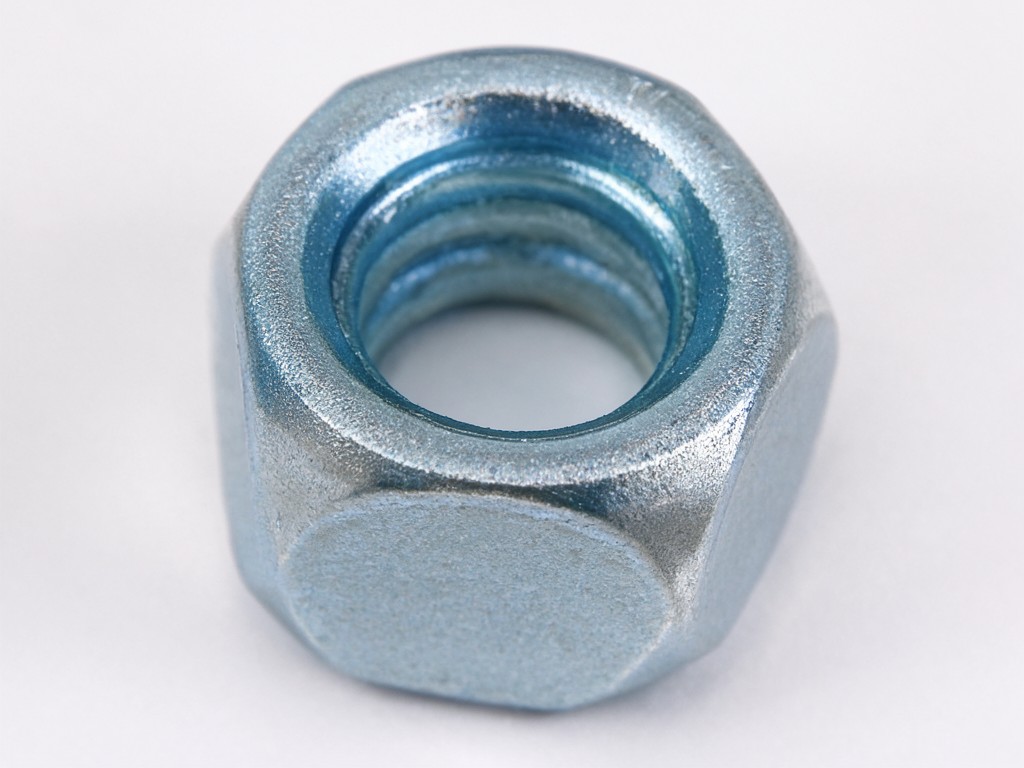
What Gets Checked Before Shipment
Inspection depth should follow the service exposure and the cost of a field failure. Set the finish requirement to the actual storage and operating environment; a coating that suits dry indoor stock may not suit repeated moisture exposure. Use the table as a specification discussion guide, then define acceptance criteria on the order documents.
| Service condition or requirement | Specification point to confirm | Pre-shipment check |
|---|---|---|
| General indoor assembly | Material, thread, flange profile, and specified finish | Dimensional inspection, thread gauging, and visual finish review |
| Moist or corrosive exposure | Base material and coating suited to the specified environment | Coating or corrosion evaluation to the agreed method and acceptance criteria |
| Joint relies on nylon insert locking | Insert material, fit, and required locking performance under stated conditions | Insert presence and retention review, plus agreed prevailing-torque checks |
| Repeat OEM or wholesale reorder | Controlled drawing revision and lot identification requirements | Lot records and sample checks against the approved reference |
Dimensions to review normally include thread fit, across-flats size, flange diameter, and flange thickness. The purchase specification should also state the finish and the conditions for any locking-performance test; torque readings without a defined method are difficult to compare between suppliers.
Capacity, Tooling and Scheduling
Moving from sample orders to container loads changes the cost calculation. A sample may use existing tooling or a short setup; a repeat production run can allocate die, setup, and inspection costs across a larger quantity. The lowest quoted unit price is useful only if the supplier has the planned press capacity, insert assembly capability, and inspection time within the required release window.
For a custom flange profile, request the tooling charge, expected setup interval, and ownership terms separately from the part price. Larger commitments can lower the tooling share per piece, but they also increase inventory exposure if the drawing changes. A staged release can balance those costs, provided the factory reserves capacity and preserves the approved process between lots.
Lead time depends on whether the required die exists, whether the finish is available on the production route, and how much inspection evidence the qualification requires. Set the quotation review around the drawing revision, annual or release quantity, target ship date, and required checks. Send the specification for a quotation review to compare tooling amortisation, unit cost, and schedule assumptions for a second-source order.