


direct factory stainless steel fasteners nuts and bolts top supplier: Specification, Ordering and Quality Notes
Fatigue appears at the stress concentration, not in the catalogue description. For a buyer qualifying a second source, thread fit, material consistency and repeatable dimensions determine whether a fastener can be substituted without rework or returns.
A typical production route uses cold heading for standard bolt forms, followed by thread rolling and finishing; non-standard geometry may require machining. Confirm the drawing, grade, thread and acceptance checks before comparing quotations. A lower unit price has little value if a shifted pitch or inconsistent head dimensions disrupts assembly.
What Actually Determines Performance
The limiting factor is rarely the headline specification. A bolted joint depends on the mating thread, grip length, clamped materials and the preload created during tightening. Torque alone does not define clamp load: thread and bearing-face friction can shift the result, especially when lubricant or surface condition changes between lots.
For a second-source approval, compare samples against the controlled drawing and the incumbent part. Check thread engagement, across-flats dimensions, under-head length, straightness and finish. Where the joint sees repeated loading, confirm that the fastener’s specified mechanical properties suit the design; stainless grade selection by corrosion exposure alone does not establish fatigue capacity.
- Specify metric or inch thread, pitch, handedness and tolerance class; a nominal diameter match is not enough.
- Track lot-to-lot variation in dimensions and mass where automated feeding or repeatable assembly depends on it.
- Check nut run-down and bolt thread condition together. A single-part inspection can miss a pairing problem.
Materials and Construction Trade-offs
| Selection point | Common 304 stainless option | Common 316 stainless option |
|---|---|---|
| Exposure fit | Often selected for general indoor and outdoor service where exposure is moderate. | Often selected where chloride exposure or more demanding atmospheric conditions make added corrosion resistance a priority. |
| Cost and limits | Usually the more economical choice when the service environment supports it. It is not immune to staining or corrosion in aggressive conditions. | Typically carries a material cost premium. It still requires correct design, cleaning and inspection for the actual chemical and crevice conditions. |
| Production checks | Align material identification, dimensions and finish records to the purchase specification. | Apply the same controls and verify that the ordered grade is clearly identified through packing and batch records. |
Cold heading suits repeat orders for standard shapes and sizes; it can reduce unit cost at volume but depends on suitable tooling and a stable specification. Machining can accommodate geometry that does not suit the heading route, although cycle time and material use can raise the unit price. State whether passivation, a particular finish, or material traceability is required rather than assuming it is included.
Where This Product Beats Standard Alternatives
Where moisture or corrosive exposure makes a plated carbon-steel fastener a poor fit, stainless steel can avoid coating damage as the first line of corrosion protection. The choice only pays off when the selected grade matches the environment and the fastener’s mechanical requirements; stainless is not a universal replacement for every strength class or joint design.
Compared with zinc-plated alternatives, stainless avoids reliance on an applied zinc layer that can be scratched during handling or installation. The trade-off is material price and a greater risk of thread galling under unsuitable tightening conditions. Where a joint is frequently dismantled, specify compatible nuts, controlled tightening practice and any approved lubricant as part of the assembly requirement.
Comparing Two Standard Configurations
Fully Threaded Hex Bolt
Choose this form when the joint needs thread engagement along most of the bolt length or the clamped stack varies. Confirm the required grip and nut engagement; excess thread in a shear plane may not suit the joint design.
For repeat orders, record the thread length and under-head dimensions explicitly. Small changes can alter assembly fit even when the nominal diameter remains unchanged.
Partially Threaded Hex Bolt
Choose a plain shank where the specified grip length places the unthreaded section through the joint. The shank diameter and length need to match the design; a near-fit can leave threads at the wrong location.
This configuration can require more size-specific production control. Keep thread length and overall length on the approved drawing to prevent substitution drift between purchase lots.
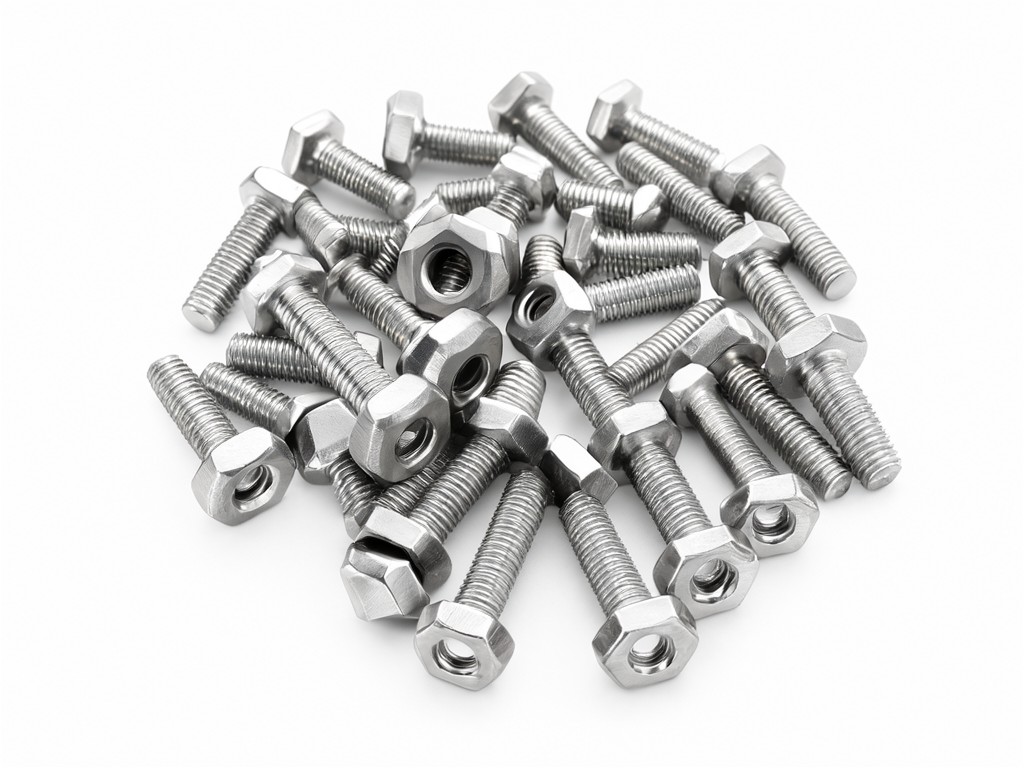
Both forms can be produced in stainless steel; configuration is a joint-design decision, not a material-grade decision. Approve a sample of the complete bolt-and-nut combination before releasing a replacement source.
Buying Mistakes That Lead to Returns
Repeat loading drives the failure, but many returns start earlier: with an incomplete drawing, an assumed grade or an unapproved change to finish. A part can pass a visual check and still fail on the assembly line because its pitch, head dimensions or thread fit differs from the incumbent lot.
- Do not specify only “stainless steel.” Name the grade, applicable product requirements, dimensions and any inspection records needed for release.
- Avoid mixing nuts and bolts from unverified sources. Thread pairing and galling behaviour can change even when both parts carry a stainless designation.
- Do not accept a finish or process change without comparing a production-representative sample against the approved part.
- Set batch identification and packaging requirements before production. Unmarked mixed lots make a dimensional complaint harder to isolate and can delay replenishment.
For second-source qualification, agree which dimensions are critical, how samples are approved and what constitutes a lot. This keeps the comparison focused on measurable differences instead of price alone.
Usage Scenarios and Buyer Segments
OEM Equipment Buyers
For repeat assembly lines, consistent thread fit and head dimensions reduce feed interruptions and fit-up adjustments. Keep revision control tied to the drawing and approved sample.
Maintenance Distributors
For mixed replacement demand, clearly labelled size and grade batches help prevent substitutions across thread pitches and service conditions.
Private-Label Buyers
For retail or trade packs, define count per pack, label language, barcode or artwork files, carton quantities and batch marks before the first production order.
Outdoor structures, equipment housings and assemblies exposed to washdown or coastal air may call for stainless steel, but the exposure details still govern grade selection. Crevices, trapped deposits and contact with dissimilar metals can affect corrosion behaviour; specify the real service conditions during quotation review.
Setup, Use and Replacement Parts
Set tightening instructions for the actual bolt, nut, joint material and lubrication condition. Stainless threads can gall when friction and heat rise during tightening; use controlled installation practice and do not apply a generic torque value across grades, sizes or lubricated and dry joints.
| Order type | MOQ basis | Lead-time drivers | Buyer control |
|---|---|---|---|
| Standard size and configuration | Quoted by size, grade, finish and production batch; confirm the minimum with the factory. | Material allocation, production schedule, inspection and export packing. | Approve a reference sample and agree lot identification for repeat orders. |
| Custom dimensions, finish or private-label pack | May reflect tooling, setup, packing materials or artwork requirements; request a quote against the full specification. | Tooling readiness, sample approval, process routing and packaging sign-off. | Freeze drawing revision, artwork and acceptance criteria before the production slot is confirmed. |
For replacement work, record the complete bolt and nut specification, not just the visible diameter. Inspect removed fasteners for thread damage, corrosion or deformation, then replace parts as the joint design requires. Keep unopened lots dry and separated by size and grade to reduce mix-ups during issue.
Review a Second-Source Quotation
Send the drawing or complete size schedule, material grade, finish, inspection needs, estimated order quantity and packing details. A quotation review can identify specification gaps before sample approval and help compare the proposed production route with your current supply.